
Tesla India: A High-Stakes Entry Into One of the World’s Toughest EV Markets
A Market Full of Promise—and Friction
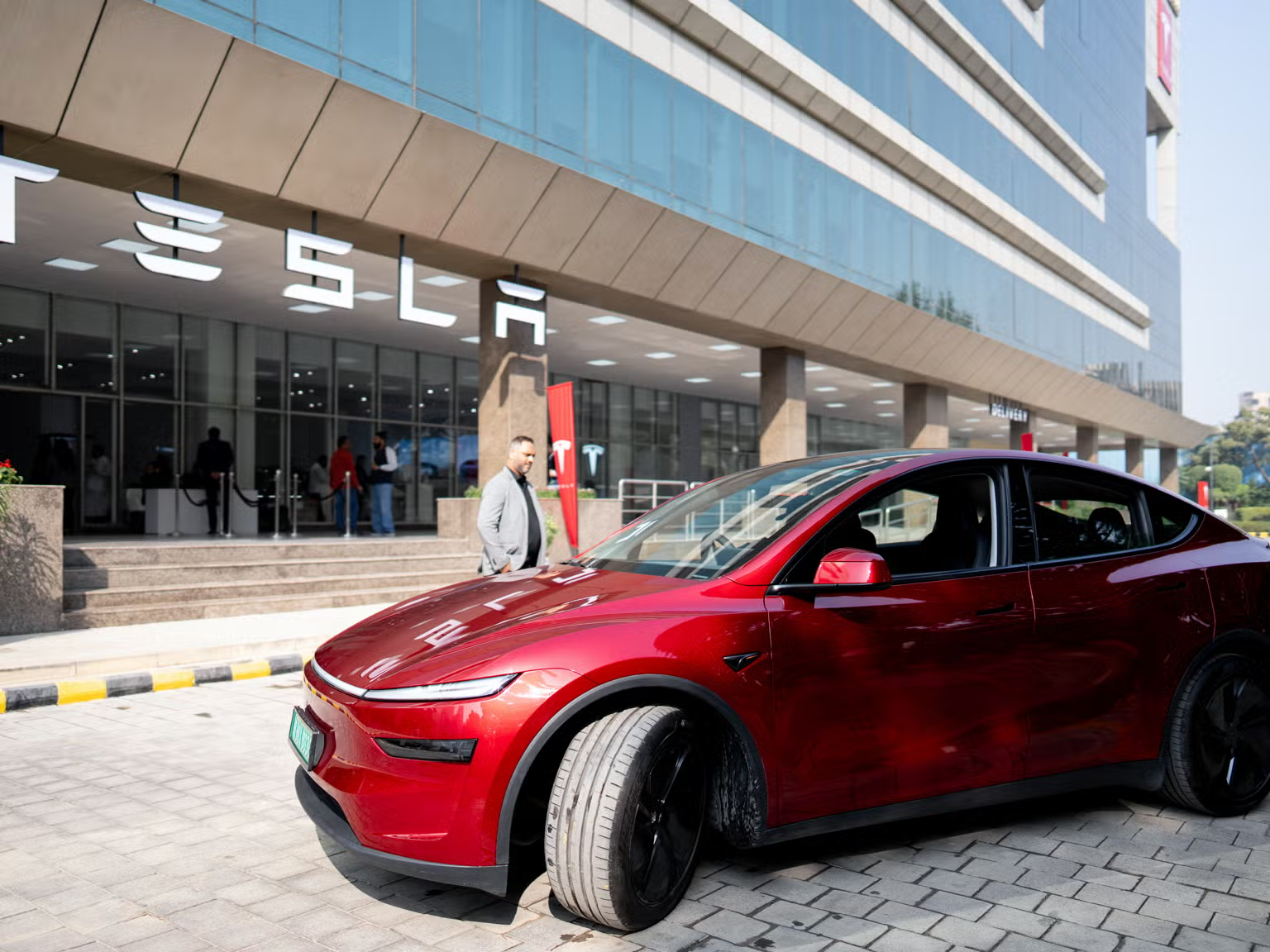
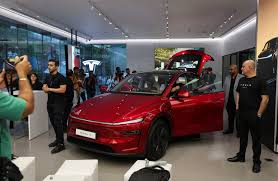
Tesla’s long-anticipated push into India has entered a decisive new phase. The electric vehicle (EV) giant has officially introduced its first car in the country, the Model Y, followed by the launch of the more spacious Model Y L—a six-seater, long-wheelbase variant designed to appeal to family buyers and premium customers.
But beneath the surface of this expansion lies a complex reality. India, the world’s most populous nation and an emerging EV hotspot, presents Tesla with both immense opportunity and formidable challenges. High import tariffs, pricing pressures, and policy disagreements have slowed the company’s progress, turning what could have been a breakthrough into a measured, uncertain rollout.
The Model Y L: Tesla’s Strategic Bet
Tesla’s latest move in India centers around the Model Y L, a long-wheelbase version of its globally popular SUV. Priced at Rs 61.99 lakh (ex-showroom), it sits slightly above the standard Model Y, which starts at Rs 59.89 lakh.
The Model Y L marks several firsts for Tesla in India:
- It is the company’s first officially launched car in the market
- It introduces a three-row, six-seat (2+2+2) configuration
- It offers a claimed range of up to 681 km on a full charge
This extended range even surpasses the standard Model Y by 20 km, positioning the vehicle as a premium long-distance EV option in the country.
Performance-wise, the Model Y L is equipped with a dual-motor all-wheel-drive system, capable of accelerating from 0 to 100 km/h in about 5 seconds and reaching a top speed of 201 km/h.
From a product standpoint, Tesla has stayed true to its minimalist philosophy. The SUV features:
- A 16-inch touchscreen infotainment system controlling most functions
- A panoramic glass roof
- Wireless charging and premium audio system (18 speakers)
- Advanced safety features, including ADAS and optional Full Self Driving (FSD)
The design remains sleek and understated, with aerodynamic touches like flush door handles and a clean, futuristic front-end.
A Premium Product in a Price-Sensitive Market
Despite the impressive specifications, Tesla faces a fundamental challenge: pricing.
India’s EV market is still developing, and most consumers are highly price-sensitive. While Tesla’s Model Y L costs roughly $66,000, competing electric vehicles in India are significantly cheaper.
For instance:
- BYD Sealion 7: approximately $53,000–$59,000
- Other premium EVs like BMW iX1 and Kia EV6 also undercut Tesla in certain configurations
This price gap is largely driven by India’s import tariffs, which can reach nearly 100% on fully imported vehicles.
Although discussions between the U.S. and India have resulted in tariff reductions for some high-end cars—from as high as 110% to about 30%—electric vehicles have notably been excluded from these concessions.
The result: Tesla’s cars remain expensive relative to the local market.
Early Struggles: Weak Sales and Limited Adoption
Tesla’s initial performance in India has been modest at best.
- The company has reportedly sold just 350 Model Y units since launch
- It received just over 600 orders between mid-July and February
These numbers highlight the gap between Tesla’s global popularity and its local traction in India.
Several factors contribute to this slow uptake:
- High pricing due to tariffs
- Limited local manufacturing presence
- Strong competition from more affordable EV brands
Additionally, Tesla’s decision to abandon plans for a manufacturing plant in India—and instead import vehicles from China—has further complicated its positioning in the market.
The Indian government has been clear: if Tesla wants easier market access, it must commit to building cars locally.
Policy Tensions and Strategic Missteps
Tesla’s relationship with India has not been without friction.
CEO Elon Musk has long lobbied for reduced tariffs on EV imports, but the government has resisted, prioritizing domestic manufacturing.
At the same time, Musk’s public behavior has occasionally stirred controversy, potentially impacting Tesla’s brand perception in the country.
These tensions underscore a broader strategic dilemma:
- Should Tesla adapt to India’s industrial policy by localizing production?
- Or continue importing vehicles at higher prices, targeting only a niche premium segment?
So far, Tesla appears to be pursuing the latter approach.
India’s EV Ambitions: A Moving Target
India’s government has set ambitious goals for electric mobility.
- EVs currently make up around 5% of the automotive sector
- The target is to increase this to 30% by 2030
This growth trajectory presents a long-term opportunity for Tesla. However, the near-term landscape remains dominated by affordability and infrastructure challenges.
Domestic and regional players—such as Tata Motors, Mahindra, and BYD—are already capitalizing on this environment with competitively priced models tailored to local needs.
Can the Model Y L Turn the Tide?
Tesla’s introduction of the Model Y L is a calculated attempt to reposition itself in India. By offering more seating capacity, greater range, and enhanced comfort, the company is targeting affluent buyers who value premium features over price.
Yet, the fundamental barriers remain:
- High cost relative to competitors
- Limited localization strategy
- Policy constraints on imports
Without addressing these structural issues, even a well-engineered product may struggle to achieve scale.
The Road Ahead: High Stakes for Tesla
For Tesla, India represents more than just another market—it is a test of its global expansion strategy.
Analysts suggest that the stakes “could not be higher,” especially as the company faces pressure to deliver on ambitious projects like Robotaxi networks and Optimus humanoid robots.
At the same time, its automotive business—particularly in emerging markets—remains critical to sustaining growth.
India offers a massive consumer base, rising EV adoption, and long-term potential. But success will likely depend on whether Tesla can:
- Align with government policies
- Reduce costs through local manufacturing
- Adapt its product strategy to local market dynamics
Conclusion
Tesla’s journey in India is still in its early stages, marked by cautious optimism and significant hurdles. The launch of the Model Y L signals intent, but not yet dominance.
The company’s challenge is clear: transform a premium niche presence into a scalable business in one of the world’s most price-sensitive automotive markets.
Whether Tesla can navigate tariffs, policy expectations, and competition will determine if its Indian venture becomes a breakthrough—or a missed opportunity.


