


ChatGPT Down? What’s Behind the Global Outage Affecting Millions
A Sudden Disruption Across the AI Landscape
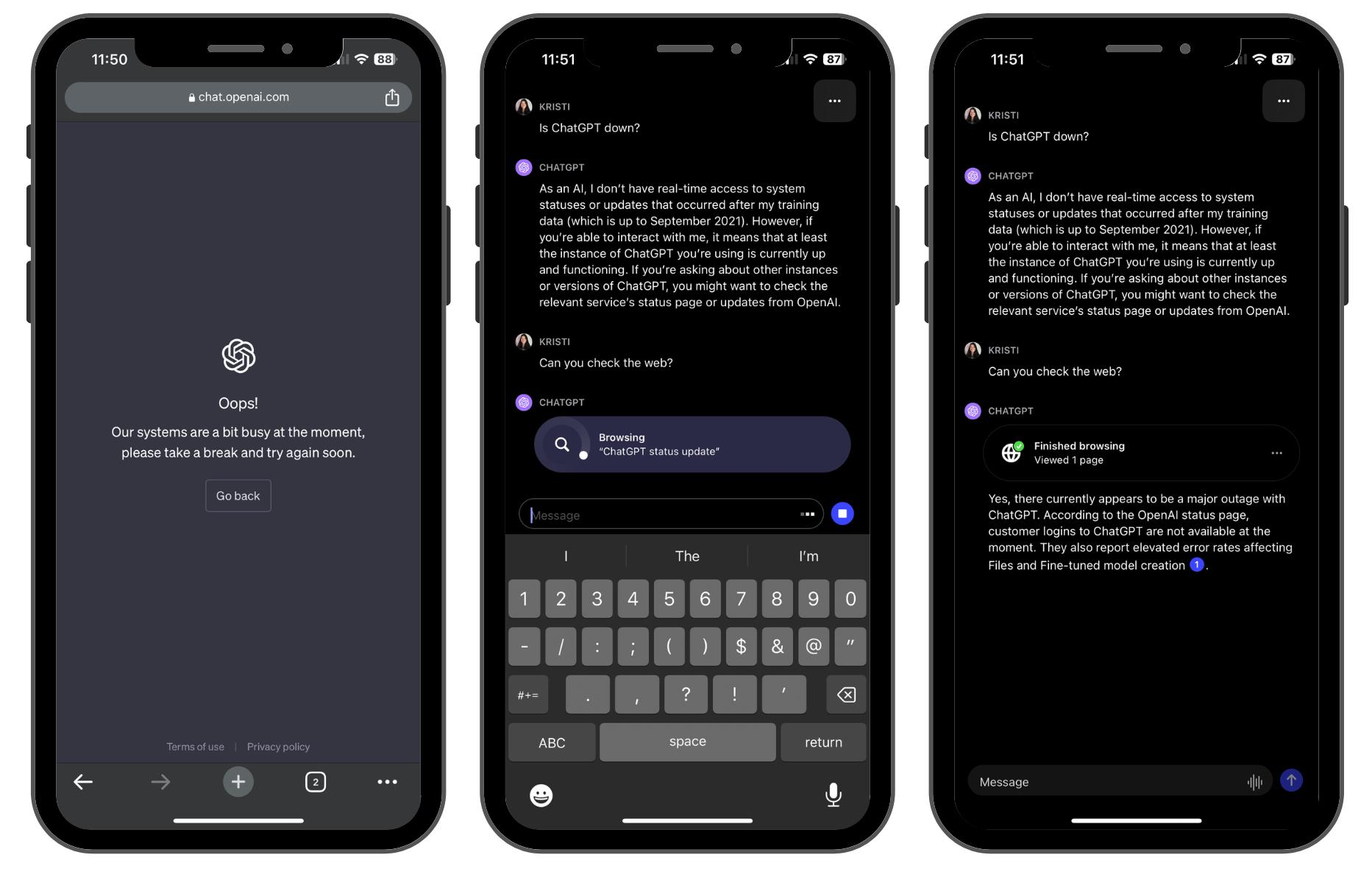
For millions of users relying on artificial intelligence tools for work, study, and everyday tasks, the question “chatgpt down?” quickly turned from a casual query into a widespread concern. Reports of “chatgpt is down” began surfacing globally, signaling a significant disruption affecting one of the most widely used AI platforms.
The outage, confirmed by OpenAI, impacted both ChatGPT and its associated tool Codex, leaving users unable to access services or experiencing degraded performance. What initially seemed like isolated glitches quickly escalated into a global event.
When Did the Outage Begin?
The first signs of trouble appeared at approximately 10:05 a.m. ET (3:05 p.m. local time in many regions), when monitoring platforms began registering a sharp spike in user complaints. Downtime tracking services recorded thousands of reports within minutes, indicating that the issue was not localized but systemic.
At its peak, the number of complaints surged dramatically:
- Over 7,600 reports in the UK
- Around 1,700 reports in the United States
- More than 8,000 complaints in India
- Globally, reports exceeded 2,000 and climbed to nearly 4,000 within minutes
This rapid escalation highlighted the scale of the disruption and the dependence users now have on AI-driven platforms.
What Exactly Went Wrong?
According to official updates, the core issue centered on users being unable to load ChatGPT and Codex. The platform’s status systems described the situation as “degraded performance,” a term typically used to indicate partial outages where some users experience failures while others face slow or inconsistent responses.
In practical terms, users reported:
- Complete inability to access the platform
- Login failures
- Errors loading conversations
- Interruptions during active sessions
A breakdown of complaints revealed that:
- 86% of users experienced issues on the web version
- 8% faced problems with the mobile application
- Around 3% reported login-related failures
These figures suggest that the web interface bore the brunt of the outage, though the disruption extended across multiple access points.
Regional Differences Add Complexity
One of the more unusual aspects of this outage was its uneven geographic distribution. Reports indicated significantly higher complaint volumes in some regions compared to others.
For example, the UK saw a peak exceeding 8,000 reports, while the US numbers remained comparatively lower. This discrepancy may be attributed to time zone differences, usage patterns, or varying infrastructure loads across regions.
Such regional variation complicates diagnosis and response, as engineers must determine whether the issue stems from global infrastructure failures or localized bottlenecks.
OpenAI’s Response: Investigation and Mitigation
OpenAI acknowledged the problem early, stating that it was “investigating” the issue affecting ChatGPT and Codex. As the outage progressed, updates indicated that mitigation measures had been applied and recovery efforts were underway.
An official note on the platform’s status page also mentioned:
“Users may encounter issue with ChatGPT Business after upgrade or adding new seats for up to an hour.”
This suggests that at least part of the disruption could be linked to backend changes or system updates—common triggers for temporary instability in large-scale cloud services.
By the later stages of the incident, OpenAI confirmed that mitigation had been implemented and that teams were actively monitoring recovery .
A Growing Pattern Across AI Platforms
Interestingly, this outage does not exist in isolation. Similar disruptions have recently affected other AI systems, including those developed by Anthropic. Reports of service interruptions across multiple platforms point to a broader trend: as AI systems scale rapidly, maintaining stability becomes increasingly complex.
These platforms rely on vast cloud infrastructures, real-time data processing, and continuous updates. Even minor misconfigurations or unexpected traffic surges can trigger cascading failures.
Why Outages Like This Matter
At first glance, a temporary outage may seem like a minor inconvenience. However, the implications are far more significant:
1. Dependence on AI Tools
Businesses, developers, students, and content creators now depend heavily on tools like ChatGPT. An outage can disrupt workflows, delay projects, and impact productivity on a global scale.
2. Reliability Expectations
As AI becomes embedded in daily operations, users expect near-continuous availability. Outages challenge trust and highlight the need for more resilient systems.
3. Enterprise Impact
For organizations using AI tools in customer service, coding, or automation, even short disruptions can lead to financial and operational consequences.
4. Infrastructure Pressure
The scale of usage—millions of concurrent users—places enormous strain on servers and networks, especially during peak demand periods.
What Users Can Do During an Outage
While the root cause lies with platform providers, users can take practical steps when encountering issues:
- Check official status pages for real-time updates
- Verify if the issue is global using outage trackers
- Retry access after some time instead of repeated refresh attempts
- Switch devices or networks to rule out local connectivity issues
Understanding whether the problem is widespread helps avoid unnecessary troubleshooting.
What Happens Next?
Although the immediate focus is on restoring service, outages often lead to deeper internal reviews. These typically involve:
- Identifying the root cause of the failure
- Strengthening system redundancy
- Improving monitoring and alert systems
- Enhancing communication during incidents
Given the rapid growth of AI platforms, such events are likely to shape future infrastructure strategies and resilience planning.
Conclusion: A Reminder of AI’s Fragile Backbone
The “chatgpt down” incident serves as a clear reminder that even the most advanced digital systems are not immune to disruption. As reliance on AI continues to expand, so does the importance of stability, transparency, and rapid response.
While services are expected to recover, the broader lesson remains: the infrastructure powering modern AI is still evolving, and occasional disruptions are part of that progression.
For users asking, “chatgpt is down?”, the answer—at least for now—is yes for many, but recovery is actively underway.


