Air Canada: Reinventing the Passenger Experience in a Competitive Aviation Era
A National Carrier at a Strategic Turning Point
Air Canada is entering a decisive phase in its evolution, positioning itself not merely as a legacy airline but as a modern global competitor focused on premium experience, technological integration, and long-term growth.
- A National Carrier at a Strategic Turning Point
- The “Glowing Hearted” Vision: More Than a Cabin Upgrade
- A Dual-Aircraft Strategy: Precision Meets Flexibility
- Design Choices That Reflect Passenger Psychology
- Beyond Seats: A Full-Service Transformation
- Fleet Modernization and Network Strategy
- Competitive Positioning in a Mature Market
- Cultural Identity as a Brand Asset
- What This Means for the Future of Air Travel
- Conclusion: A Calculated Evolution, Not a Reinvention
Recent developments reveal a clear strategic direction: invest heavily in passenger comfort, differentiate through design and service, and align the brand with a distinctly Canadian identity. At the center of this shift is a sweeping transformation of its long-haul cabins—an initiative that reflects both post-pandemic recovery ambitions and intensified competition in international aviation.
The “Glowing Hearted” Vision: More Than a Cabin Upgrade
Air Canada’s latest redesign initiative, branded as the “Glowing Hearted” standard, represents a holistic rethink of how passengers experience air travel. Rather than focusing solely on seat design, the airline is advancing a broader philosophy that integrates aesthetics, hospitality, and operational functionality.


“This investment is about fundamentally redefining the experience of flying with Air Canada,” said Mark Nasr, the airline’s Chief Operations Officer.
The concept draws inspiration from Canadian cultural identity—subtle design cues, warm lighting, and symbolic elements such as maple leaf motifs aim to create a sense of place.


From a strategic standpoint, this move signals a shift toward experiential branding, where airlines compete not only on price and routes but on emotional connection and perceived quality.
A Dual-Aircraft Strategy: Precision Meets Flexibility
Boeing 787-10: Premium Long-Haul Benchmark
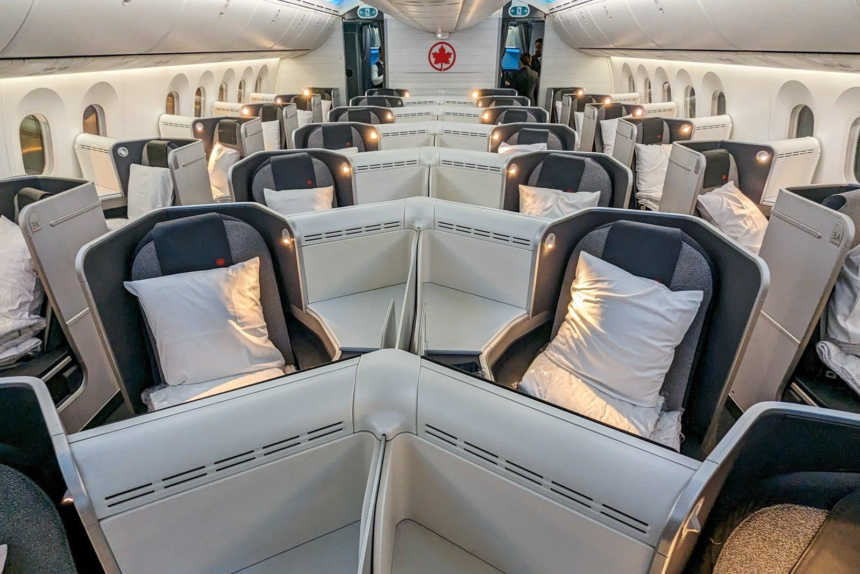
Air Canada’s upcoming Boeing 787-10 Dreamliner aircraft will anchor its premium long-haul offering. Configured with 332 seats—including 42 business class seats—the aircraft introduces a refined version of the airline’s Signature Class.
Key features include:
- Reverse herringbone seating with privacy doors
- 27-inch 4K OLED entertainment screens
- Bluetooth audio integration
- Full lie-flat beds extending to 6’5”
- Advanced power options (AC, USB-C)
A notable addition is the Signature Plus Suite, a sub-category within business class that targets high-end travelers with expanded space and companion seating options.


This layered premium approach reflects a broader industry trend: segmentation within business class to capture luxury demand without moving fully into first-class territory.
Airbus A321XLR: Expanding the Network Frontier
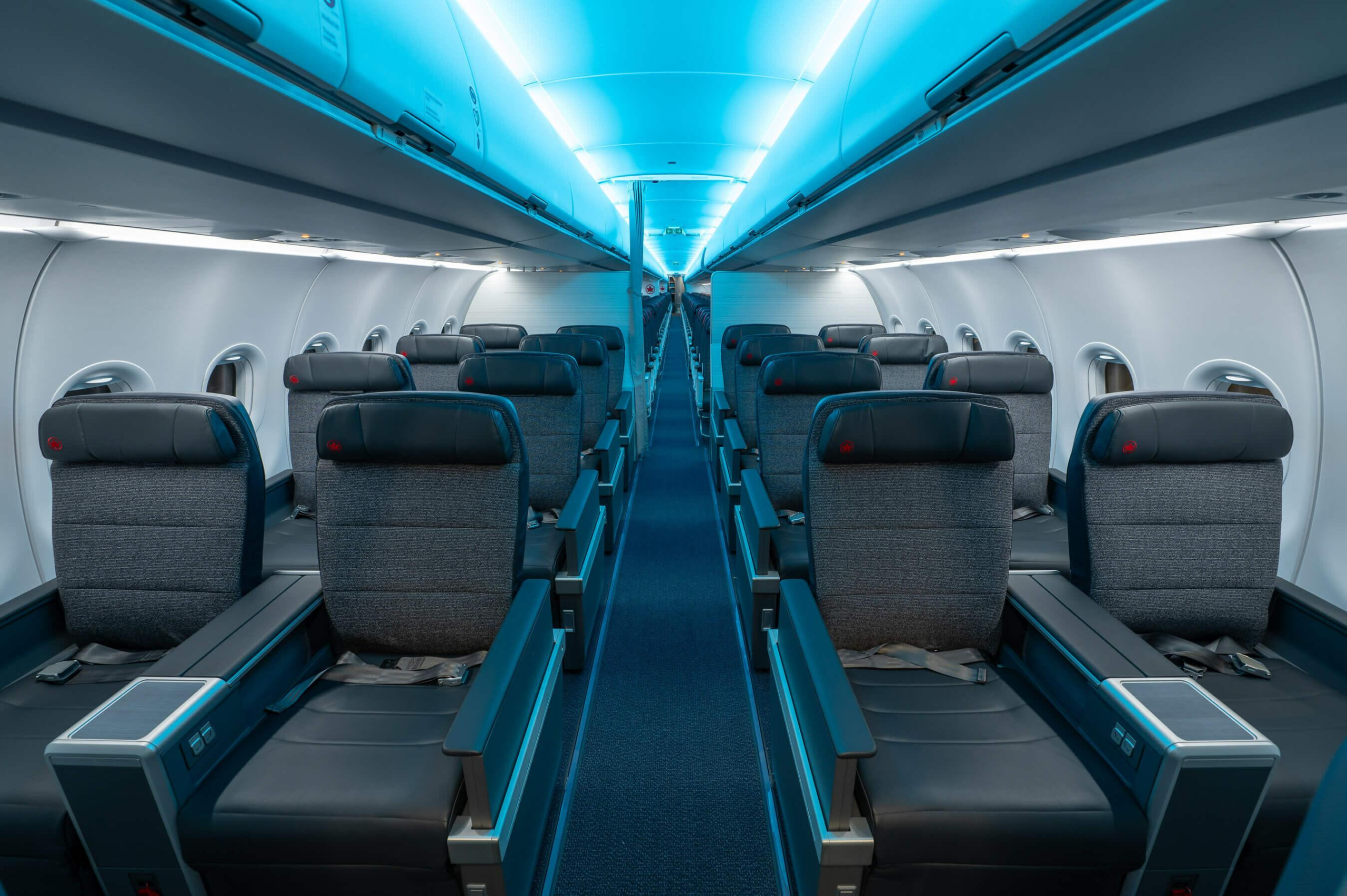
On the other end of the operational spectrum, Air Canada is deploying the Airbus A321XLR as a “transatlantic game-changer.”
With 182 seats—including 14 business class seats—the aircraft is designed to open new routes that are not economically viable for larger planes.
Key innovations include:
- Lie-flat business class seats on a single-aisle aircraft (a first for Air Canada)
- 19-inch 4K OLED screens
- Enhanced personal space through ergonomic design
- Full connectivity and power access at every seat
The strategic implication is significant: narrowbody aircraft with long-range capabilities allow airlines to enter secondary markets, increase frequency, and reduce operational risk.
Design Choices That Reflect Passenger Psychology
One of the more subtle but important aspects of Air Canada’s redesign is its approach to cabin ergonomics and passenger perception.
For example:
- The A321XLR business class intentionally avoids installing doors to prevent a claustrophobic environment in a narrow cabin.
- Lower partitions and wider aisles create a more open spatial experience
- Lighting and materials are calibrated to evoke a residential atmosphere
These decisions demonstrate a shift from purely technical optimization to human-centered design, where comfort is measured not just in dimensions but in perceived space and emotional response.
Beyond Seats: A Full-Service Transformation
Air Canada’s investment extends beyond hardware. The airline is preparing a comprehensive upgrade to its “soft product”—the service layer that defines the overall journey.
Planned enhancements include:
- Upgraded food and beverage offerings
- Improved onboard service protocols
- Enhanced amenities and hospitality touchpoints
- Expanded lounge experiences, including Signature Suites in Toronto and Vancouver
Additionally, the airline is integrating digital improvements such as fast, free Wi-Fi for Aeroplan members and upgraded in-flight entertainment systems.
This aligns with a broader industry reality: once seat design reaches maturity, differentiation shifts toward service quality and digital ecosystems.
Fleet Modernization and Network Strategy
The cabin redesign is part of a larger multi-year transformation that includes fleet restructuring:
- Integration of Airbus A320 and A321 aircraft into the mainline fleet
- Transition of Boeing 737 MAX aircraft to Air Canada Rouge by 2026
- Expansion of long-haul capabilities through next-generation aircraft
This restructuring allows Air Canada to optimize capacity across different market segments—premium long-haul, leisure travel, and emerging routes.
Competitive Positioning in a Mature Market
The global airline industry has reached a point where business class products are increasingly standardized in terms of space and layout. As a result, differentiation now depends on:
- Technology integration
- Material quality and finishes
- Service consistency
- Brand storytelling
Air Canada’s current strategy reflects an understanding of this shift. Rather than attempting to radically redesign seat architecture, the airline is focusing on refinement, cohesion, and attention to detail.
Cultural Identity as a Brand Asset
A distinctive element of Air Canada’s transformation is its emphasis on national identity. Design features such as maple leaf canopies and water-inspired cabin structures are not incidental—they are part of a deliberate branding effort.
This approach serves multiple purposes:
- Differentiates the airline in a crowded market
- Reinforces emotional connection with passengers
- Aligns with Canada’s global image of warmth and hospitality
The concept of “glowing-hearted hospitality” encapsulates this positioning, blending professionalism with a more personal, welcoming tone.
What This Means for the Future of Air Travel
Air Canada’s current trajectory illustrates several broader trends shaping the aviation industry:
- Hybrid Fleet Strategies
Combining widebody luxury with narrowbody flexibility - Experience-Driven Competition
Moving beyond price and routes to focus on passenger perception - Digital Integration
Connectivity and entertainment as core expectations - Segmented Premium Offerings
Introducing tiers within business class to capture diverse demand - Brand Differentiation Through Identity
Leveraging cultural elements to stand out globally
Conclusion: A Calculated Evolution, Not a Reinvention
Air Canada is not attempting a disruptive overhaul of aviation norms. Instead, it is executing a calculated evolution—refining existing standards, enhancing consistency, and aligning its product with long-term strategic goals.
The introduction of new business class cabins on the Boeing 787-10 and Airbus A321XLR represents more than a product update. It reflects a broader ambition: to position Air Canada among the world’s leading airlines by delivering a cohesive, premium, and distinctly branded travel experience.
If successfully implemented, this strategy could redefine how passengers perceive the airline—not just as a means of transportation, but as a curated journey shaped by design, service, and identity.