

Guy Fieri and Andrew Tate: A Viral Moment That Sparked a Cultural Debate
When Celebrity Worlds Collide at UFC 327
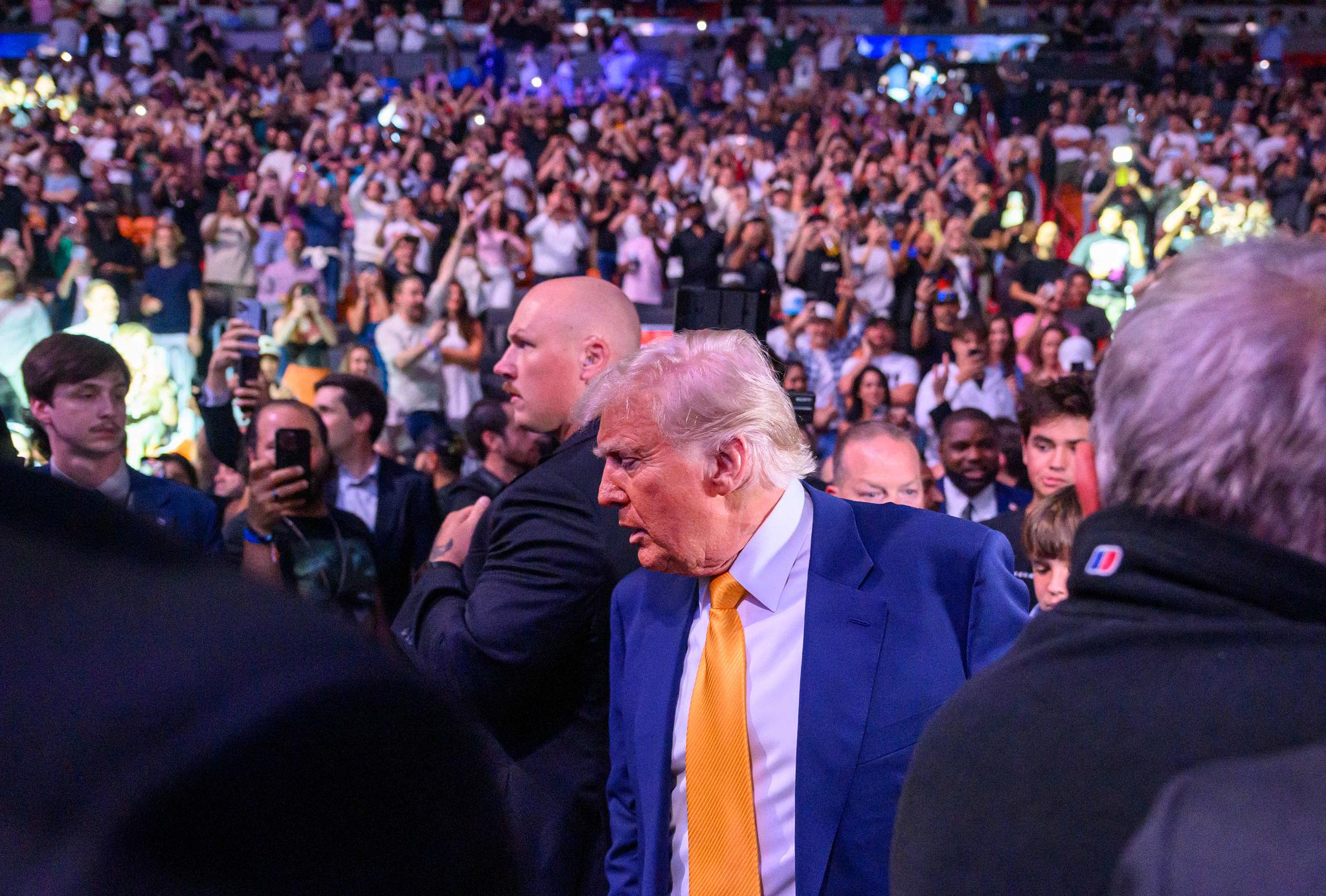
At UFC 327 in Miami, what was expected to be another high-profile night of mixed martial arts quickly turned into a cultural flashpoint. The event, held at the Kaseya Center, drew an eclectic mix of celebrities, athletes, and political figures.
Among them were celebrity chef Guy Fieri and controversial internet personality Andrew Tate—two figures who rarely intersect in public discourse, yet found themselves at the center of one of the most talked-about moments of the night.
Video clips circulating on social media showed Fieri greeting Tate with a handshake and casual conversation. What might have been a fleeting interaction at any other event quickly escalated into a viral moment, amplified by the personalities involved and the broader context surrounding them.
A Night Packed with High-Profile Encounters
The significance of the moment becomes clearer when viewed against the broader backdrop of UFC 327. The fight card, headlined by Jiří Procházka and Carlos Ulberg, already had considerable attention. However, the presence of major public figures added another layer of visibility.
Former U.S. President Donald Trump attended the event amid ongoing geopolitical tensions involving Iran. Meanwhile, podcast host Joe Rogan was seen greeting Trump, despite having recently criticized U.S. military actions.
Rogan had stated on his podcast:
“I’m confused. I can’t believe we went to this war… When we started bombing Iran, I was like, ‘This can’t be true.’”
Despite these criticisms, Rogan confirmed he would still participate in upcoming UFC-related events, including a proposed White House card, though he described it as “not a wise idea” and “a security nightmare.”
These overlapping interactions—political, cultural, and entertainment—transformed UFC 327 into more than a sporting event. It became a microcosm of modern celebrity influence.
The Backlash: Why the Moment Triggered Strong Reactions
The reaction to Fieri’s interaction with Tate was immediate and intense. Social media platforms, particularly X (formerly Twitter), were flooded with criticism from fans who expressed disappointment and concern.
The backlash largely stems from the controversies surrounding Andrew Tate. He is currently facing serious legal scrutiny, including investigations in the United Kingdom related to allegations of rape and abuse, as well as human trafficking charges in Romania involving both him and his brother. Tate has denied all allegations, and no convictions have been secured.
Beyond legal issues, Tate’s public persona—marked by widely criticized and often misogynistic statements—has made him a polarizing figure globally. His large online following amplifies both his influence and the scrutiny he faces.
For many observers, Fieri’s brief public association with Tate was interpreted as an implicit endorsement, regardless of intent. Comments ranged from disappointment to outright condemnation, with some fans questioning whether they would continue supporting Fieri’s television projects.
Notably, Fieri had not issued any public response at the time the reactions intensified.
Celebrity Optics in the Age of Viral Accountability
The incident highlights a broader phenomenon: the increasing scrutiny of celebrity interactions in the digital age. In previous decades, a brief handshake at a crowded event might have gone unnoticed. Today, however, every interaction can be recorded, shared, and dissected in real time.
For figures like Guy Fieri—known for his energetic, apolitical persona centered around food and entertainment—the stakes are particularly high. His brand, built through shows like Diners, Drive-Ins and Dives, relies heavily on public goodwill and relatability.
By contrast, Andrew Tate operates within a different ecosystem—one driven by controversy, online virality, and ideological debate. The intersection of these two worlds created a moment that resonated far beyond the walls of the arena.
UFC as a Cultural Crossroads
Events like UFC 327 increasingly function as more than sporting spectacles. They serve as convergence points for politics, entertainment, and internet culture.
The presence of figures like Donald Trump, Joe Rogan, and Andrew Tate reflects the UFC’s unique position at the intersection of multiple audiences. It attracts not only sports fans but also political figures, influencers, and celebrities from diverse industries.
This convergence amplifies the visibility of interactions that might otherwise remain peripheral. It also raises questions about the role of such platforms in shaping public discourse.
What This Means Going Forward
The fallout from the Fieri–Tate moment underscores several emerging dynamics:
- Reputation Sensitivity: Public figures are increasingly judged not only for their actions but also for their associations.
- Context Collapse: Different audiences interpret the same moment through vastly different lenses, leading to polarized reactions.
- Platform Amplification: Events like UFC serve as accelerators for viral narratives, particularly when high-profile individuals are involved.
For Guy Fieri, the long-term impact remains uncertain. While some backlash may fade, the incident illustrates how quickly a public image can be challenged in the current media environment.
For Andrew Tate, the moment reinforces his continued relevance in online discourse—whether viewed positively or negatively.
Conclusion: A Moment Larger Than It Appeared
What began as a brief interaction at a crowded sporting event evolved into a widely discussed cultural moment. The meeting between Guy Fieri and Andrew Tate at UFC 327 was not significant because of its duration, but because of what it represented.
It revealed how interconnected modern celebrity culture has become—and how quickly narratives can form when different worlds collide.
In an era defined by constant visibility, even the smallest gestures can carry disproportionate weight.


