
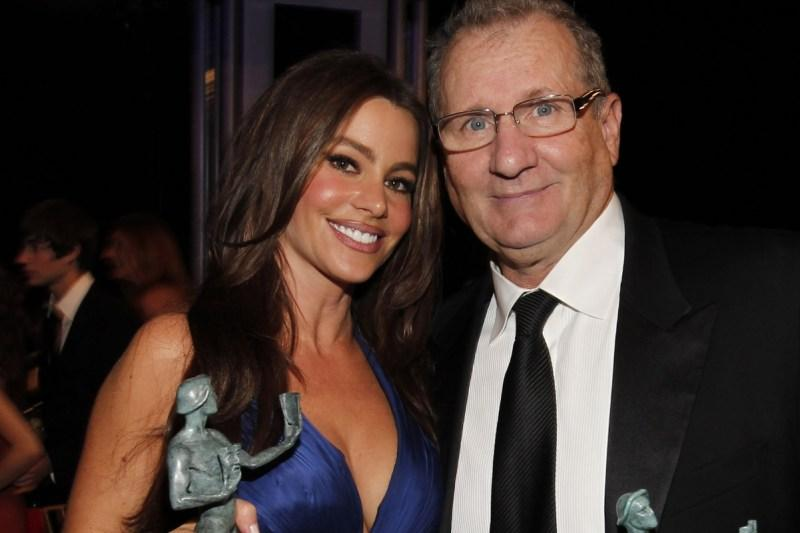
Ed O’Neill at 80: The Evolution of Television’s Most Enduring Sitcom Patriarch
At 80 years old, Ed O’Neill stands as one of television’s most enduring and quietly transformative figures. His career, now spanning more than four decades, is not defined by constant reinvention but by something rarer—precision, patience, and longevity. From redefining the sitcom father in the late 20th century to reshaping it again for modern audiences, O’Neill’s trajectory offers a clear case study in how television evolves—and how a single actor can shape that evolution across generations.
This is not simply a birthday milestone. It is a reflection point for a career that has influenced the structure, tone, and emotional depth of American sitcoms.

From Youngstown to Hollywood: The Unlikely Path
Born on April 12, 1946, in Youngstown, Ohio, O’Neill’s early ambitions were far removed from acting. In 1969, he signed with the Pittsburgh Steelers as an undrafted free agent under coach Chuck Noll. Competing alongside future defensive legends like Joe Greene and L. C. Greenwood, O’Neill was ultimately cut during training camp.
The pivot to acting was not immediate, but it proved decisive. His film debut came in the crime thriller Cruising, marking the start of a career that would soon find its defining platform in television.
The Al Bundy Era: Redefining the Sitcom Father
When Married… with Children premiered in 1987, it disrupted the prevailing image of the sitcom patriarch. O’Neill’s portrayal of Al Bundy—a cynical, frustrated, and deeply flawed working-class father—was a direct departure from the idealized television dads of earlier decades.
For ten seasons (1987–1997), O’Neill anchored the show as its central comedic force. The character’s sarcasm, bitterness, and raw honesty resonated with audiences in a way that traditional sitcom archetypes could not. Al Bundy was not aspirational; he was recognizable.
This shift was significant. It opened the door for more complex, imperfect characters in mainstream comedy, influencing the tone of sitcoms that followed.
Reinvention Through Restraint: The Jay Pritchett Transformation
After the conclusion of Married… with Children, O’Neill did something uncommon in Hollywood—he stepped back. For over a decade, he avoided the kind of roles that might have capitalized on nostalgia.
That decision culminated in his return as Jay Pritchett in Modern Family (2009–2020). The contrast between Al Bundy and Jay Pritchett is instructive.
Where Bundy was loud and openly cynical, Jay was restrained, emotionally guarded, and gradually evolving. As a wealthy patriarch navigating a blended, multicultural family, Jay represented a more nuanced iteration of the sitcom father—one shaped by generational tension, cultural shifts, and personal growth.
The series itself became a defining success, winning 22 Emmy Awards, including five for Outstanding Comedy Series, and a Golden Globe in 2011. O’Neill’s contribution to that success was central, earning him multiple nominations and four Screen Actors Guild Awards.
The Emotional Architecture of “Modern Family”
To understand O’Neill’s impact, it is necessary to examine the specific moments that defined his performance. Several episodes of Modern Family serve as benchmarks for his range:
- “Clean Out Your Junk Drawer” (Season 7, Episode 8)
A turning point in Jay’s character development, where he delivers a deeply emotional monologue about his father. The scene strips away the character’s defenses, revealing unresolved pain and vulnerability. - “Goodnight Gracie” (Season 4, Episode 24)
Balancing grief and humor, O’Neill portrays Jay coping with the death of his mother while attempting to fulfill her final wishes. - “The Kiss” (Season 2, Episode 2)
A subtle but significant moment in which Jay confronts his discomfort with affection, culminating in a tender gesture toward his son Mitchell. - “Legacy” (Season 11, Episode 11)
A reflective episode exploring themes of aging, memory, and generational continuity, highlighting O’Neill’s ability to convey depth through restraint. - “Connection Lost” (Season 6, Episode 16)
A comedic standout that showcases his timing in a digitally framed episode, emphasizing generational gaps in technology.
These episodes collectively demonstrate O’Neill’s ability to move between comedy and drama without disrupting narrative continuity—a skill that remains relatively rare in sitcom acting.
A Career Defined by Dual Peaks
Few actors achieve sustained success across multiple decades. Fewer still define two separate eras of television.
O’Neill’s career is notable for its dual peaks:
| Period | Role | Cultural Impact |
|---|---|---|
| 1987–1997 | Al Bundy (Married… with Children) | Redefined sitcom father archetype |
| 2009–2020 | Jay Pritchett (Modern Family) | Modernized family dynamics in comedy |
Between these two roles lies a broader filmography that includes titles such as Wayne’s World, Little Giants, The Bone Collector, Wreck-It Ralph, and Finding Dory, reflecting his versatility across genres and formats.
Industry Recognition and Peer Perspective
O’Neill’s career has been recognized through multiple awards and nominations, including:
- Four Screen Actors Guild Awards
- Three Primetime Emmy Award nominations
- Two Golden Globe nominations
Beyond formal recognition, his influence is evident in peer acknowledgment. As Jesse Tyler Ferguson, his Modern Family co-star, observed:
“He could say anything and it would get a laugh. He had this effortless humor that made everyone around him better.”
This statement captures a key aspect of O’Neill’s craft—his ability to elevate ensemble performances without dominating them.
Cultural Impact: From Archetype to Evolution
O’Neill’s significance extends beyond individual performances. His work illustrates how television narratives adapt to societal change.
- Al Bundy reflected a late-20th-century skepticism toward idealized family structures.
- Jay Pritchett embodied a 21st-century negotiation between tradition and progress, particularly in areas such as family diversity and generational attitudes.
This progression mirrors broader cultural shifts, positioning O’Neill as both participant and influence in the evolution of televised storytelling.
Personal Connections and Public Recognition
The enduring affection for O’Neill is evident in the responses from colleagues and fans. Sofía Vergara, who portrayed Gloria in Modern Family, publicly marked his 80th birthday with a message:
“Feliz cumpleaños to my favorite husband! (Happy birthday to my favorite husband!) I miss u Ed O’neil!!!!”
Such tributes underscore the strong interpersonal dynamics that contributed to the show’s success.
Longevity in an Industry of Reinvention
O’Neill’s career challenges common assumptions about longevity in entertainment. Rather than continuously reinventing his persona, he refined it—adapting core traits to fit evolving narratives.
At 80, his legacy is defined by:
- Consistency across decades
- Impact on two distinct eras of television
- Mastery of both comedic and dramatic performance
- Strategic career choices, including a deliberate hiatus
Conclusion: A Legacy Built on Precision and Patience
Ed O’Neill’s career is not characterized by constant visibility or rapid reinvention. Instead, it reflects a measured, deliberate approach to performance—one that prioritizes depth over frequency and impact over volume.
From Al Bundy’s cynical realism to Jay Pritchett’s understated emotional complexity, O’Neill has shaped how audiences understand the sitcom father. His work demonstrates that longevity in entertainment is not simply about staying relevant—it is about contributing meaningfully to the medium over time.
At 80, his influence remains embedded in the structure of modern television, ensuring that his legacy will extend well beyond his on-screen roles.


