
Thunder vs Suns: What the Final Score Really Tells Us About the Playoffs
A Lopsided Finale With Hidden Meaning
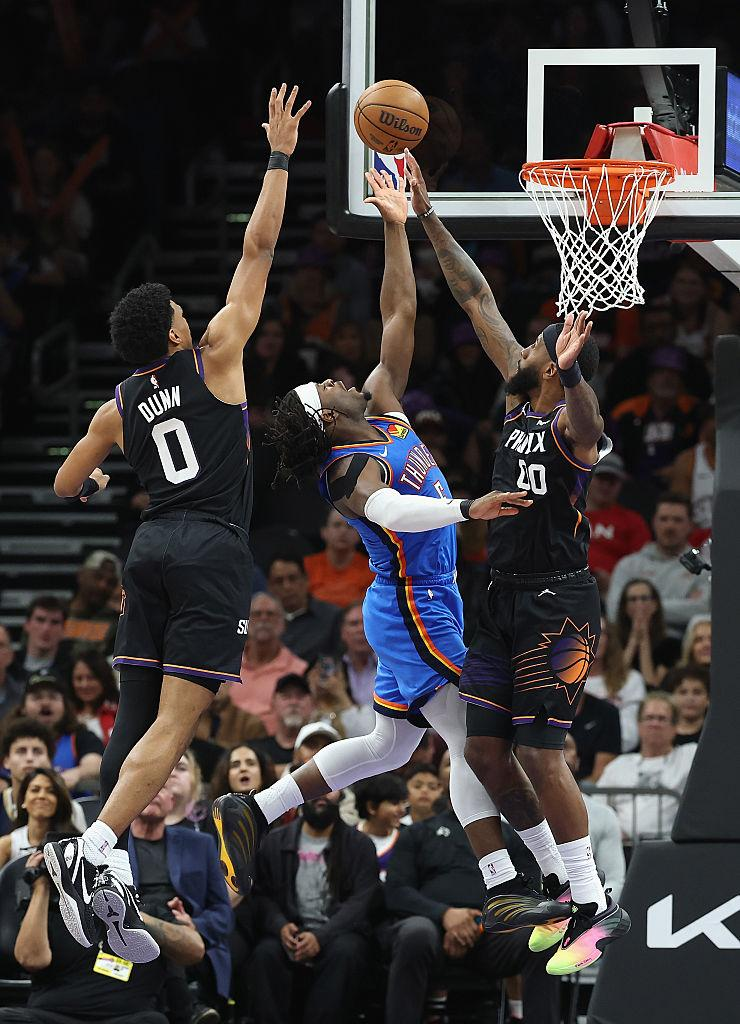
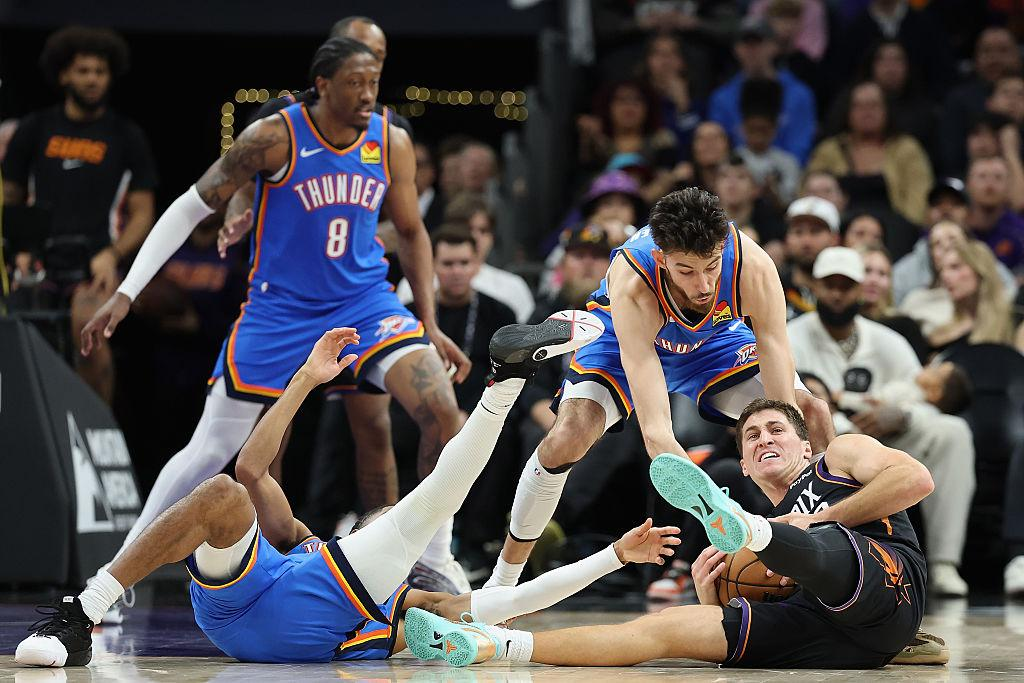
The regular-season finale between the Oklahoma City Thunder and the Phoenix Suns ended in a decisive 135–103 victory for Phoenix. On the surface, it looked like a routine blowout. In reality, it was a strategically managed game with limited competitive stakes but significant implications for player development, playoff positioning, and team priorities.
Both teams entered the matchup with their postseason paths already determined. Oklahoma City had secured the No. 1 seed in the Western Conference, while Phoenix was locked into the play-in bracket. As a result, the contest became less about winning and more about preparation.
Why This Game Was Never About the Result
The Thunder made a deliberate decision to rest nearly their entire core rotation. Key players, including major contributors, were unavailable due to injury management or rest protocols. The objective was clear: preserve health ahead of a deep playoff run.
Head coach Mark Daigneault summarized the approach:
“The last two games, the priority was the health of the higher minute guys that have logged a lot of the load throughout the season.”
This strategic rest created an opportunity for lesser-used players and two-way contract athletes to take center stage.
For Phoenix, the situation was similar. With their seed secured, they also relied heavily on bench players. However, unlike Oklahoma City, their second unit executed at a significantly higher level.
Phoenix’s Depth Dominates Early
The Suns effectively decided the game in the opening minutes. A 21–0 run established a 26–5 lead, setting the tone for the remainder of the night.
Leading the charge was Jamaree Bouyea, who delivered a standout performance:
- 27 points (career-high)
- 9 assists
- Controlled offensive tempo throughout
He was supported by Ryan Dunn, who added:
- 20 points
- 11 rebounds
- 5 assists
Phoenix’s offensive efficiency was notable:
- 55% field goal shooting
- 49% from three-point range
The Suns’ ball movement, spacing, and transition execution exposed Oklahoma City’s inexperienced lineup.
Thunder’s Young Core Shows Promise
Despite the heavy loss, the Thunder extracted value from the game—particularly in player development.
Payton Sandfort’s Breakthrough
Payton Sandfort delivered the most compelling storyline:
- 23 points (career-high)
- 5 three-pointers
- 28 minutes played
His performance marked his first double-digit scoring game and reflected steady improvement from his G League stint with the OKC Blue.
Sandfort’s post-game reflection captured the significance:
“I would have prayed for one NBA minute this year… it’s really special.”
Nikola Topic’s Continued Rise
Nikola Topic followed up a strong previous outing with:
- 18 points
- 14 assists (career-high)
- 4 rebounds
This marked his second consecutive game with double-digit assists, signaling rapid development after missing his rookie season due to injury and a serious health challenge.
His resilience drew praise from Daigneault:
“I couldn’t be more impressed with his resilience, mental toughness, maturity…”
Lu Dort and the 65-Game Benchmark
Another key subplot involved Luguentz Dort, who played exactly 20 minutes to meet the NBA’s 65-game eligibility requirement for postseason awards.
Dort finished with 6 points, but his contribution went beyond scoring. By meeting the threshold, he remains eligible for honors such as the All-Defensive Team—an award he earned previously.
This reflects how even limited minutes late in the season can carry significant implications.
Statistical Snapshot
Final Score: Suns 135, Thunder 103
Phoenix Leaders:
- Jamaree Bouyea: 27 pts, 9 ast
- Ryan Dunn: 20 pts, 11 reb
- Koby Brea: 20 pts
Oklahoma City Leaders:
- Branden Carlson: 26 pts
- Payton Sandfort: 23 pts
- Nikola Topic: 18 pts, 14 ast
Western Conference Implications
Although the game itself did not affect standings, the broader playoff picture became clearer:
- Thunder finished 64–18, securing the No. 1 seed
- Suns finished 45–37, entering the play-in tournament
- Phoenix will host a play-in game to determine final seeding
- Oklahoma City will face the No. 8 seed in the first round
Importantly, Oklahoma City avoided a potential semifinal clash with the Denver Nuggets, who secured the No. 3 seed elsewhere.
Tactical Takeaways
1. Depth Matters Under Playoff Conditions
Phoenix demonstrated that a well-structured bench unit can maintain offensive efficiency even without star players. This could prove critical in play-in scenarios.
2. Thunder Prioritize Long-Term Success
Oklahoma City’s decision to sacrifice short-term results for player health reflects a championship-oriented strategy.
3. Emerging Talent Is a Strategic Asset
Performances from Sandfort and Topic indicate that OKC’s development pipeline remains strong—a key factor for sustained competitiveness.
What Comes Next
For the Suns, attention shifts immediately to the play-in tournament. Their ability to replicate this level of bench production could determine whether they secure the No. 7 seed or face elimination pressure.
For the Thunder, the focus is recovery and preparation. With the league’s best record and a healthy roster, they enter the playoffs as a primary title contender.
Conclusion
The Thunder vs Suns finale was not a traditional competitive showdown. Instead, it functioned as a controlled environment for roster management, player evaluation, and playoff positioning.
Phoenix leaves with momentum from a dominant performance, while Oklahoma City exits with something arguably more valuable—rest, clarity, and confidence in its emerging talent.
In the context of the postseason, those factors may prove far more decisive than the final score.


