Two Oceans Marathon 2026: A Race of Scale, Scenery, and Redemption
A Weekend That Defines Cape Town’s Sporting Calendar
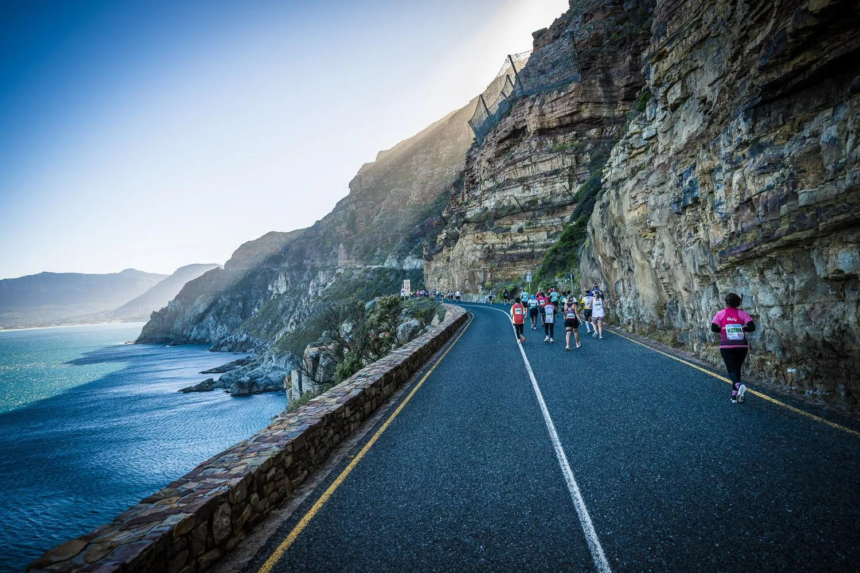
As April unfolds in Cape Town, one event consistently transforms the city into a global stage for endurance sport: the Two Oceans Marathon. Often described as “the world’s most beautiful marathon,” the race is more than a test of physical resilience—it is a cultural institution deeply embedded in South Africa’s sporting identity.
- A Weekend That Defines Cape Town’s Sporting Calendar
- A Race Structured Around Endurance and Precision
- Elite Competition: Records, Rivalries, and Expectations
- Behind the Scenes: Logistics at Urban Scale
- A Race with Memory and Meaning
- Recovery and Reform: A New Board Takes Charge
- The Runner’s Perspective: Preparation Meets Reality
- Economic and Cultural Impact
- Looking Ahead: Sustaining Legacy in a Competitive Era
- Conclusion: More Than a Race
The 2026 Totalsports Two Oceans Marathon returns this weekend with renewed focus and heightened expectations. More than 30,000 runners are set to participate, taking on either the 56-kilometre Ultra Marathon on Saturday or the 21.1-kilometre Half Marathon on Sunday . The scale alone places it among the most significant mass-participation events on the continent.
Yet beyond the numbers lies a more layered narrative—one shaped by competition, logistics, legacy, and a deliberate effort to restore trust after recent challenges.


A Race Structured Around Endurance and Precision
The Two Oceans Marathon is not a single race but a dual-format endurance event designed to accommodate both elite athletes and committed amateurs.
Ultra Marathon (56 km)
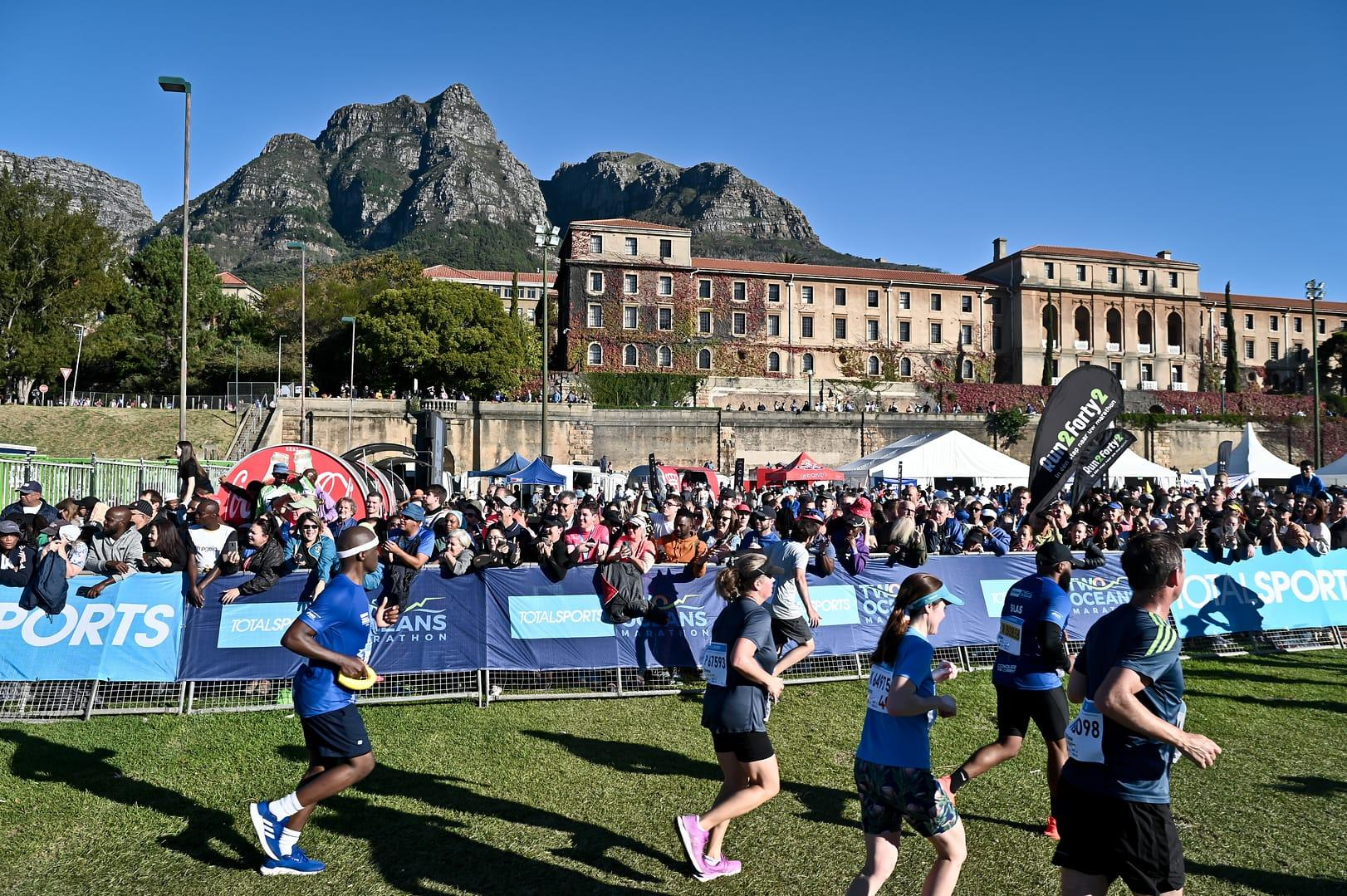
The flagship race unfolds over a demanding 56-kilometre course that winds through Cape Town’s southern suburbs and coastal routes. Starting in Newlands and finishing at the University of Cape Town’s rugby fields, the course is renowned for its scenic contrasts—ocean vistas, mountain passes, and densely packed spectator zones.


The challenge is not merely distance. Runners must complete the race within a strict seven-hour cutoff, having already demonstrated capability by qualifying through a sub-five-hour marathon performance .
Half Marathon (21.1 km)
Held the following day, the half marathon offers a shorter but still demanding route. It shares the same start and finish points, ensuring consistency in race logistics while broadening participation.
Together, these races create a weekend-long sporting festival that reshapes the city’s rhythm.
Elite Competition: Records, Rivalries, and Expectations
At the elite level, the 2026 edition carries a strong competitive narrative.


Six-time champion Gerda Steyn enters the race aiming for a seventh consecutive victory, a feat that would further cement her dominance in ultra-distance running. Her approach reflects calculated confidence:
“I know I have done it before and so I believe that I can do it again… Every athlete is focused on winning this race, so I have to give 110%.”
Her challengers include seasoned competitors and emerging talent, ensuring that the race remains competitive rather than ceremonial.
On the men’s side, defending champion Joseph Khoarahlane Seutloali faces pressure from a deep field, including past winners and record contenders. Discussions ahead of the race suggest that a sub-3:09 finish—a benchmark last achieved in 2019—could be within reach .
The elite field underscores the race’s global relevance, balancing tradition with high-performance athletics.
Behind the Scenes: Logistics at Urban Scale
Hosting an event of this magnitude requires extensive coordination across transport, infrastructure, and public safety systems.
Road Closures and Route Management
Large sections of Cape Town’s road network are temporarily closed to accommodate the race. Key arteries—from Main Road in Newlands to Chapman’s Peak and Hout Bay—are affected at staggered intervals throughout the weekend .
These closures, while disruptive to regular traffic, are essential to ensuring runner safety and maintaining race integrity.
Public Transport Integration
To mitigate congestion, PRASA Western Cape has implemented additional train services across major lines. These include:
- Expanded peak-hour services on Saturday
- Targeted Sunday schedules for spectators and commuters
- Post-race trains to manage crowd dispersal
Park-and-ride facilities with 24-hour security have also been introduced at key stations, encouraging a shift away from private vehicle use .
This integrated approach reflects a broader trend in major events—leveraging public transport to sustain urban mobility under pressure.
A Race with Memory and Meaning
The Two Oceans Marathon is not defined solely by its annual edition. Its significance is cumulative, shaped by decades of participation and shared experience.
Veteran runner Bruce Fordyce, reflecting on more than 40 years of involvement, captured the emotional dimension of the race:
- It has been a constant feature of April since the early 1980s
- It offers both competitive challenge and communal enjoyment
- It balances scenic beauty with physical brutality
The course itself embodies this duality. Early sections are described as “gentle, seductive, and polite,” while the latter stages become “brutal, harsh and punishing” .
This contrast is central to the race’s identity—an experience that is as psychological as it is physical.
Recovery and Reform: A New Board Takes Charge
The 2026 edition also carries institutional significance.
Following disruptions in the previous year, a new board has been appointed to improve race standards and restore operational confidence .
This move signals a recognition that large-scale sporting events must continuously evolve. Expectations from participants, sponsors, and the public now extend beyond the race itself to include:
- Efficient logistics
- Transparent governance
- Consistent participant experience
The success of this year’s event will likely be measured not only by race results but by its execution.
The Runner’s Perspective: Preparation Meets Reality
For many participants, the Two Oceans Marathon represents a personal milestone rather than a competitive objective.
SA FM producer Marumo Kekana, preparing for his first marathon, illustrates the level of commitment required:
- Training volumes reaching nearly 200 km per week
- Consistent preparation over multiple months
- A primary goal of simply finishing within the time limit
“Being the first one, I would just like to finish… organisation-wise tiptop.”
His experience reflects a broader truth: while elite athletes chase records, the majority of runners pursue completion, resilience, and personal achievement.
Economic and Cultural Impact
The Two Oceans Marathon extends far beyond athletics.
Economic Influence
- Increased tourism and hospitality demand
- Temporary employment opportunities
- Commercial exposure for sponsors and local businesses
Cultural Significance
- Reinforces Cape Town’s identity as a global sports destination
- Encourages mass participation in fitness and wellness
- Creates shared public experiences across diverse communities
The event’s scale ensures that its impact is both immediate and long-term.
Looking Ahead: Sustaining Legacy in a Competitive Era
As global marathon events become increasingly competitive—both in participation and prestige—the Two Oceans Marathon faces a strategic challenge: maintaining its unique identity while adapting to modern expectations.
Key factors shaping its future include:
- Continued investment in race infrastructure
- Expansion of international participation
- Integration of technology for race management and tracking
- Strengthening governance to avoid past disruptions
If successfully managed, the event is positioned to retain its status as one of the world’s most distinctive endurance races.
Conclusion: More Than a Race
The 2026 Two Oceans Marathon represents a convergence of sport, community, and legacy. It is a race defined not only by distance but by its ability to bring together elite competition, personal ambition, and urban coordination at scale.
From the elite runners chasing history to first-time participants aiming simply to finish, the event captures the full spectrum of endurance sport. At the same time, its operational evolution signals a commitment to maintaining relevance in an increasingly demanding global landscape.
In Cape Town this weekend, the roads, the crowds, and the coastline will once again align for a race that continues to define what a marathon can be.