

Hakeem Jeffries and the Battle Over War Powers: A Defining Political Moment
Introduction: Leadership Under Pressure
At a moment of escalating geopolitical tension and domestic political division, Hakeem Jeffries has emerged as a central figure in shaping the Democratic response to U.S. military action in Iran. As House Minority Leader, Jeffries is not merely reacting to events—he is actively attempting to redefine the balance of power between Congress and the presidency.
His recent calls to reconvene Congress and vote on a War Powers Resolution have positioned him at the forefront of a broader constitutional and political debate: who ultimately decides when the United States goes to war?
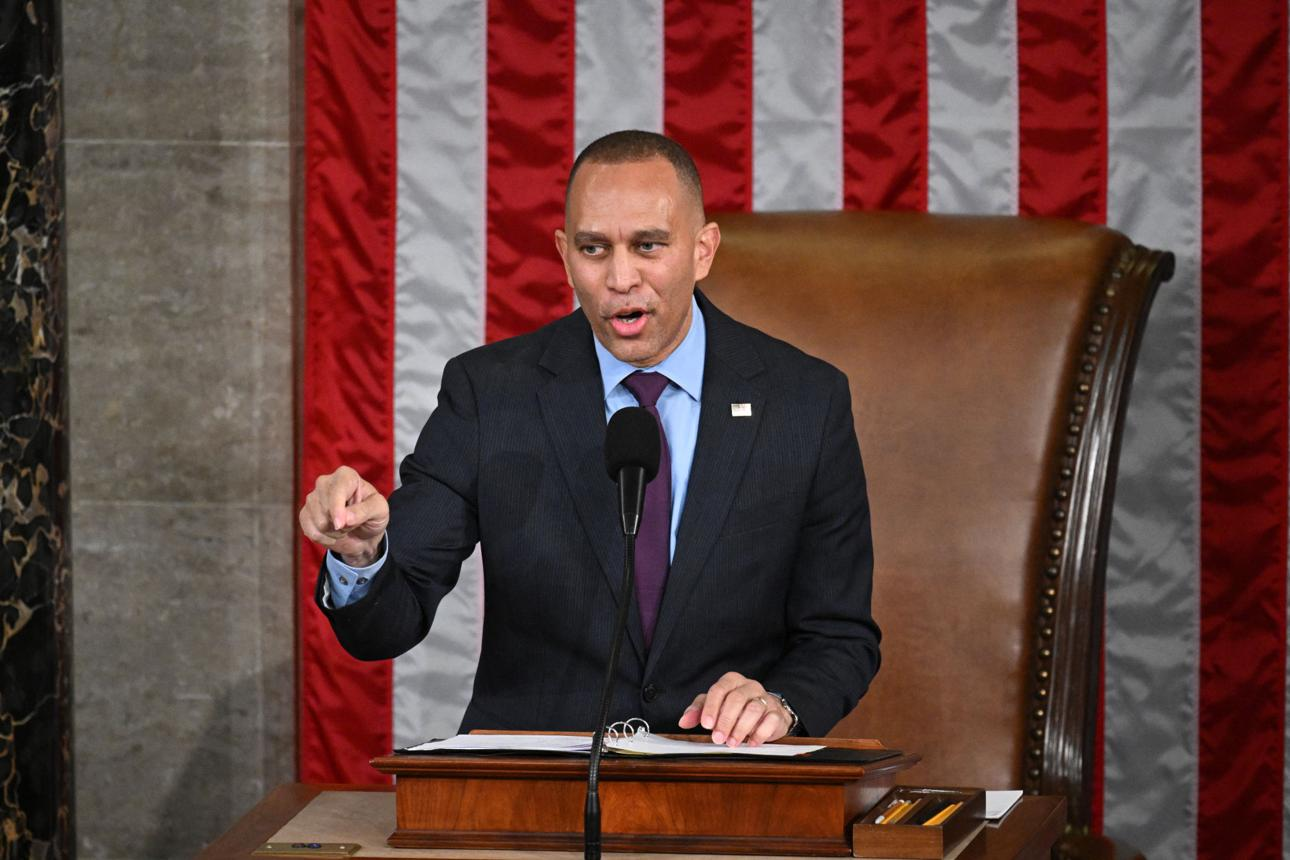
A Strategic Push to Reassert Congressional Authority
Jeffries’ latest intervention came amid a fragile ceasefire between the United States and Iran. While the pause in hostilities offered temporary relief, he framed it as insufficient and potentially misleading.
In a direct and widely circulated statement, Jeffries emphasized:
“We need a permanent end to Donald Trump’s reckless war of choice”
This statement reflects a broader Democratic argument that the military action was undertaken without proper congressional authorization, raising serious constitutional concerns.
The proposed War Powers Resolution seeks to:
- End ongoing U.S. military involvement in Iran
- Prevent further unilateral military action by the president
- Reassert Congress’s constitutional authority over war decisions
However, despite growing support within Democratic ranks, the effort has encountered immediate resistance.
Congressional Gridlock and Political Resistance
Attempts to advance the resolution have already been blocked by Republican lawmakers. During a recent pro forma session, efforts to bring the measure forward were effectively shut down before debate could begin.
This reflects a persistent reality in Washington:
- Republicans currently control the House
- Any war powers limitation faces procedural and political hurdles
- Even if passed, a presidential veto remains a possibility
Jeffries has responded by increasing pressure on GOP leadership, urging them to reconvene Congress immediately rather than wait until after recess.
His argument is direct: delaying action risks allowing the conflict to escalate further without oversight.
CAIR’s Endorsement and Civil Society Pressure
The intervention by the Council on American-Islamic Relations (CAIR) adds another layer to the situation, highlighting the role of advocacy groups in shaping policy discourse.
CAIR publicly endorsed Jeffries’ position, with Government Affairs Director Robert S. McCaw stating:
“This unauthorized war is reckless, dangerous, and spiraling toward a broader crisis that will cost innocent lives and destabilize an entire region.”
The organization warned that the ceasefire is likely temporary, describing it as:
- A “fragile pause” rather than lasting peace
- A prelude to further escalation if unchecked
- A humanitarian and geopolitical risk
CAIR had already taken proactive steps, including:
- Urging Democratic leadership to act before congressional recess
- Launching an Action Alert encouraging public pressure on lawmakers
This alignment between political leadership and civil society underscores the growing urgency surrounding the issue.
Rising Public Pressure and Political Mobilization
Beyond Washington, the issue has triggered a notable surge in public engagement.
Congressional offices have reportedly been inundated with calls and messages from constituents concerned about:
- The risk of a prolonged war
- The legality of military action without congressional approval
- Broader implications for global stability
One lawmaker described an unprecedented volume of communication, with hundreds of calls received within a single day. This grassroots pressure is influencing Democratic strategy, reinforcing calls for immediate legislative action.
At the same time, some Democrats have gone further—raising discussions about impeachment or invoking the 25th Amendment. However, Jeffries has so far focused on legislative solutions rather than constitutional removal mechanisms.
A Broader Democratic Strategy Emerges
Jeffries’ approach reflects a calculated strategy with multiple objectives:
1. Contain Executive Power
By pushing for a War Powers Resolution, Democrats aim to limit unilateral military action by the president.
2. Shift the Political Narrative
Rather than centering debates on impeachment, the focus is on constitutional authority and accountability.
3. Build Bipartisan Pressure
Some Republican lawmakers have shown openness to reconsidering their stance, suggesting potential cracks in party unity.
4. Maintain Public Engagement
Sustained communication from constituents is being leveraged to justify urgent congressional action.
This multi-layered approach suggests that Jeffries is not only responding to current events but also shaping longer-term institutional dynamics.
The International Dimension: Ceasefire and Uncertainty
The geopolitical backdrop remains volatile.
The temporary ceasefire between the United States and Iran has:
- Reduced immediate military escalation
- Opened space for diplomatic engagement
- Introduced uncertainty about long-term stability
Planned diplomatic talks involving U.S. officials and international mediators may influence the next phase of the conflict. However, the absence of confirmed Iranian participation raises questions about the viability of negotiations.
Jeffries’ position is rooted in skepticism toward the ceasefire’s durability, reinforcing his call for legislative action rather than reliance on executive decisions.
Implications for U.S. Governance and Global Stability
The current situation carries significant implications across multiple domains:
Constitutional Governance
- Reinforces the ongoing debate over war powers
- Tests the limits of executive authority
- Highlights Congress’s role in foreign policy
Domestic Politics
- Deepens partisan divisions
- Elevates Jeffries as a leading Democratic voice
- Shapes the political narrative ahead of future elections
International Relations
- Signals uncertainty to global allies and adversaries
- Impacts regional stability in the Middle East
- Influences diplomatic negotiations and alliances
What Comes Next?
Several key developments are likely in the near term:
- Renewed votes in Congress: Democrats are expected to push for another vote on war powers restrictions
- Potential bipartisan shifts: Some Republicans may reconsider their position
- Senate action: Parallel efforts are underway to introduce similar measures
- Public pressure: Continued engagement from voters could influence legislative outcomes
The situation remains fluid, with outcomes dependent on both political negotiations and developments on the ground.
Conclusion: A Defining Test of Leadership
Hakeem Jeffries’ response to the Iran conflict represents more than a policy disagreement—it is a test of leadership in a moment of crisis.
By advocating for congressional action, he is attempting to:
- Reassert constitutional norms
- Prevent further escalation of conflict
- Align political strategy with public concern
Whether his efforts succeed will depend on the interplay between political will, institutional constraints, and international developments. What is clear, however, is that Jeffries has positioned himself at the center of one of the most consequential debates in contemporary U.S. politics.


