Kevin Durant Leads Rockets’ Statement Win in Emotional Phoenix Return
When Kevin Durant stepped onto the court in Phoenix on April 7, 2026, the atmosphere was charged with expectation, tension, and unresolved history. It was his first game back since the offseason trade that sent him from the Phoenix Suns to the Houston Rockets—a move that reshaped both franchises.
The reception reflected that complexity. Durant was greeted with a mix of boos and cheers, a familiar soundtrack for a superstar whose career has often intersected with controversy and high-stakes decisions. But once the game began, sentiment quickly gave way to performance.
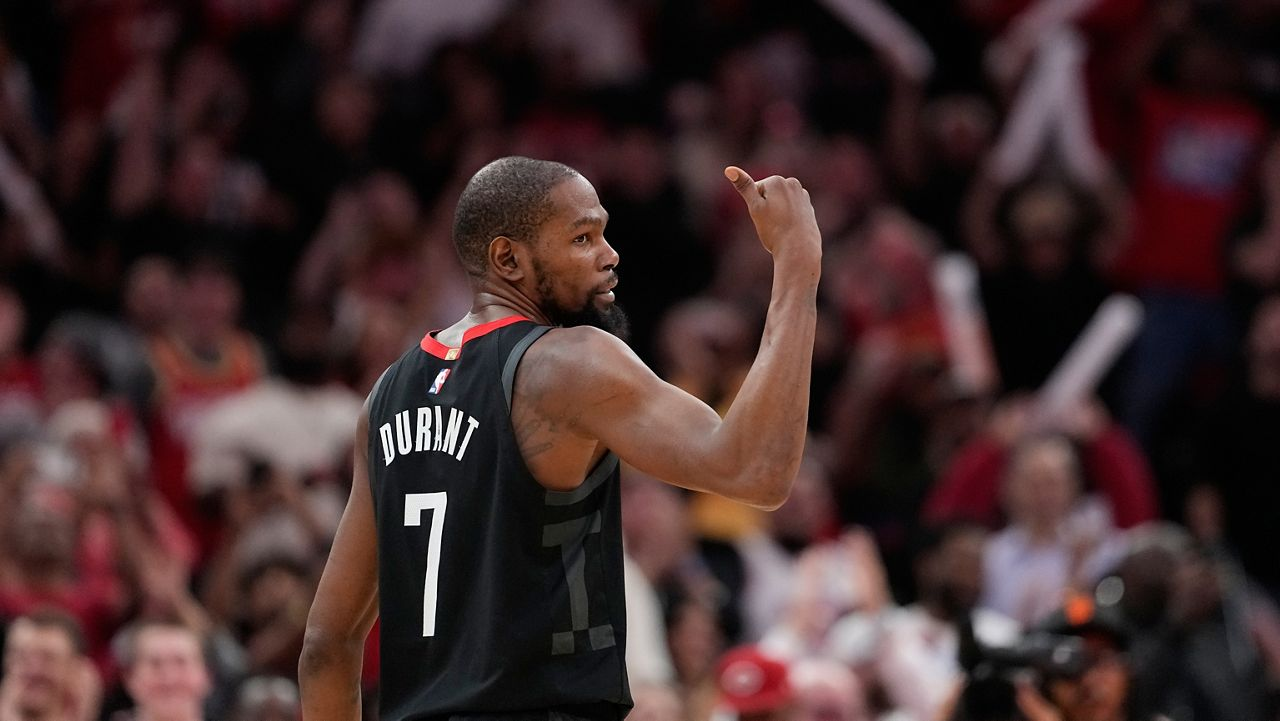
Durant delivered exactly what Houston needed: composure, leadership, and scoring precision.
From Cold Start to Commanding Finish
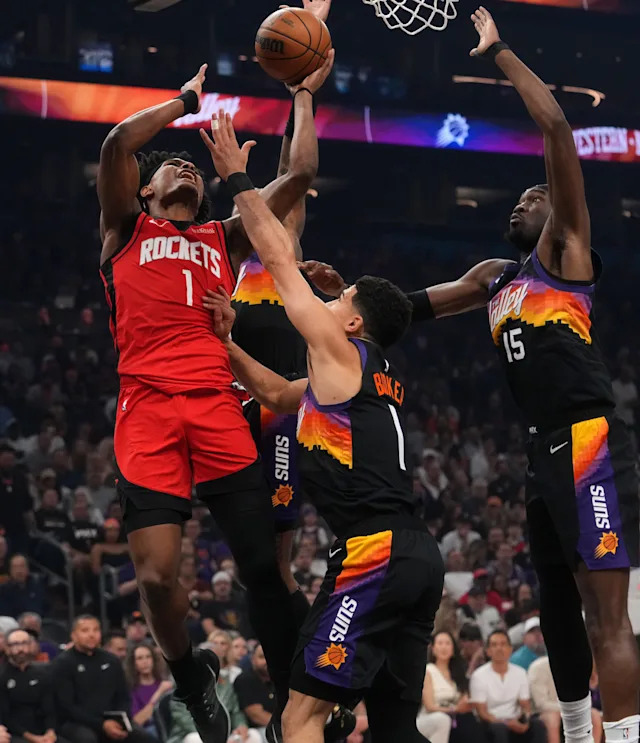
The game began poorly for Durant. He missed his first five shots, and Phoenix surged ahead with a dominant opening, building a 21-point lead in the first quarter. The Suns looked in control, fueled by early scoring from Devin Booker and strong crowd energy.
But the narrative shifted gradually—and then decisively.
Durant found his rhythm before halftime, scoring 13 points after his slow start and helping Houston close the gap to just three points by the break. From there, the contest evolved into a tactical battle before Houston seized control in the fourth quarter.
The Rockets opened the final period with an 8–0 run and never looked back.
Durant finished with:
- 24 points
- 5-of-9 from three-point range
- Key late-game shot-making, including a decisive three-pointer that pushed the lead to 111–96
His performance wasn’t just statistical—it was structural. He stabilized the offense, dictated tempo, and responded every time Phoenix threatened to regain momentum.
The Anatomy of a Comeback
Houston’s 119–105 victory was not a one-man show, even with Durant at the center. The comeback was built on systemic advantages that became overwhelming as the game progressed.
Key Factors Behind the Rockets’ Win
- Rebounding dominance: Houston outrebounded Phoenix 64–41, including 24 offensive boards
- Second-chance scoring: 37 points generated from offensive rebounds
- Turnover conversion: Forced 19 turnovers, turning them into 25 points
- Balanced scoring: Multiple players in double figures, including:
- Amen Thompson (22 points, 11 rebounds)
- Jabari Smith Jr. (20 points)
The physicality stood out. Even without key interior presence, Houston imposed itself through effort, positioning, and relentless pursuit of loose balls.
A Psychological Edge: Durant’s Influence
Beyond the box score, Durant’s impact was psychological.
Midway through the second quarter, a heated exchange with Dillon Brooks appeared to ignite his intensity. Moments later, Durant responded with a composed scoring sequence—an illustration of a pattern seen throughout his career: adversity sharpens his focus.
After the game, Durant dismissed the idea that external factors drive him:
“I don’t need him or anybody to give me extra motivation to play.”
This mentality translated directly to Houston’s younger roster. Players fed off his calm under pressure, particularly during critical stretches where decision-making often determines outcomes.
Suns Falter Despite Booker’s Brilliance
For Phoenix, the loss carried significant implications.
Despite a 31-point performance from Devin Booker, the Suns could not sustain their early dominance. Their weaknesses became increasingly exposed:
- Poor three-point shooting (22.6%)
- High turnover count (19)
- Defensive lapses on rebounds
The defeat effectively eliminated Phoenix from contention for a top-six playoff seed, pushing them toward the play-in tournament.
From a broader perspective, the game highlighted structural concerns in roster construction—particularly size and consistency over four quarters.
Rockets’ Momentum and Playoff Implications
The victory extended Houston’s winning streak to seven games and pushed them into a tie for the No. 4 seed in the Western Conference. This is no longer a developing team—they are entering the postseason conversation with credibility.
Several elements define this transformation:
- Veteran anchor: Durant provides late-game reliability
- Emerging talent: Players like Thompson are evolving into high-impact contributors
- Identity: Physical, resilient, and increasingly composed under pressure
Head coach Ime Udoka emphasized the team’s growth:
“It shows we’ve got that will and that grit to get back in it.”
That resilience was evident in Phoenix, where Houston overturned a game that appeared lost after the first quarter.
Durant’s Legacy in Motion
At 37, Kevin Durant remains one of the most efficient and adaptable scorers in basketball. A 16-time All-Star, his career has been defined by elite shot-making, versatility, and the ability to elevate teams in high-pressure moments.
His tenure in Phoenix—spanning 2½ seasons—ended without advancing past the second round of the playoffs. Now in Houston, the narrative is shifting again.
This latest performance suggests something significant: Durant is not merely contributing—he is redefining the competitive ceiling of a rising team.
What Comes Next
- Houston Rockets: Hosting the Philadelphia 76ers next, aiming to solidify playoff positioning
- Phoenix Suns: Facing the Dallas Mavericks, with play-in seeding at stake
For Houston, the trajectory is upward. For Phoenix, uncertainty remains.
Conclusion: A Statement Beyond the Scoreline
Kevin Durant’s return to Phoenix was more than a routine regular-season game. It was a convergence of narrative, performance, and postseason implications.
He entered to mixed reactions. He left having delivered a controlled, decisive performance that reinforced his enduring value.
For the Rockets, it signaled readiness.
For the rest of the league, it served as a warning.