
Ian Cameron and the Debate Over Military Deployment in Cape Town
A Critical Moment in South Africa’s Fight Against Gang Violence
In recent weeks, the spotlight has turned sharply toward Ian Cameron, a key figure in South Africa’s parliamentary oversight of policing. His assessment of the government’s strategy to combat gang violence in the Western Cape has ignited renewed debate about the effectiveness of military involvement in civilian crime prevention.
- A Critical Moment in South Africa’s Fight Against Gang Violence
- What Prompted the Deployment?
- Operation Prosper: Expectations vs Reality
- Cameron’s Core Argument: Strategy Over Scale
- The Role of Local Law Enforcement
- Broader Implications for South Africa’s Security Strategy
- What Happens Next?
- Conclusion: A Test Case for Crime Policy
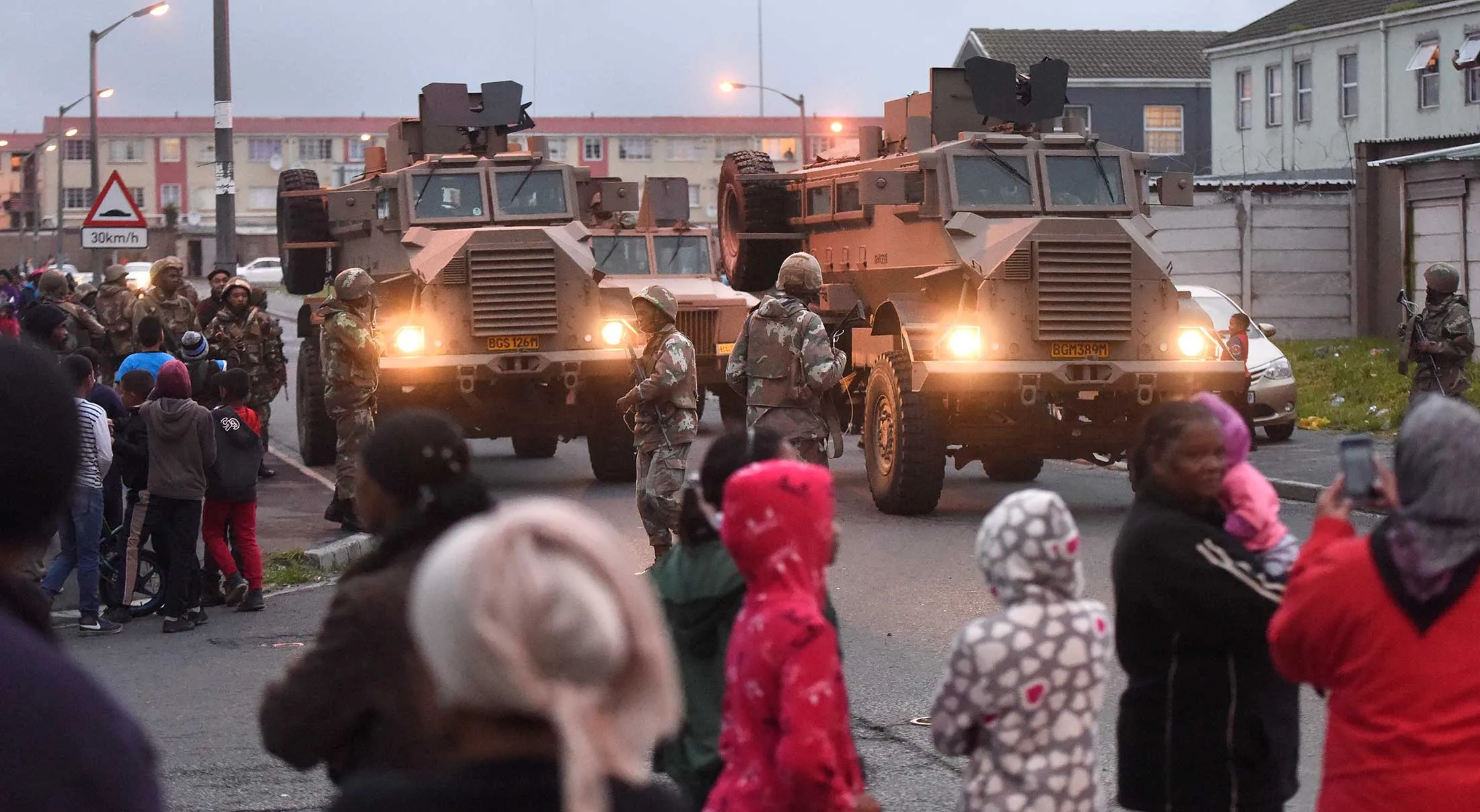
At the center of the discussion is Operation Prosper, a joint initiative involving the South African National Defence Force (SANDF) and the South African Police Service (SAPS), deployed to curb escalating violence in Cape Town’s most affected communities.
What Prompted the Deployment?
The Western Cape, particularly areas within the Cape Flats, has long struggled with entrenched gang activity. Communities such as Mitchells Plain, Manenberg, Lotus River, Delft, Elsies River, and Bishop Lavis frequently experience cycles of violent crime, often linked to organized gangs and illegal firearms.


Over the Easter long weekend alone, officials recorded 22 shootings across these areas, underscoring the severity of the crisis.
This surge in violence triggered a national response, leading to the deployment of SANDF troops to support SAPS in restoring order.


Operation Prosper: Expectations vs Reality
Operation Prosper was introduced with the expectation that a coordinated military-police effort would deliver rapid and visible results. However, early outcomes have raised concerns.
According to Cameron, the operation has been “haphazard so far,” with limited measurable impact. Since deployment began, authorities reported only two arrests in Elsies River, both linked to possession of illegal firearms and ammunition.
This discrepancy between expectations and results has fueled criticism, particularly from oversight bodies in Parliament.
The Numbers Controversy
Another issue highlighted by Cameron relates to inconsistencies in troop deployment figures.


- Parliament was initially informed that more than 800 soldiers would be deployed.
- This figure was later revised to just over 100.
- On the ground, approximately 200 soldiers were observed in Mitchells Plain.
These shifting numbers have raised questions about planning, coordination, and transparency in the operation’s execution.
Cameron’s Core Argument: Strategy Over Scale
Despite concerns about troop numbers, Cameron’s critique goes deeper than simple resource allocation. His central argument is that effectiveness depends on strategy, not scale.
He emphasized that:
“If an operation is intelligence-led and prosecution-driven, it shouldn’t be a problem. In fact, with quite a small team of police members and soldiers, you would be able to make a significant impact.”
This perspective challenges a common assumption in crime control—that more personnel automatically translates to better outcomes. Instead, Cameron points to the need for:
- High-quality intelligence gathering
- Coordinated investigative work
- Effective prosecution pipelines
Without these elements, even large-scale deployments risk producing limited results.
The Role of Local Law Enforcement
Another key dimension of Cameron’s critique is the underutilization of local law enforcement structures.
He argued that greater collaboration with:
- Metro police
- Local law enforcement agencies
- Community-based policing structures
could significantly enhance the effectiveness of the operation.
This reflects a broader principle in policing: local knowledge and community integration often outperform centralized, top-down interventions in complex urban environments.
Broader Implications for South Africa’s Security Strategy
The debate surrounding Ian Cameron’s comments extends beyond the Western Cape. It raises fundamental questions about how South Africa approaches violent crime at a national level.
1. Is Military Deployment a Sustainable Solution?
While the use of the military can provide short-term stabilization, it is rarely considered a long-term solution to systemic crime issues. Cameron’s remarks align with concerns that:
- Military interventions may lack investigative capacity
- They are not designed for sustained law enforcement roles
- Their presence can sometimes displace rather than eliminate criminal activity
2. Intelligence as the Missing Link
The repeated emphasis on intelligence-led operations suggests a gap in South Africa’s current policing framework. Effective crime reduction requires:
- Data-driven targeting of criminal networks
- Inter-agency intelligence sharing
- Disruption of supply chains for illegal weapons
Without these, operations risk being reactive rather than proactive.
3. Community Trust and Engagement
In areas heavily affected by gang violence, trust between communities and law enforcement is often fragile. Heavy military presence may:
- Improve short-term safety perceptions
- But also risk alienating residents if not properly managed
Cameron’s call for greater involvement of local enforcement hints at the importance of community-based approaches.
What Happens Next?
The future of Operation Prosper—and similar interventions—will likely depend on how policymakers respond to these early critiques.
Key areas to watch include:
- Whether intelligence capabilities are strengthened
- Adjustments to coordination between SAPS, SANDF, and local agencies
- Measurable outcomes in terms of arrests, prosecutions, and crime reduction
If Cameron’s concerns are addressed, the operation could evolve into a more targeted and effective model. If not, it risks becoming another example of high-profile intervention with limited long-term impact.
Conclusion: A Test Case for Crime Policy
Ian Cameron’s assessment of the SANDF deployment is more than a critique of a single operation—it is a reflection of broader structural challenges in South Africa’s fight against violent crime.
The situation in the Western Cape illustrates a critical tension:
- Visibility vs effectiveness
- Force vs intelligence
- Short-term action vs long-term strategy
As the country continues to grapple with gang violence, the outcome of Operation Prosper may serve as a defining case study for future security policy.