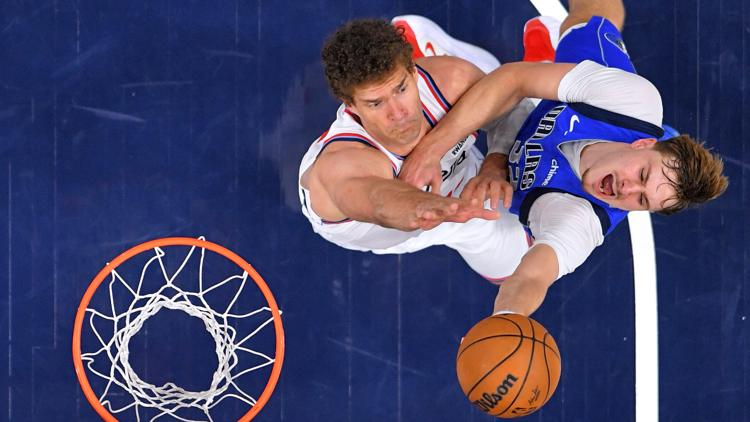
Clippers vs Dallas Last Game: Kawhi Leonard Takes Control in Momentum-Shifting Win
A Game of Runs Ends in Clippers Control
The most recent meeting between the Dallas Mavericks and the LA Clippers delivered a classic NBA narrative—fast starts, dramatic swings, and a decisive closing stretch led by a superstar.
- A Game of Runs Ends in Clippers Control
- First Quarter Explosion: Clippers Set the Tone Early
- Mavericks Fight Back: Momentum Swings in the Second Quarter
- Third Quarter Drama: Mavericks Briefly Take Control
- Fourth Quarter Execution: Clippers Close with Authority
- Statistical Snapshot: Efficiency vs Effort
- Kawhi Leonard’s Milestone Consistency
- Season Context: Clippers Gain Edge in Series
- What Comes Next for Both Teams
- Conclusion: A Game Defined by Control and Recovery
On April 7, 2026, at the Intuit Dome in Inglewood, California, the Clippers secured a 116–103 victory over the Mavericks. The final score reflects control, but the path to that result was far from straightforward.
At the center of the outcome was Kawhi Leonard, who produced a commanding performance, scoring 34 points while knocking down six three-pointers. His influence extended beyond scoring—he dictated tempo, stabilized the Clippers during critical stretches, and ultimately closed the game with authority.
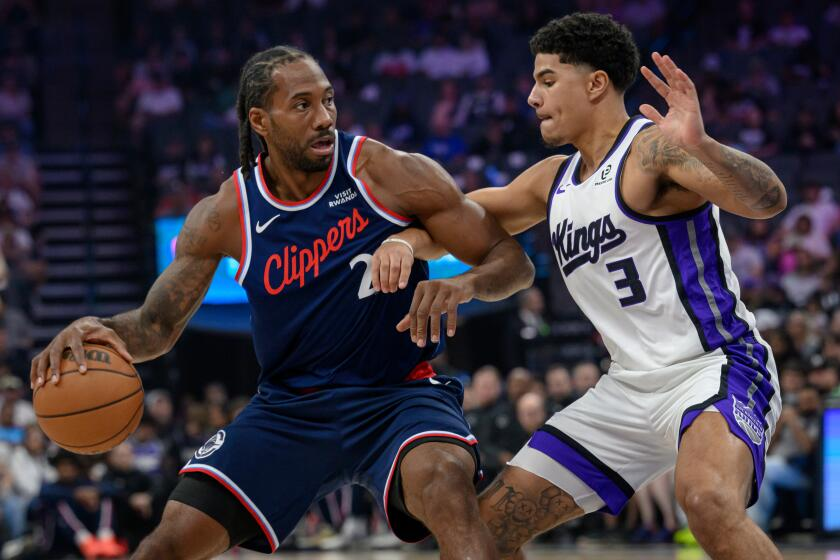


First Quarter Explosion: Clippers Set the Tone Early
The game opened with a striking imbalance. The Clippers surged out of the gate, scoring 17 consecutive points, immediately placing the Mavericks on the back foot.
By the end of the first quarter:


- Clippers: 39 points
- Mavericks: 26 points
The Clippers shot an efficient 68% from the field, demonstrating early offensive cohesion and spacing. A three-pointer from Brook Lopez pushed the lead to 23 points, highlighting just how dominant the opening stretch had been.
At this stage, the game appeared one-sided. However, the Mavericks would not fade quietly.
Mavericks Fight Back: Momentum Swings in the Second Quarter
The Mavericks responded with urgency. Behind contributions from multiple players, they mounted a 21–8 run, eventually tying the game at 47–47.
Key contributors during this stretch included:


- Marvin Bagley III, who sparked the comeback with perimeter scoring
- Cooper Flagg, who, despite a quiet second quarter, remained a focal point
- Strong free-throw efficiency (25 of 26 overall in the game)
This phase exposed a vulnerability in the Clippers’ defense, as their early intensity dipped and allowed Dallas to regain confidence.
Still, the Clippers regained composure before halftime, finishing the half on an 18–8 run to lead 65–55. Leonard accounted for the final seven points in that stretch, reinforcing his central role.
Third Quarter Drama: Mavericks Briefly Take Control
The third quarter introduced the most competitive stretch of the game. The Mavericks not only erased the deficit but briefly seized control.
A basket by Ryan Nembhard gave Dallas a 80–77 lead, marking just their second lead of the game.
This moment represented a critical inflection point:
- Dallas had neutralized the early deficit
- The Clippers faced the risk of a complete collapse after leading by 23
However, the response from Leonard was immediate and decisive.
He scored seven of the Clippers’ final 11 points in the quarter, restoring a 89–84 lead heading into the fourth.
Fourth Quarter Execution: Clippers Close with Authority
The final period was defined by control rather than chaos. Unlike earlier swings, the Clippers maintained structure and executed efficiently.
Key closing factors:
- Balanced scoring across the roster
- Defensive stability limiting Dallas’ rhythm
- Continued leadership from Leonard
Supporting performances included:
- Darius Garland: 22 points
- Derrick Jones Jr.: 11 points, 10 rebounds
- Brook Lopez: 11 rebounds
For Dallas:
- Cooper Flagg: 25 points, 9 rebounds
- Marvin Bagley III: 21 points, 9 rebounds (bench)
- Max Christie: 10/10 free throws
Despite these contributions, the Mavericks struggled with shooting efficiency (35.0% from the field), which ultimately limited their ability to complete the comeback.
Statistical Snapshot: Efficiency vs Effort
A deeper look at team metrics clarifies the outcome:
Clippers
- Field Goal %: 44.6%
- Three-Point Shooting: 37.8% (14 made)
- Total Rebounds: 56
- Assists: 23
Mavericks
- Field Goal %: 35.0%
- Three-Point Shooting: 18.2%
- Free Throws: 96.4% (27/28)
- Total Rebounds: 54
The contrast is clear:
- Dallas excelled at the free-throw line
- Los Angeles dominated in shooting efficiency and perimeter scoring
That differential proved decisive.
Kawhi Leonard’s Milestone Consistency
Leonard’s performance carried additional significance beyond the box score.
- 34 points, 6 three-pointers
- 55th consecutive game with 20+ points
- Played his 62nd game of the season
He now needs to appear in the final three regular-season games to reach 65 games, the threshold required for eligibility in major postseason awards such as MVP and All-NBA honors.
This consistency underscores his value not only as a scorer but as a stabilizing presence during volatile game stretches.
Season Context: Clippers Gain Edge in Series
With this win, the Clippers secured a 3–1 season series advantage over the Mavericks.
Recent results between the teams:
- Apr 7, 2026: Clippers 116–103
- Mar 21, 2026: Clippers 138–131
- Nov 29, 2025: Mavericks 114–110
- Nov 14, 2025: Clippers 133–127
This pattern reflects a broader trend—Los Angeles has consistently found ways to outscore Dallas in high-paced, offense-driven matchups.
What Comes Next for Both Teams
The schedule immediately presents new challenges:
- Mavericks: Travel to face the Phoenix Suns in a back-to-back scenario
- Clippers: Host the Western Conference-leading Oklahoma City Thunder
Both teams are navigating late-season positioning:
- Clippers (41–38): Competing in the crowded Western Conference middle tier
- Mavericks (25–54): Near the bottom of the standings, focusing on development and evaluation
Conclusion: A Game Defined by Control and Recovery
The latest Clippers vs Mavericks matchup encapsulated several core NBA dynamics—momentum swings, individual brilliance, and the importance of execution under pressure.
The Clippers:
- Established early dominance
- Survived a significant comeback attempt
- Closed the game with composure
The Mavericks:
- Demonstrated resilience
- Showed flashes of offensive potential
- Fell short due to inefficiency and defensive lapses
Ultimately, the difference was a familiar one: a superstar stepping forward when the game required it. Kawhi Leonard’s performance did not just influence the result—it defined it.