
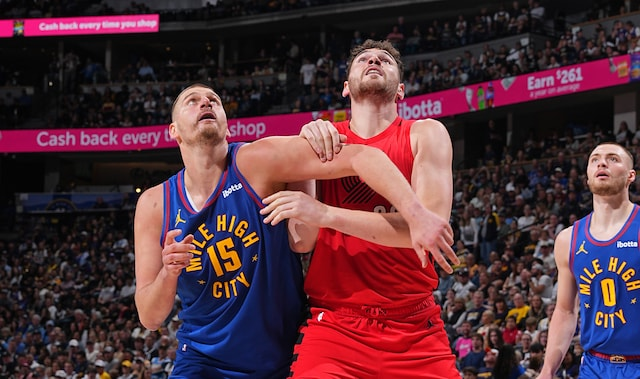
Nuggets vs Blazers Last Game: A Fourth-Quarter Comeback for the Ages
The latest clash between the Denver Nuggets and the Portland Trail Blazers was not just another regular-season matchup—it was a high-intensity, overtime thriller that carried significant playoff implications. Played at Ball Arena in Denver, the contest delivered everything: a historic shooting performance, a dramatic comeback, and a defining statement from one of the league’s most dominant players.
Denver ultimately secured a 137–132 overtime victory, but the scoreline only tells part of a game defined by shifting momentum and elite individual performances.
A Game of Two Narratives: Control vs Collapse
For much of the night, Portland looked in control. The Trail Blazers built a commanding 115–99 lead with just over eight minutes remaining in the fourth quarter, fueled by sharp perimeter shooting and disciplined offensive execution.
Toumani Camara led the charge with a standout 30-point performance, shooting 10-of-16 from the field and an exceptional 8-of-13 from three-point range. Portland’s offensive rhythm was further supported by Deni Avdija, who added 26 points and converted 13 of 14 free throws, demonstrating efficiency and composure under pressure.
The team’s collective output was historic: Portland knocked down 25 three-pointers, setting a franchise record and finishing with an impressive 48% accuracy from beyond the arc .
Yet, despite this offensive dominance, the game began to slip away in the closing minutes.
Denver’s Fourth-Quarter Revival
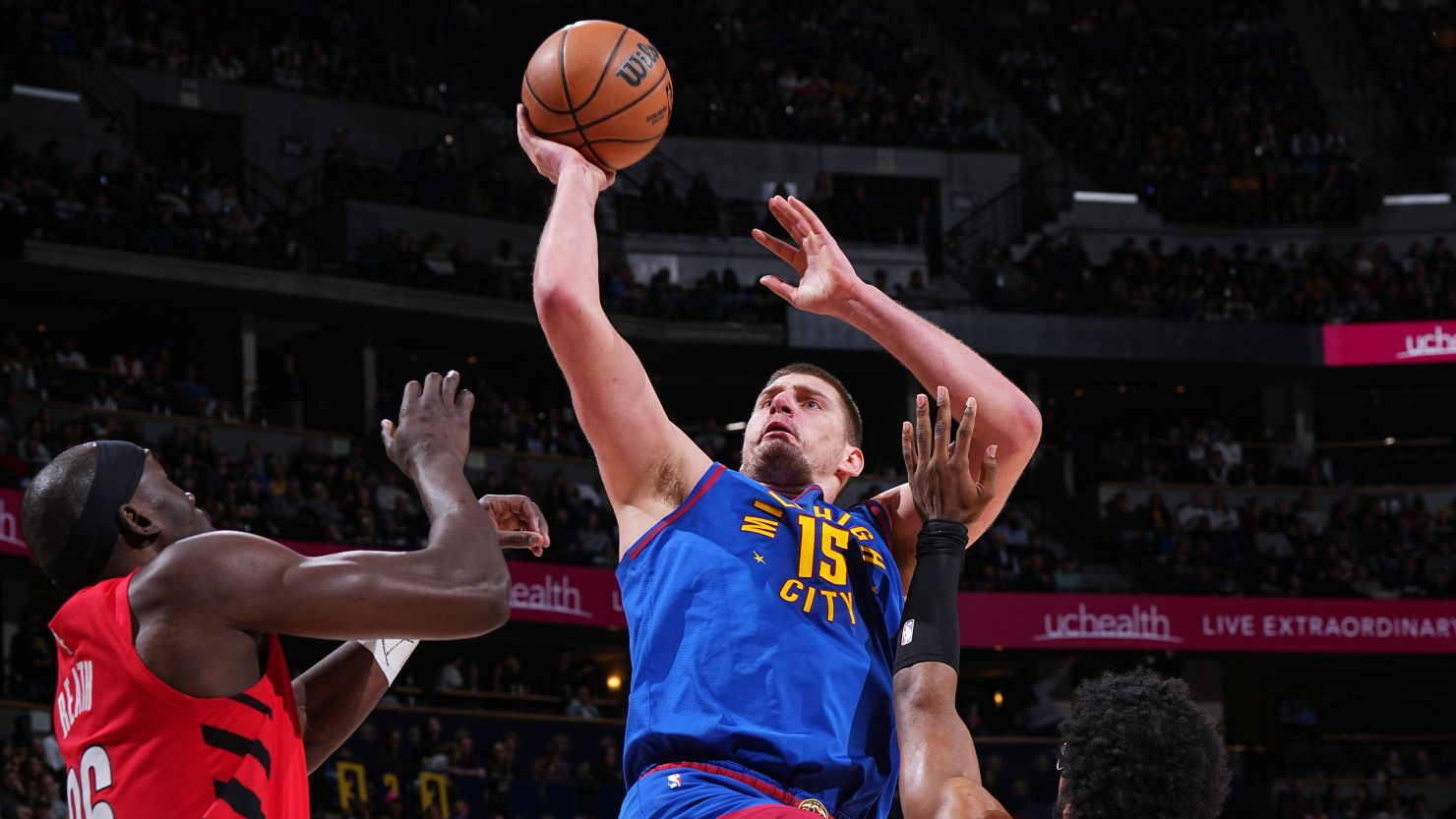
The Nuggets’ comeback was methodical rather than chaotic. Anchored by Nikola Jokic, Denver shifted the tempo and began chipping away at Portland’s lead.
Jokic delivered a masterclass performance:
- 35 points
- 14 rebounds
- 13 assists
- 5 steals and 3 blocks
This marked his 33rd triple-double of the season, reinforcing his central role in Denver’s system.
Crucially, Jokic scored 10 points in the fourth quarter alone and orchestrated a decisive 21–5 run, bringing Denver back into contention. His ability to manipulate defensive schemes forced Portland into difficult rotations, ultimately opening scoring opportunities for teammates.
Aaron Gordon played a pivotal supporting role, finishing with 23 points and hitting a crucial corner three-pointer to tie the game late in regulation. Moments later, his baseline jumper gave Denver a brief lead before Portland responded to force overtime.
Overtime: Execution Under Pressure
Once the game entered overtime, the difference in composure became evident.
Denver opened the extra period aggressively, with Jamal Murray and Gordon each hitting early three-pointers to establish control. Murray, who finished with 20 points, scored seven of those in overtime and effectively closed the game at the free-throw line.
A decisive sequence saw Murray convert free throws, follow with a dunk, and then assist Jokic for a final layup—effectively sealing the win.
Portland, by contrast, struggled to maintain offensive fluidity after losing Camara to fouls late in regulation, a moment that significantly impacted their ability to respond in clutch situations .
Statistical Breakdown: Where the Game Was Won
Despite Portland’s shooting efficiency, several underlying metrics favored Denver:
1. Shot Volume Advantage
- Denver attempted 101 field goals compared to Portland’s 89.
- This discrepancy stemmed from superior offensive rebounding and turnover control.
2. Ball Movement
- Denver recorded 37 assists versus Portland’s 29, highlighting a more fluid offensive system.
3. Clutch Efficiency
- The Nuggets outscored opponents 45–18 in recent clutch minutes, continuing a trend of late-game dominance.
These factors collectively explain how a team trailing by double digits late could still emerge victorious.
Key Performers on Both Sides
Denver Nuggets
- Nikola Jokic: Triple-double leader, game orchestrator
- Aaron Gordon: 23 points, clutch shooting in regulation and overtime
- Jamal Murray: 20 points, decisive overtime execution
Portland Trail Blazers
- Toumani Camara: 30 points, elite perimeter shooting
- Deni Avdija: 26 points, near-perfect free-throw shooting
- Jrue Holiday: 19 points, 11 assists, strong playmaking presence
Implications for the Western Conference
The victory carried immediate consequences for the standings:
- Denver improved to 51–28, moving into third place in the Western Conference
- The win extended their streak to nine consecutive victories, tying the longest run of the Jokic era
- Portland dropped to 40–39, slipping to ninth place and intensifying their Play-In Tournament battle
For Denver, the result strengthens their push for a favorable playoff seed. However, their position remains sensitive, as they do not hold the tiebreaker over the Los Angeles Lakers.
Tactical Observations: Why Portland Fell Short
Portland’s loss cannot be attributed to a single factor. Instead, it reflects a convergence of late-game issues:
- Defensive breakdowns during Denver’s fourth-quarter surge
- Loss of Camara, reducing offensive spacing and scoring options
- Overcommitment to Jokic, which exposed perimeter defense and allowed Denver’s shooters to capitalize
Even with record-setting shooting, these structural weaknesses proved decisive.
Conclusion: A Statement Win for Denver
This game encapsulated the defining traits of both teams.
Portland demonstrated offensive potential and resilience, pushing a top-tier opponent to overtime with a record-setting performance. However, their inability to close the game underscores ongoing inconsistencies.
Denver, on the other hand, reinforced its identity as a championship-caliber team—disciplined, composed, and anchored by one of the league’s most complete players in Nikola Jokic.
In a tightly contested Western Conference, this was more than just a win. It was a statement.


