

Nuggets vs Trail Blazers: Overtime Thriller Defined by Execution Under Pressure
A Game of Momentum Swings and Missed Opportunities
The latest clash between the Denver Nuggets and the Portland Trail Blazers delivered one of the most dramatic finishes of the season, culminating in a 137–132 overtime victory for Denver at Ball Arena.
This was not a routine win. It was a game that exposed the thin margin between control and collapse in professional basketball. Portland dominated for long stretches, only to see the game slip away in the final minutes and overtime—a sequence that ultimately defined the outcome.
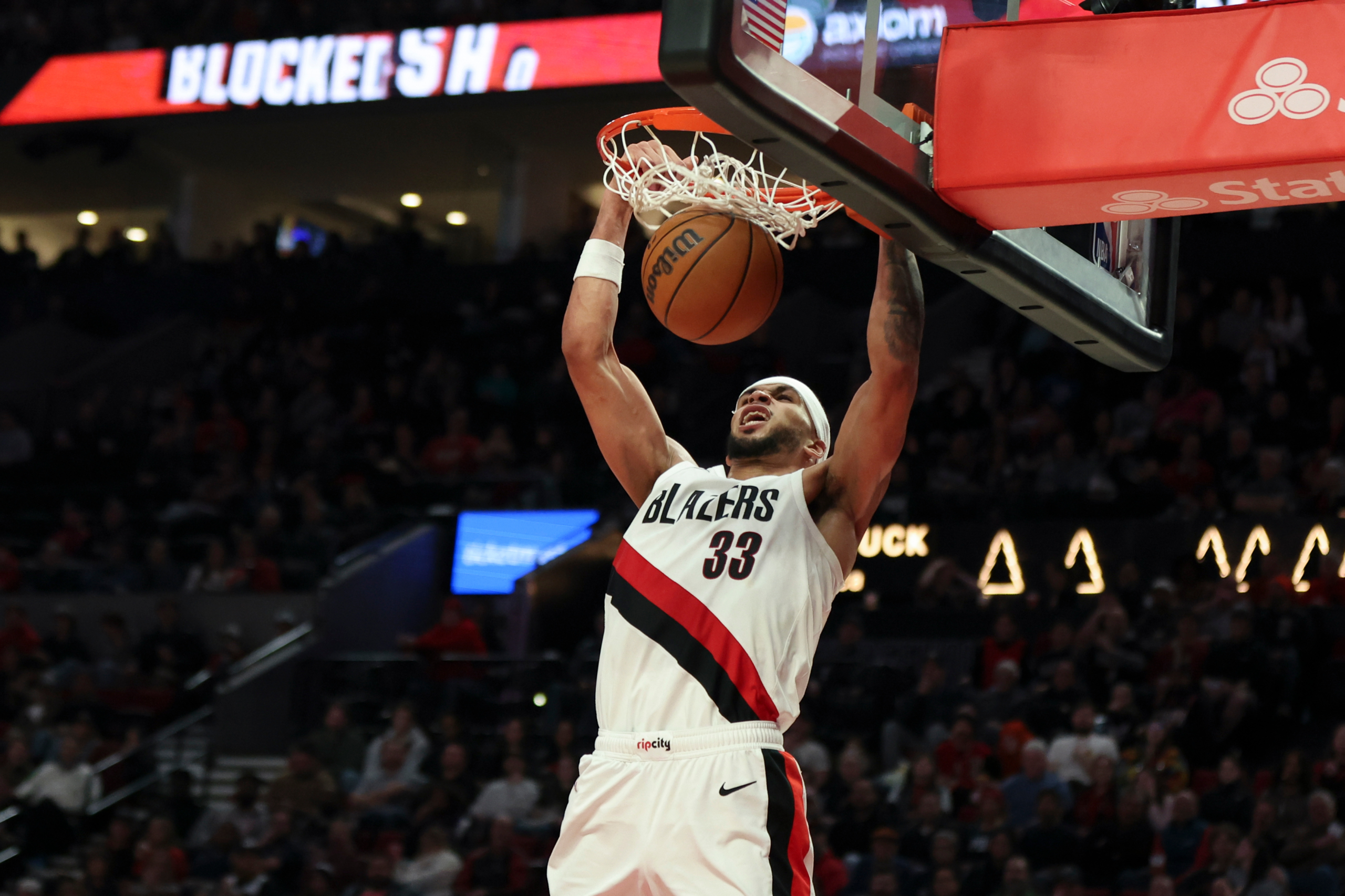
At the center of it all stood Nikola Jokic, whose triple-double performance (35 points, 14 rebounds, 13 assists) once again reinforced his status as the engine of Denver’s system. On the other side, Toumani Camara delivered a standout 30-point performance that nearly carried Portland to a statement victory.
Portland’s Early Dominance: A Near-Perfect Opening
From the opening tip, Portland dictated tempo and execution. The Trail Blazers:
- Won the first quarter 35–31
- Extended the lead to 72–58 at halftime
- Maintained control with a 101–87 advantage entering the fourth quarter
The offensive rhythm was evident. Portland shot efficiently, moved the ball effectively, and displayed composure against one of the league’s top teams. Key contributions included:
- Toumani Camara: 30 points, including 8-of-13 from three-point range
- Deni Avdija: 26 points and 7 assists
- Jrue Holiday: 19 points and 11 assists
- Donovan Clingan: 18 points and 12 rebounds
This was a complete three-quarter performance. Portland executed its game plan with precision and appeared in full control.
Denver’s Response: Experience and Structure Take Over
The turning point came in the fourth quarter. Denver outscored Portland 38–24, gradually erasing the deficit through disciplined offense and defensive adjustments.
The Nuggets’ system—built around Jokic’s playmaking—began to impose itself:
- Jokic orchestrated possessions with surgical precision
- Aaron Gordon added 23 points, many in high-leverage moments
- Jamal Murray contributed 20 points and key late-game execution
- The team generated 37 assists, reflecting cohesive offensive structure
Denver’s ability to remain composed under pressure contrasted sharply with Portland’s fading control.
Overtime: Where the Game Was Decided
The defining stretch came in overtime. The Nuggets outscored the Trail Blazers 14–9, a margin that reflects execution rather than dominance.
Key observations:
- Denver capitalized on high-efficiency possessions
- Portland struggled to replicate earlier offensive rhythm
- Decision-making under pressure favored the more experienced side
The statistical edge was minimal, but the situational execution was decisive. As noted in the game analysis, “the better team prevailed when the chips were all on the table.”
Statistical Snapshot: Balanced Contributions vs Centralized Leadership
Portland Trail Blazers
- Total Points: 132
- Field Goals: 42/89
- Three-Point Shooting: 25/52
- Assists: 29
Denver Nuggets
- Total Points: 137
- Field Goals: 52/101
- Three-Point Shooting: 12/38
- Assists: 37
The contrast is notable:
- Portland relied heavily on perimeter scoring (25 three-pointers)
- Denver leaned on interior efficiency and playmaking orchestration
- Jokic’s triple-double anchored a system-driven approach
Player of the Game: Dual Recognition
The performance analysis highlights two central figures:
- Toumani Camara (Portland): Offensive catalyst who kept the Blazers competitive
- Nikola Jokic (Denver): Complete control of tempo, scoring, and distribution
While Camara elevated Portland’s ceiling, Jokic ultimately determined the outcome.
Tactical Insight: Why Portland Fell Short
Despite leading for most of the game, Portland’s loss can be attributed to three core factors:
1. Late-Game Execution Decline
The Blazers’ offensive efficiency dropped significantly in the fourth quarter and overtime.
2. Defensive Fatigue
Denver’s sustained pressure exposed gaps in Portland’s defensive rotations late in the game.
3. Reliance on Momentum
Portland’s performance was momentum-driven, while Denver’s was system-driven—an important distinction in close finishes.
What This Means Going Forward
For Portland, the result is a missed opportunity but not a structural failure. The team demonstrated:
- Competitive capability against elite opponents
- Depth in scoring and playmaking
- Strong early-game execution
However, closing games remains a critical development area as the season approaches its conclusion.
For Denver, the victory reinforces:
- The effectiveness of a Jokic-centered system
- The importance of composure in high-pressure situations
- Their positioning as a top-tier contender with a 51–28 record
What’s Next
The Trail Blazers move forward quickly, with a scheduled matchup against the San Antonio Spurs. The focus will be on maintaining early-game intensity while improving late-game execution.
Denver, meanwhile, continues to build momentum, demonstrating the consistency required for postseason success.
Conclusion: A Game That Reflects the Margins of Winning
This matchup between the Nuggets and Trail Blazers was not defined by dominance but by precision at critical moments. Portland showed it can compete at a high level, but Denver showed why it wins.
In high-level basketball, the difference is rarely about talent alone. It is about execution when the margin for error disappears. This game provided a clear example.


