

Macron on Trump: From Diplomatic Friction to Personal Reproach
A Relationship Under Strain
The relationship between Emmanuel Macron and Donald Trump has entered a visibly tense phase, marked by an unusual mix of geopolitical disagreement and personal rhetoric. What once appeared to be a pragmatic, if sometimes theatrical, transatlantic partnership has evolved into a more contentious exchange—one that now blends diplomacy with public criticism.
Recent remarks by Trump about Macron’s marriage have triggered a sharp response from the French president, underscoring how personal commentary can intersect with broader geopolitical tensions. At the same time, disagreements over the ongoing Iran conflict and NATO cooperation have amplified the divide between Washington and Paris.
The Trigger: Personal Remarks Amid Global Conflict
The immediate catalyst for the latest diplomatic friction came during a U.S. address and private engagements in Washington, where Trump mocked Macron’s relationship with his wife, Brigitte Macron. He claimed she “treats him extremely badly” and referenced a 2025 video in which she appeared to push him in the face.
Macron, speaking during an official visit to South Korea, responded with measured but pointed language, describing the comments as “neither elegant nor up to standard.” He further dismissed the remarks as unworthy of a response, signaling a deliberate attempt to maintain presidential decorum while still registering disapproval.
The French president has previously explained the 2025 incident as playful behavior, stating that the couple were “just joking about as we do.”
Beyond Personalities: Strategic Disagreements on Iran
While the personal exchange captured headlines, it reflects deeper policy disagreements—particularly regarding the war involving Iran.
Macron has repeatedly criticized what he perceives as inconsistent messaging from the Trump administration. He emphasized the need for stability and clarity in international affairs, warning against frequent shifts in rhetoric.
“This is not a show. We are talking about war and peace and the lives of men and women,” Macron stated, adding that contradictory daily messaging undermines seriousness in diplomacy.
France’s position has been notably cautious. While it has deployed military assets to protect regional allies, it has declined to fully support U.S. operations, including refusing to commit naval resources to reopen the Strait of Hormuz and restricting the use of its airspace for certain military missions.
This strategic restraint has drawn criticism from Trump, who has accused France of being “very unhelpful” in the conflict.
NATO, Trust, and the Question of Alliances
The disagreement extends into the broader framework of NATO and Western alliances. Trump’s remarks questioning NATO commitments have been met with concern in Europe.
Macron responded by emphasizing that alliances are built not only on formal agreements but on trust and reliability. Publicly casting doubt on commitments, he argued, weakens the foundation of such partnerships.
“There’s too much chatter… but we all need stability, calm, and a return to peace,” he said, pointing to what he views as an overabundance of conflicting signals from Washington.
The French position aligns with other European allies, including Spain and Italy, which have also taken a more cautious stance in the Iran conflict.
Domestic Reaction in France: A Rare Consensus
Trump’s personal remarks sparked widespread criticism across the French political spectrum—an unusual moment of unity in a typically divided landscape.
Leading figures described the comments as “absolutely unacceptable,” with lawmakers stressing that such rhetoric is inappropriate given the gravity of ongoing global conflicts.
The reaction reflects a broader cultural difference: in France, the private lives of political leaders are generally treated with greater discretion compared to the United States. Trump’s comments therefore resonated not only as a diplomatic slight but also as a breach of political norms.
From Handshakes to Hostility: A Changing Dynamic
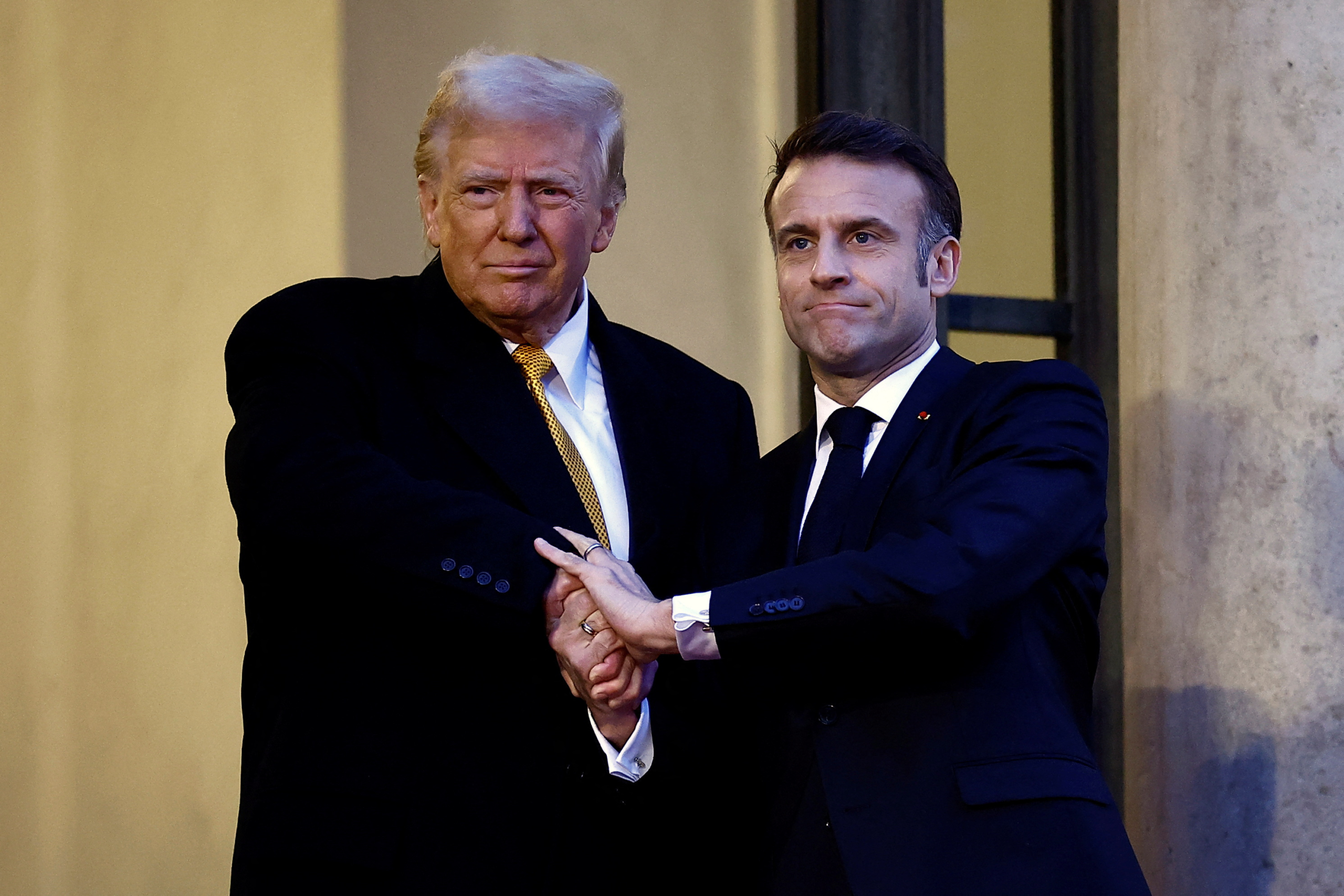
The Macron-Trump relationship has undergone a notable transformation. During Trump’s first term, their interactions were often characterized by symbolic gestures—most famously, their prolonged and competitive handshakes.
However, the current phase is defined less by performative diplomacy and more by substantive disagreement. Trump has increasingly personalized his critiques, even sharing private communications and mimicking Macron in public appearances.
For Macron, the response has been more restrained but firm, combining diplomatic language with clear opposition to U.S. policy directions.
Implications: Diplomacy in an Era of Personal Politics
The exchange highlights a broader shift in international relations, where personal rhetoric can influence—or complicate—statecraft.
Three key implications emerge:
- Erosion of diplomatic norms: Public mockery between leaders risks normalizing informal and confrontational discourse.
- Strained alliances: Disagreements over Iran and NATO could weaken coordinated Western responses to global crises.
- Public perception: Domestic audiences increasingly shape diplomatic narratives, amplifying tensions beyond traditional policy disputes.
What Comes Next?
The trajectory of U.S.-France relations will likely depend on two variables: the evolution of the Iran conflict and the ability of both leaders to recalibrate their public messaging.
Macron has signaled a preference for measured diplomacy, emphasizing long-term stability and multilateral cooperation. Trump, by contrast, continues to adopt a more direct and often confrontational style.
Whether these approaches can be reconciled remains uncertain. What is clear is that the relationship has entered a more volatile phase—where policy disagreements are intertwined with personal dynamics in ways that are difficult to separate.
Conclusion
The recent exchange between Macron and Trump is more than a fleeting political controversy. It reflects deeper tensions in transatlantic relations, driven by diverging strategies, contrasting communication styles, and shifting expectations of leadership.
As global challenges intensify—from conflicts in the Middle East to questions about alliance structures—the ability of major leaders to maintain both strategic alignment and diplomatic decorum will be increasingly tested.


