
The Golden Helmet (Gouden Helm): A Stolen Treasure, a Dramatic Return, and a Symbol of History
Few artifacts carry the weight of history, identity, and international attention like the Golden Helmet of Coțofenești—often referred to as the “gouden helm.” In early 2026, this nearly 2,500-year-old masterpiece returned to the spotlight after a dramatic recovery following one of Europe’s most talked-about museum heists.
The helmet, along with several golden bracelets, had been stolen from the Drents Museum in Assen in January 2025. Its recovery—announced on April 2, 2026—marked a turning point in a case that had drawn intense scrutiny from governments, law enforcement agencies, and cultural institutions across Europe.
What emerged is not just a story of theft and recovery, but a deeper narrative about cultural heritage, diplomacy, and the enduring power of ancient artifacts.
From Ancient Dacia to Modern Museums
The gouden helm is not simply a museum piece—it is a relic of a long-lost civilization.
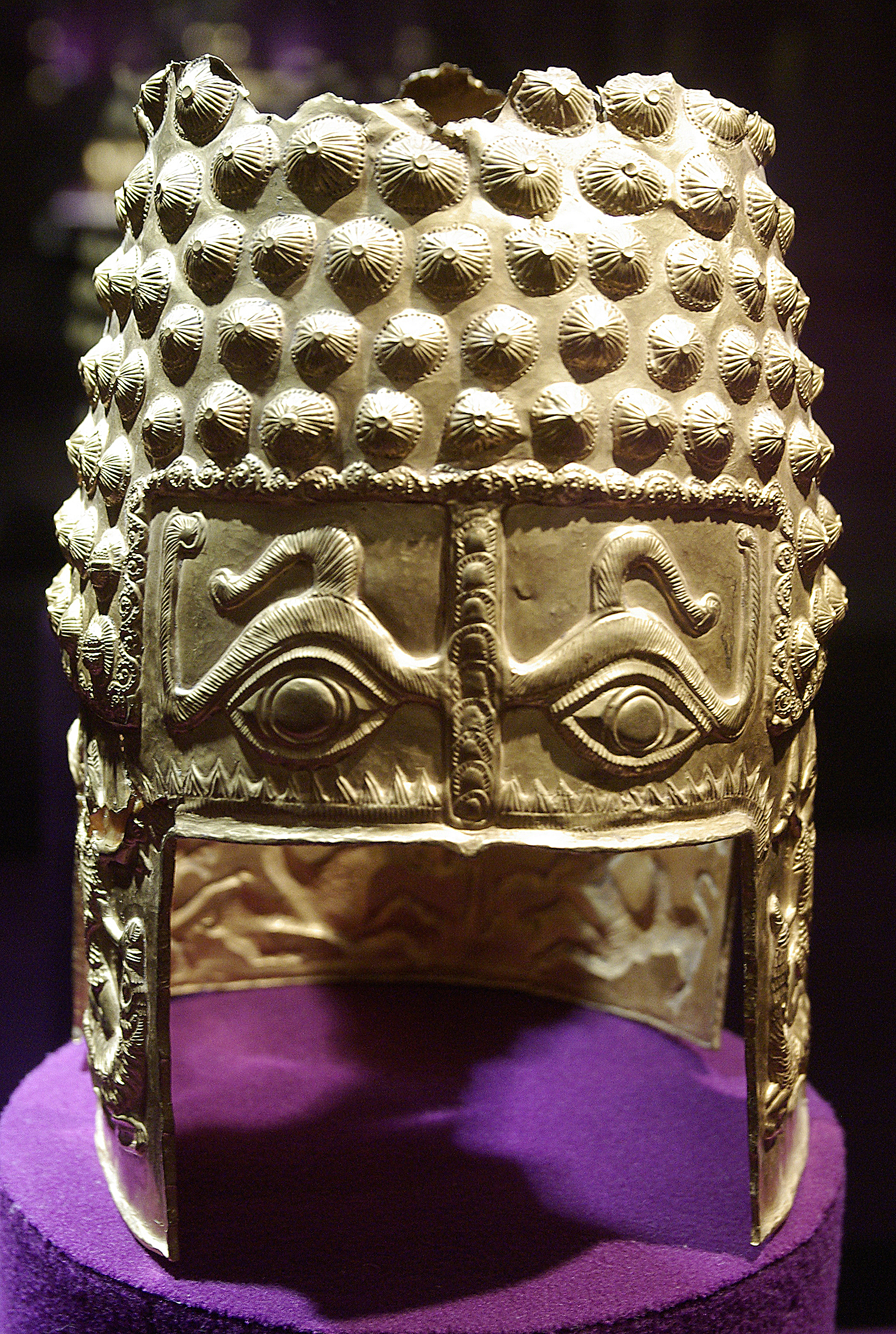
Dating back to around the 5th century BC, the helmet originates from ancient Dacia, a region that now spans parts of modern Romania and Bulgaria. Crafted from electrum—a natural alloy of gold, silver, and copper—it reflects both artistic sophistication and symbolic authority.
Weighing close to one kilogram, the helmet is richly decorated with intricate motifs, including mythological creatures and ritual scenes. Scholars believe it may have belonged to a Dacian king or aristocrat, suggesting both ceremonial and political significance.
Its striking design includes large protective “eyes,” believed to ward off evil—an example of how ancient belief systems were embedded into elite objects.
Over time, the helmet came to be regarded as a national symbol in Romania—so much so that officials have compared it to a cultural equivalent of the “Night Watch,” underscoring its immense symbolic value.
Discovery and a Curious Early History
The helmet’s journey into modern awareness began unexpectedly in 1926. It was discovered by a child in a rural Romanian village, who reportedly used it as a toy and even as a chicken feeder before its true value was recognized.
Eventually purchased and transferred to Romania’s national collections, the helmet became one of the country’s most prized archaeological treasures.
Its path—from forgotten field object to national icon—already reads like a story. But its modern chapter would prove even more dramatic.
The 2025 Heist: Shock and Diplomatic Fallout
On the night of January 24–25, 2025, thieves used an explosive device to break into the Drents Museum, stealing the golden helmet and three Dacian bracelets.
The audacity of the theft triggered immediate outrage. The artifacts had been on loan from Romania’s National Historical Museum, and their disappearance sparked a diplomatic dispute between the Netherlands and Romania.
Romania demanded accountability, and the Dutch government ultimately paid €5.7 million in compensation to the insurer.
The theft also raised broader questions about museum security, international loans, and the vulnerability of priceless cultural artifacts in transit.
The Breakthrough: Recovery Through Negotiation
After months of investigation and arrests, a breakthrough came in April 2026.
Authorities announced that the helmet and two of the three stolen bracelets had been recovered. The return was facilitated through intermediaries, including the suspects’ lawyers, and involved procedural agreements with the accused.
While details remain limited due to ongoing legal proceedings, it is clear that negotiations played a central role in securing the artifacts.
Three suspects—Douglas W., Bernhard Z., and Jan B.—remain in custody and are expected to stand trial. The extent of their cooperation, and any benefits received in exchange for returning the items, will likely emerge during court proceedings.
A Tense Reveal Under Heavy Security
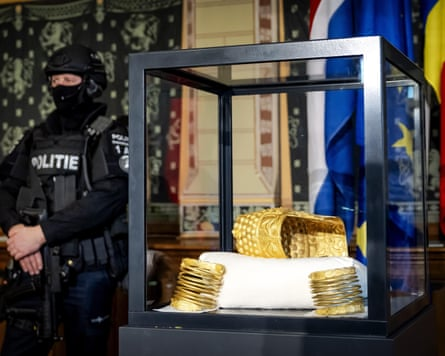
The recovered artifacts were unveiled during a tightly controlled press conference at the Drents Museum.
Armed officers guarded the display as the helmet and bracelets were presented to the public.
The condition of the items offered cautious relief:
- The helmet was slightly dented but restorable
- The bracelets were found in perfect condition
- One bracelet remains missing
Museum director Robert van Langh described the moment as both surprising and emotional, noting that staff embraced upon hearing the news.
More Than Gold: National Identity and Symbolism
The significance of the gouden helm extends far beyond its material value.
For Romania, it represents a tangible link to the Dacian past—a civilization described by ancient historians as fierce, resilient, and culturally rich.
Artifacts like this helmet are not merely historical objects; they are embodiments of identity. Their loss—and recovery—resonates deeply with national sentiment.
Romanian officials expressed gratitude for the return, calling the moment “a difficult time” finally resolved and emphasizing the importance of international cooperation in safeguarding cultural heritage.
What Happens Next?
With the helmet recovered, attention now shifts to several unresolved issues:
1. Legal Proceedings
The upcoming trial will clarify:
- The full extent of the suspects’ involvement
- Whether they acted alone or on behalf of others
- The nature of the agreements that led to the recovery
2. Missing Bracelet
One of the three stolen bracelets remains unaccounted for, leaving an open thread in the investigation.
3. Financial Implications
The Netherlands has already paid compensation. It remains unclear how recovery of the artifacts will affect financial settlements.
4. Return to Romania
The helmet and recovered items are expected to be returned to Romania, restoring them to their cultural and historical context.
A Broader Lesson in Cultural Protection
The story of the gouden helm highlights several critical issues:
- Security vulnerabilities in international exhibitions
- The role of negotiation in recovering stolen art
- The importance of cultural diplomacy
- The enduring value of ancient heritage in modern society
It also underscores a paradox: artifacts created thousands of years ago continue to shape present-day politics, law enforcement priorities, and international relations.
Conclusion: A Treasure That Endures
The Golden Helmet of Coțofenești has survived centuries—buried, rediscovered, displayed, stolen, and now recovered.
Its story is no longer just about ancient craftsmanship. It is about resilience—of culture, of institutions, and of collective memory.
While one bracelet is still missing and legal questions remain unresolved, the recovery of the helmet represents a rare success in the often uncertain world of art theft.
For Romania, it is the return of a national symbol.
For Europe, it is a case study in cooperation and persistence.
For the world, it is a reminder that history—no matter how old—still matters.


