

Mohsin Khan: A Comeback Story Forged Through Discipline, Setbacks, and Self-Belief
In the high-pressure environment of the Indian Premier League, few stories resonate as strongly as a player reclaiming form after adversity. For Mohsin Khan, the IPL 2026 clash between Lucknow Super Giants and Delhi Capitals was more than just another match—it was a statement of resilience.
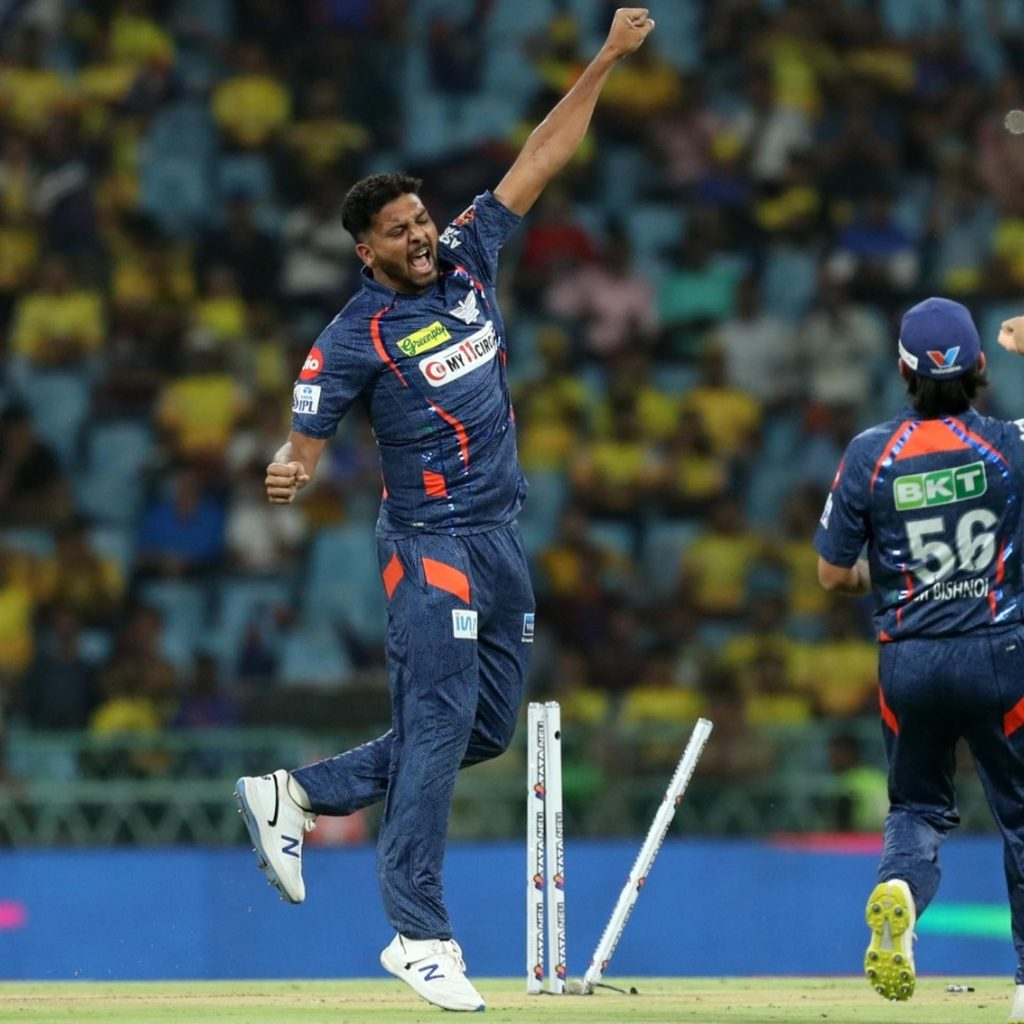
Returning to competitive cricket after a prolonged absence, Mohsin delivered an immediate impact. In his first outing in over 15 months, he bowled a wicket-maiden, dismissing Nitish Rana and applying pressure on batters like Tristan Stubbs. His spell was marked by control, movement, and composure—traits that had once made him one of India’s most promising fast bowlers.
Yet, despite his disciplined performance—conceding just six runs in his first three overs—the match narrative shifted when Sameer Rizvi orchestrated a counterattack, eventually leading Delhi Capitals to victory.
Still, the numbers only tell part of the story. The real significance lay in Mohsin’s presence itself—fit, confident, and competitive once again.
Early Promise and Rapid Rise
Mohsin Khan’s journey into professional cricket gained national attention during IPL 2022. Representing Lucknow Super Giants, he emerged as one of the standout bowlers of the season, claiming 14 wickets in just 10 matches with an exceptional economy rate of 5.96.
His ability to swing the ball both ways at speeds approaching 140 km/h, combined with his height (6 feet 3 inches), made him a rare asset in Indian cricket. His deliveries often generated steep bounce, troubling even experienced batters.
At that stage, an international call-up seemed imminent.
The Injury Spiral That Changed Everything
Momentum, however, can be fragile in professional sport. Mohsin’s career trajectory was disrupted by a series of injuries that sidelined him for extended periods.
Over a span of four years, he endured:
- A serious shoulder injury that kept him out of competitive cricket for an entire year
- A groin injury that further delayed his return
- A torn anterior cruciate ligament (ACL) in his right knee during the Vijay Hazare Trophy
For a fast bowler—whose role depends heavily on physical durability—these setbacks were not just interruptions; they were existential threats to his career.
His coach, Badruddin Siddiqui, summarized it bluntly: injuries are part of the profession, but Mohsin had been “a bit unfortunate.”
The Turning Point: A Line That Redefined His Approach
Amid this difficult phase, a pivotal influence emerged in the form of Mohammed Shami.
Mohsin trained and lived at Shami’s farmhouse in Bihar, where a critical moment reshaped his mindset. During a casual interaction, Shami delivered a remark that would become central to Mohsin’s comeback:
“Mohsin miyaan, gym se body ban jayegi, bowling nahi.”
Translated: gym may build your physique, but it won’t improve your bowling.
The statement was direct, even harsh—but effective. According to his coach, Mohsin was stunned. Yet that moment triggered a fundamental shift in how he approached training.
Rebuilding from the Ground Up
The comeback was not accidental—it was engineered through deliberate changes.
Under Shami’s guidance, Mohsin moved away from excessive gym-focused routines and returned to the fundamentals of fast bowling:
- Extensive on-field training
- Long running sessions to build endurance
- Repetitive bowling drills to refine rhythm
- Technical adjustments, including wrist position and run-up mechanics
The philosophy was simple: fast bowling is built on repetition, rhythm, and resilience—not just physical strength.
His coach reinforced this approach:
“If you want to bowl at 140 kph, you have to grind on the field.”
Over time, these changes translated into improved control, better rhythm, and enhanced match fitness.
Fitness, Fearlessness, and a New Mindset
One of the most telling indicators of Mohsin’s transformation came not from his bowling—but his fielding.
During the IPL 2026 match, he made a full-stretched dive at third man to save runs. For his coach, this moment symbolized something deeper:
“He is not afraid anymore.”
For a player whose career had been repeatedly interrupted by injuries, such commitment in the field indicated renewed confidence in his body.
This psychological shift—from caution to conviction—is often the hardest part of a comeback.
Technical Evolution and Competitive Edge
Beyond fitness, Mohsin has also refined his bowling technique:
- Improved wrist position for better seam control
- Slightly extended run-up to generate rhythm and pace
- Enhanced ability to swing the ball both ways
These adjustments have strengthened his natural advantages—height, bounce, and left-arm variation—making him a more complete bowler.
His coach even suggested that Mohsin’s steep bounce could surpass that of Shami, highlighting his unique threat in Indian conditions.
The Broader Impact: A Case Study in Modern Fast Bowling
Mohsin Khan’s journey reflects broader themes in modern cricket:
- Injury Management
Fast bowlers operate at physical limits. Sustainable careers require not just recovery, but adaptation. - Training Philosophy
The balance between gym work and skill-based training remains a critical debate. Mohsin’s case reinforces the importance of sport-specific preparation. - Mentorship
The role of experienced players like Mohammed Shami can be decisive in shaping younger athletes’ careers. - Mental Resilience
Comebacks are as much psychological as physical. Overcoming fear of re-injury is often the final barrier.
What Lies Ahead for Mohsin Khan?
At 27, Mohsin is entering what many consider the prime years for a fast bowler. According to his coach, he potentially has five to six strong years left—possibly more if he maintains his fitness.
The immediate goal is consistency in the IPL, but the larger ambition remains clear: representing India at the international level.
Shami’s persistent question echoes in the background:
“India khelna hai ya nahi?”
It is both a challenge and a reminder of what is still within reach.
Conclusion: More Than Just a Comeback
Mohsin Khan’s story is not merely about returning to cricket—it is about redefining how to stay in it.
From early promise to career-threatening injuries, from misplaced training focus to disciplined reinvention, his journey captures the volatility and demands of modern fast bowling.
His IPL 2026 return may not have delivered a match-winning result, but it signaled something more important: sustainability.
For a fast bowler, that is often the hardest victory to achieve.


