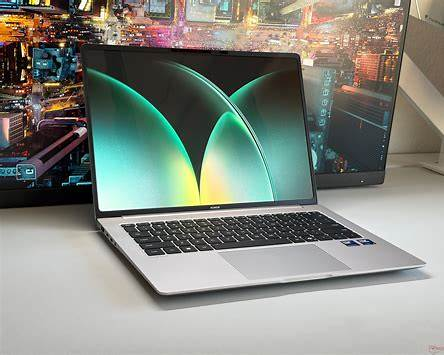
Honor MagicBook Pro 14 (2026) Review: A Premium OLED Ultrabook That Gets Almost Everything Right
Honor’s premium laptop ambitions are becoming impossible to ignore. Over the past few years, the company has steadily evolved from a smartphone-focused brand experimenting with Windows notebooks into a serious contender in the ultrabook market. The Honor MagicBook Pro 14 (2026) may be the clearest example yet of that transition.
- Honor’s Premium Laptop Strategy Comes Into Focus
- The OLED Display Is the Star of the Show
- Intel Panther Lake Brings Serious Performance
- Thermal Performance Is Surprisingly Good
- Battery Life Sets a High Standard
- Connectivity and Expandability Are Refreshingly Practical
- AI Features Reflect the Industry’s New Direction
- Availability Remains the Biggest Problem
- Final Verdict
Packed with Intel’s latest Panther Lake processors, a vibrant 3.1K OLED touchscreen, an unusually large 92Wh battery, and one of the strongest thermal systems seen in a compact laptop, the MagicBook Pro 14 (2026) arrives as a machine built for professionals, creators, and productivity-focused users who want desktop-class responsiveness in a portable chassis.
What makes this laptop especially interesting is that it does not attempt to reinvent the category with gimmicks. Instead, Honor focuses on refining the fundamentals: display quality, sustained performance, battery life, and portability. The result is a laptop that competes directly against premium Windows ultrabooks and even challenges Apple’s MacBook lineup in several key areas.


Honor’s Premium Laptop Strategy Comes Into Focus
The MagicBook Pro 14 (2026) represents Honor’s broader push into the high-end computing segment. Unlike entry-level productivity laptops that prioritize affordability over performance, this machine clearly targets users who work with demanding applications every day.
Honor positions the laptop as a creator and business-focused device, combining AI-enabled Intel hardware with premium industrial design and long battery endurance. The company is also leaning heavily into ecosystem integration, allowing the laptop to work across Windows, Android, and Apple devices through Honor Share and multi-device collaboration tools.


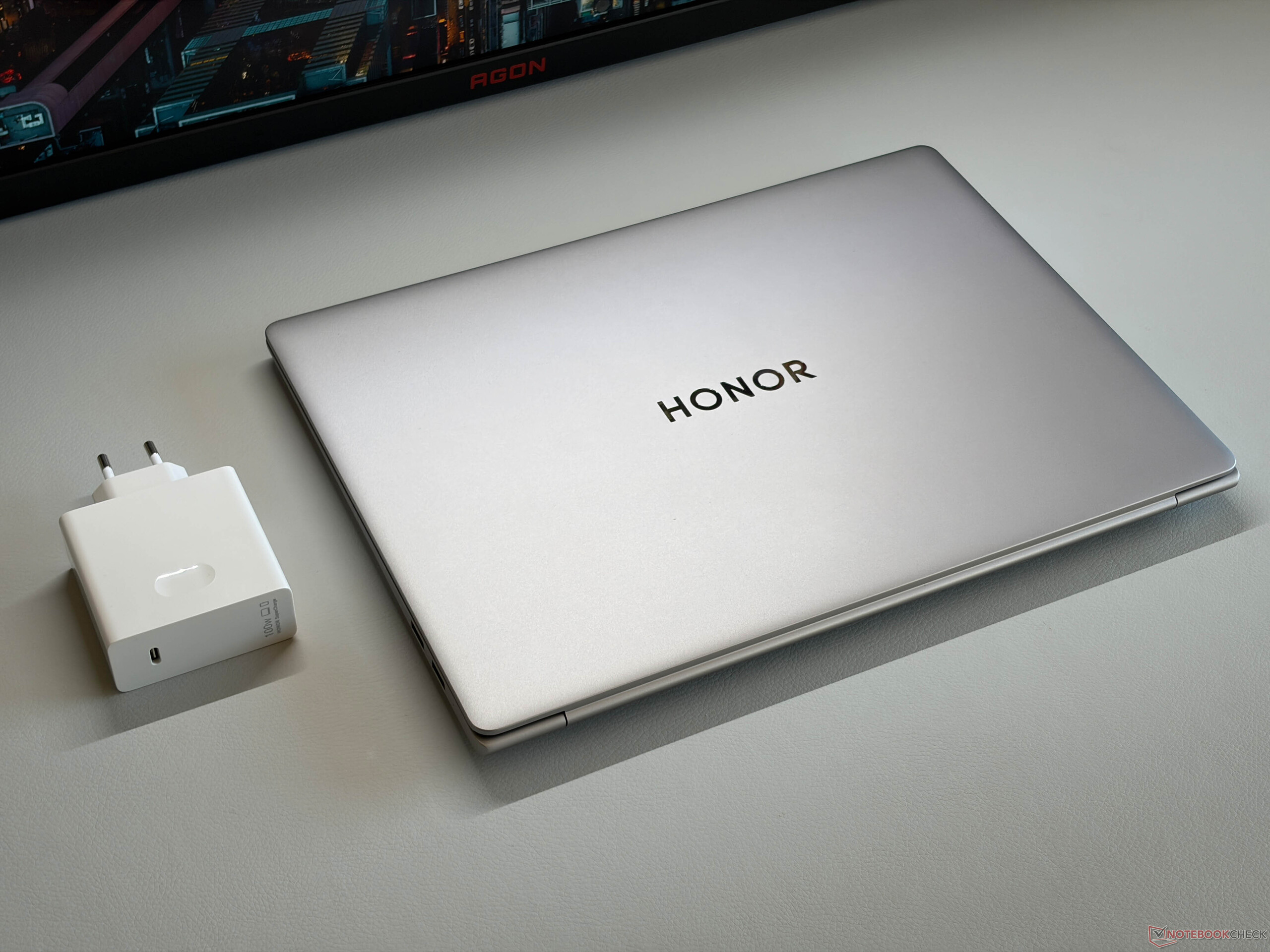
At first glance, the laptop resembles earlier MagicBook Pro and MagicBook Art models. That familiarity is intentional. Honor retained the clean metal unibody construction and refined the design language instead of overhauling it.
The laptop features a slim chassis with “Vine-Leaf Curves” styling and a pearlescent finish option that gives the white model a subtle satin glow under lighting. Honor refers to this finish as its “Pearlescent Electrophoresis Process.”
Despite carrying a massive battery, the system remains relatively portable at approximately 1.39kg and 15.9mm thick, making it lighter than several competing MacBook configurations.
The OLED Display Is the Star of the Show
The centerpiece of the MagicBook Pro 14 (2026) is undoubtedly its display.


Honor equipped the laptop with a 14.6-inch OLED touchscreen featuring a sharp 3120 x 2080 resolution and a productivity-friendly 3:2 aspect ratio. That taller display format provides noticeably more vertical workspace compared to the 16:9 and 16:10 panels commonly found in competing laptops.
For users working with documents, spreadsheets, code editors, photo editing tools, or browser-heavy workflows, the additional vertical room significantly improves usability.
The panel supports:
- 120Hz refresh rate
- 10-point touch input
- 100% DCI-P3 color coverage
- HDR support
- Peak brightness up to 700 nits
- TÜV Rheinland low blue light certification
- 4320Hz PWM flicker-free dimming
Independent testing measured approximately 500 nits in SDR mode and nearly 800 nits in HDR scenarios, placing the display among the brightest OLED panels currently available in the ultrabook category.
Color reproduction is another major strength. Honor includes multiple professional calibration presets tailored for both P3 and sRGB workflows, making the laptop suitable for photographers, video editors, and designers who require accurate color output.
The panel reportedly achieves ΔE<0.5 calibration in supported modes and supports 1.07 billion colors.
Honor also includes several eye comfort and adaptive display modes inside its PC Manager software. These features allow users to adjust color temperature, dimming behavior, brightness, and even switch the display into grayscale reading modes for reduced eye strain during extended sessions.
The only notable drawback is the absence of a dynamic refresh rate system. Users must manually switch between 60Hz and 120Hz modes rather than allowing the system to adapt automatically.
Intel Panther Lake Brings Serious Performance
Inside the MagicBook Pro 14 (2026) is Intel’s latest Panther Lake platform, introduced during CES 2026 and built on Intel’s advanced 18A architecture — a 3nm-class manufacturing node.
The review configuration pairs:
- Intel Core Ultra 5 338H processor
- 32GB LPDDR5x RAM
- Intel Arc integrated graphics
- 1TB PCIe 4.0 SSD
Honor also offers configurations using the Core Ultra 5 336H and Core Ultra 9 388H processors.
Performance benchmarks place the laptop firmly within premium ultrabook territory:
| Benchmark | Result |
|---|---|
| Geekbench 6 Single-Core | 2782 |
| Geekbench 6 Multi-Core | 14220 |
| Geekbench 6 OpenCL GPU | 48376 |
| Cinebench 2026 Multi-Core | 3795 |
| Passmark CPU | 29950.1 |
Real-world usage appears equally impressive. Reviews describe smooth performance in:
- Adobe Photoshop
- Lightroom Classic
- Premiere Pro
- DaVinci Resolve
- Microsoft Office
- Multitasking workflows
- Moderate 4K video editing
- Light 3D rendering
The integrated Intel Arc GPU also delivers respectable gaming performance for a thin-and-light system. Games such as Indiana Jones and the Great Circle and Hogwarts Legacy reportedly run effectively at 1080p medium settings, although the laptop is not designed as a dedicated gaming machine.
Thermal Performance Is Surprisingly Good
One of the most impressive aspects of the MagicBook Pro 14 (2026) is how well it handles sustained workloads.
Compact ultrabooks often struggle under prolonged heavy processing, with performance dropping sharply once thermal limits are reached. Honor appears to have avoided that problem through an aggressive cooling redesign that includes larger heat pipes, tri-wing vortex fins, and software-based Turbo X optimization.
During a two-hour stress test connected to AC power, the Core Ultra 5 338H reportedly maintained around 55W sustained power draw at roughly 3.5GHz while stabilizing temperatures near 90°C.
On battery power, the laptop sustained approximately 40W and 3.2GHz while lowering fan noise and temperatures.
Perhaps more importantly, surface temperatures remained comfortable even during extended stress testing. The keyboard, palm rests, and trackpad avoided the excessive heat buildup common in many thin laptops.
That combination of sustained performance and thermal stability could make the MagicBook Pro 14 particularly attractive for professionals who regularly work with long rendering jobs, exports, or heavy multitasking sessions.
Battery Life Sets a High Standard
Battery endurance is another area where the MagicBook Pro 14 (2026) stands out.
Honor integrated a massive 92Wh battery — unusually large for a 14-inch ultrabook. Combined with Intel’s efficient Panther Lake platform, the system delivers excellent runtime figures.
Independent testing produced:
- 10 hours and 27 minutes of web browsing
- 13 hours and 50 minutes of video streaming
Those numbers place the MagicBook Pro 14 among the strongest battery performers in the premium Windows ultrabook category.
Charging performance is also competitive. The included 100W USB-C charger restores the battery from 0% to 100% in roughly 70 minutes, with Honor claiming 50% charge capacity in around 30 minutes.
The laptop additionally supports reverse charging for compatible devices through USB-C.
Connectivity and Expandability Are Refreshingly Practical
Unlike some premium ultrabooks that aggressively reduce ports in pursuit of thinness, Honor retained a practical selection of connectivity options.
The laptop includes:
- HDMI 2.1
- Thunderbolt 4
- USB-C 3.2 Gen 2
- Two USB-A 3.2 Gen 1 ports
- 3.5mm headphone jack
The dual M.2 2280 SSD slots are another major advantage, giving users the option to expand storage without external drives.
Still, there are a few compromises.
The system lacks Thunderbolt 5 support, and there is no right-side USB-C charging port, meaning charging flexibility is somewhat limited. Reviewers also noted that the included SSD remains PCIe 4.0 rather than PCIe 5.0.
AI Features Reflect the Industry’s New Direction
Like many premium laptops launched in 2026, the MagicBook Pro 14 places strong emphasis on AI acceleration.
Honor says the combined CPU, GPU, and NPU architecture delivers up to 99 TOPS of AI computing performance and can run local large language models with up to 20 billion parameters offline.
The system includes several AI-enhanced features such as:
- AI voiceprint noise cancellation
- Cross-device collaboration
- Connected notifications
- File sharing tools
- Honor WorkStation
- Honor Share ecosystem integration
In practice, AI performance appears solid for mainstream productivity and local inference tasks, although testing suggests Apple’s latest M-series chips and AMD’s highest-end AI processors still maintain an advantage for more demanding local AI workloads.
Availability Remains the Biggest Problem
The largest weakness of the MagicBook Pro 14 (2026) may not be the hardware at all — it is availability.
At the time of review, the laptop was only available in select markets including China, the UAE, and France.
Regional pricing includes:
- UAE: AED 4,299
- China: Around CNY 8,199
- France: Approximately €1,300
Broader international rollout details remain unclear, and some regions are still officially selling the previous 2025 model.
That limited distribution could prevent the MagicBook Pro 14 from reaching the wider audience its hardware arguably deserves.
Final Verdict
The Honor MagicBook Pro 14 (2026) is one of the most complete premium Windows ultrabooks released this year.
It combines a stunning OLED display, excellent sustained performance, impressive thermals, long battery life, practical connectivity, and strong portability into a polished package that competes confidently against established rivals.
The laptop is particularly well-suited for:
- Business professionals
- Creative users
- Remote workers
- Students needing long battery life
- Productivity-focused power users
While it is not intended for high-end gaming or heavy GPU rendering, it excels in nearly every other category that matters to ultrabook buyers.
Its biggest limitation remains market availability rather than technical shortcomings. If Honor expands global distribution, the MagicBook Pro 14 (2026) could become one of the defining premium Windows laptops of the year.