Google’s Gemini Intelligence Is Creating an Elite Tier of Android Phones
The next phase of Android’s AI future is arriving with a catch: most phones won’t be invited.
Google’s newly announced Gemini Intelligence platform is shaping up to be one of the company’s most ambitious pushes into on-device artificial intelligence yet. But unlike previous Android features that gradually trickled down across devices, Gemini Intelligence appears designed exclusively for a very small circle of premium flagship smartphones — at least for now.
From autonomous task execution to advanced AI-powered communication tools, Gemini Intelligence promises capabilities that move Android closer to a true AI-agent experience. Yet the technical demands behind those features are so steep that even several recent flagship phones may not qualify.
Android Is Entering Its “AI Agent” Era
Google first unveiled Gemini Intelligence during its recent Android announcements, presenting it as far more than a simple rebrand of the Gemini assistant ecosystem. According to the company, the platform introduces advanced AI workflows capable of handling multi-step actions autonomously in the background.
Instead of merely responding to prompts, Gemini Intelligence can reportedly:
- Source information from multiple places
- Transform and summarize data
- Interact with apps and websites independently
- Execute complex workflows without constant user input
One of the more eye-catching additions is a new Gboard feature called “Rambler.” The tool is designed to let users speak naturally — including filler words, pauses, and even mixed-language sentences — while the AI intelligently interprets the intended meaning.
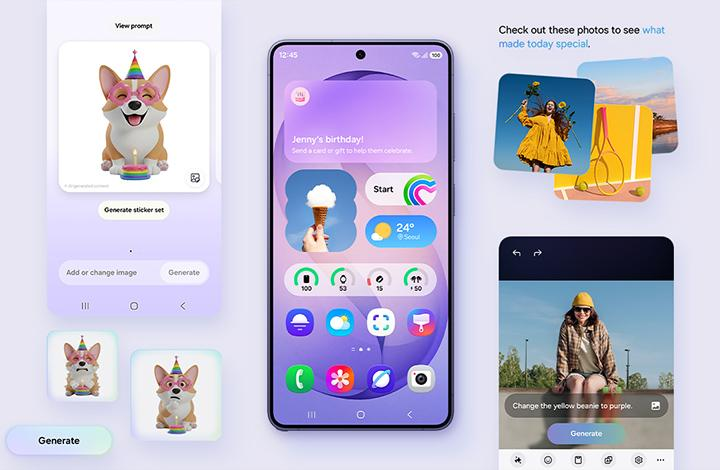
Google is also introducing features like “Create My Widget,” which uses AI to generate contextual Android home screen widgets automatically.
The broader vision is clear: Google wants Android devices to evolve from reactive smartphones into proactive AI companions.
But there’s one major limitation.
Most Android phones simply cannot run it.
Why Gemini Intelligence Requires Flagship Hardware
A footnote published on Android’s official website revealed just how demanding Gemini Intelligence actually is.
The requirements include:
- At least 12GB of RAM
- Support for AICore
- Compatibility with Gemini Nano v3 or newer
- A flagship-grade processor
- Android Virtualization Framework (AVF) support
- Protected Kernel-based Virtual Machine (pKVM) support
- Long-term software support commitments
Those requirements immediately narrow the list of eligible devices.
The 12GB RAM Barrier
The RAM requirement alone excludes a huge portion of the Android market, including many upper-midrange devices and even some premium models.
Google’s reasoning appears practical rather than arbitrary. Gemini Intelligence relies heavily on on-device AI processing, particularly through Gemini Nano v3 models, which are large enough to require substantial memory resources.
Unlike cloud-based AI tools, these models execute tasks directly on the device, improving privacy and reducing latency — but dramatically increasing hardware demands.
Gemini Nano v3 Is the Real Gatekeeper
The biggest obstacle may not even be RAM.
According to reports, the true bottleneck is support for Gemini Nano v3, the newest version of Google’s on-device AI infrastructure.
Many current flagship devices still rely on Gemini Nano v2, meaning they technically fail to qualify despite offering premium hardware.
That includes some surprising names.
Devices Currently Left Out
Several recent high-end phones reportedly do not yet meet Gemini Intelligence requirements, including:
- Pixel 9 series
- Samsung Galaxy Z Fold 7
- Galaxy S25 Ultra
- Xiaomi 17 series
This creates a strange situation where some of the most expensive Android phones released within the past year are effectively locked out of Google’s biggest new AI initiative.
As one report noted:
“The Gemini Nano v3 requirement means the Pixel 9 series — Google’s own 2025 flagship — doesn’t qualify for Gemini Intelligence.”
That revelation has raised serious questions about Google’s rollout strategy.
The Exclusive List of Eligible Phones
At the moment, the pool of supported devices appears extremely limited.
Google has confirmed that Gemini Intelligence will arrive on:
- Samsung Galaxy S26 series
- Google Pixel 10 series
The company is also expected to debut the platform publicly on Samsung’s upcoming foldables:
- Galaxy Z Fold 8
- Galaxy Z Flip 8
Meanwhile, the OPPO Find X9 series has emerged as one of the few non-Google, non-Samsung lineups believed to support Gemini Nano v3 already.
For now, this creates what may be the most exclusive feature set Android has ever introduced.
Google’s Pixel 11 Problem
One of the more awkward developments surrounding Gemini Intelligence involves Google’s own future hardware.
Recent leaks suggest that the standard Pixel 11 model could launch with only 8GB of RAM. If accurate, that would place Google’s own entry-level flagship below the official Gemini Intelligence requirement.
That leaves three possibilities:
- The leak is inaccurate
- Google creates special exceptions for its own devices
- The base Pixel 11 simply won’t support Gemini Intelligence
None of those scenarios would be particularly comfortable during a flagship launch centered heavily around AI.
The situation highlights a growing tension within the smartphone industry: AI features are becoming increasingly dependent on expensive hardware.
More Than Just Performance Requirements
Google’s restrictions extend beyond raw specifications.
To qualify for Gemini Intelligence, devices must also meet a long list of ecosystem and reliability standards, including:
- Five Android OS upgrades
- Six years of quarterly security updates
- Low crash-rate performance metrics
- Advanced HDR and low-light media capabilities
- Spatial audio support
- Ongoing gaming driver updates
In other words, Gemini Intelligence is not simply about having enough power. Google appears to be building an entire “premium Android certification” layer around advanced AI experiences.
That strategy could fundamentally reshape how Android devices are categorized.
AI Could Deepen the Gap Between Premium and Midrange Phones
For years, many smartphone upgrades felt incremental. Camera improvements became smaller, processors became faster, but everyday usage changed only slightly.
AI may reverse that trend.
Gemini Intelligence introduces features that could genuinely separate flagship phones from cheaper alternatives in ways users immediately notice.
If AI agents can independently manage tasks, organize information, interact with apps, and automate workflows, devices lacking those capabilities may begin to feel significantly less advanced.
That creates a potential new hierarchy within Android:
- Phones capable of advanced on-device AI
- Phones limited to traditional assistant features
The divide may become even more pronounced as future Android updates increasingly revolve around AI-first experiences.
Samsung and Google Are Positioning Themselves Carefully
The companies best positioned right now are Samsung and Google.
Samsung’s Galaxy S26 series and next-generation foldables are expected to become the primary showcase devices for Gemini Intelligence. Google’s Pixel 10 lineup will serve as the company’s direct AI reference platform.
This partnership makes strategic sense.
Samsung dominates the premium Android market globally, while Google controls the AI infrastructure itself.
Together, they appear to be establishing a new standard for what a “next-generation Android flagship” should look like.
What Happens Next?
The biggest unanswered question is whether older flagship phones will eventually receive Gemini Nano v3 support through software updates.
If that happens, devices like the Pixel 9 Pro or Galaxy Z Fold 7 could still gain access to Gemini Intelligence later.
If not, consumers may face a frustrating reality where premium devices purchased only a year earlier become obsolete for Google’s newest AI ecosystem.
That could accelerate upgrade cycles while also increasing consumer skepticism around future AI marketing promises.
Either way, one thing is becoming increasingly clear:
The future of Android will be heavily shaped by AI — and not every phone will be able to keep up.