NYT Strands May 17: Puzzle #805 Turns a “Strike” Into a Bowling Alley Brain Teaser
The New York Times’ daily word game Strands continued its growing popularity on Sunday, May 17, 2026, with a puzzle that initially misled players before steering them toward a familiar recreational setting. Puzzle #805, titled “Strike one!”, challenged players to connect bowling-themed words hidden inside the game’s signature twisting letter grid.
What appeared at first to be a baseball reference quickly transformed into a puzzle centered around bowling alleys, arcade spaces, and classic lane-side culture. The result was one of the more approachable Sunday editions of the game, though still clever enough to keep players second-guessing themselves before the theme fully clicked into place.
A Puzzle Built Around Bowling Culture
The defining clue for the May 17 puzzle was the phrase “Strike one!” — a hint that deliberately nudged players toward sports terminology without immediately revealing the true answer. While baseball may have been the first association for many solvers, additional clues pointed toward bowling vocabulary instead.


Once players identified the central theme, the board became much easier to decode. The puzzle’s six theme words were:
- SCOREBOARD
- PINS
- LANES
- ARCADE
- BALLS
- LOUNGE
The puzzle’s spangram — the key phrase connecting every answer — was BOWLINGALLEY, a 12-letter vertical solution stretching from the top of the board to the bottom.


The bowling alley setting tied every discovered word together naturally. From the equipment used during the game to the social spaces surrounding modern entertainment venues, the puzzle leaned heavily into the atmosphere of a classic bowling center.
Why the Puzzle Resonated With Players
Part of the appeal of Puzzle #805 came from its balance between accessibility and misdirection. Several gaming and puzzle outlets described the challenge level as “easy,” yet praised the way the theme subtly redirected players from baseball assumptions toward bowling imagery.
The New York Times itself rated the puzzle as easy based on tester feedback, noting that difficulty rankings are determined using responses from paid testers who evaluate each game before release.
Many players reportedly recognized the answer once clues such as “spare” and “turkey” entered the discussion — terms strongly associated with bowling scoring traditions.


The puzzle also highlighted how Strands differs from simpler word-search games. Instead of allowing straightforward horizontal or vertical discovery patterns, the game encourages words to bend, snake diagonally, and shift directions unexpectedly. Every letter in the grid belongs to a valid solution, meaning there is no unused filler.
How Strands Works
For newer players discovering the game through Sunday’s puzzle, Strands continues to stand out as one of the New York Times’ fastest-growing word titles alongside Wordle and Connections.
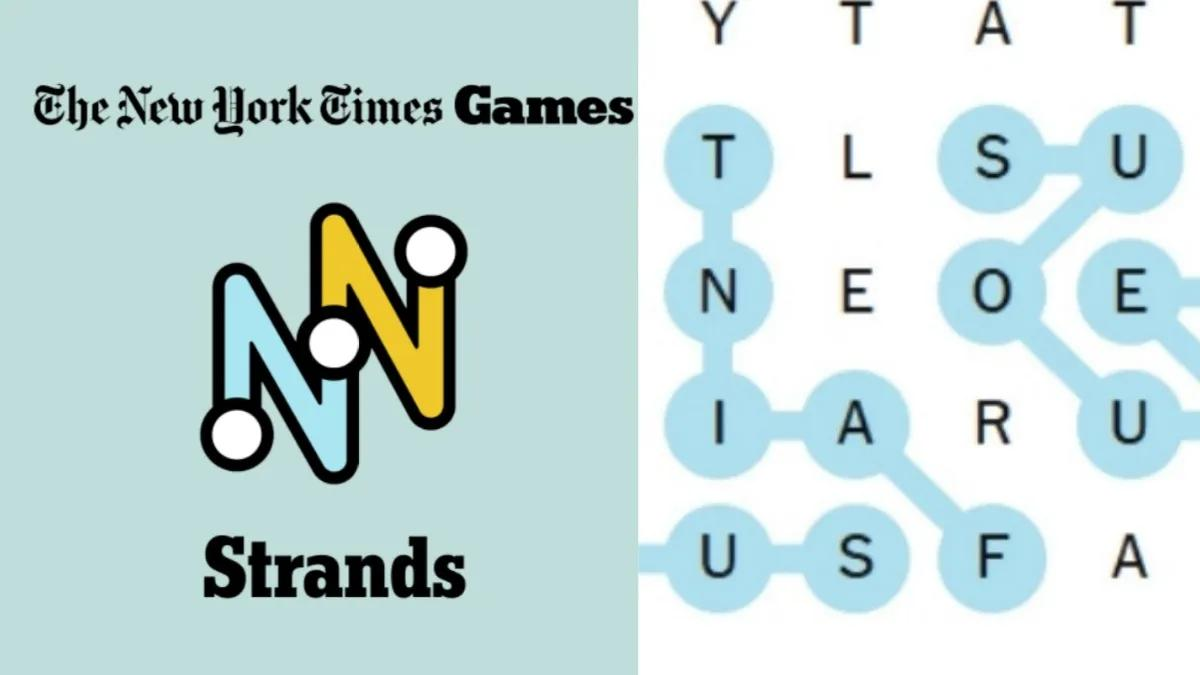
Players receive a 6-by-8 letter grid and must uncover all hidden theme words connected to a single concept. The most important answer is the spangram, which spans opposite sides of the board and defines the puzzle’s central theme.
Correct theme words are highlighted in blue, while the spangram appears in yellow once solved. Non-theme words of four or more letters can also help players earn hints. Every three valid bonus words unlock assistance revealing parts of an unsolved answer.
For Puzzle #805, suggested helper words included:
- CORE
- LONE
- SANE
- PANE
- RING
- DING
- PALS
These bonus discoveries helped players gradually uncover the bowling-centered vocabulary hidden throughout the board.
The Growing Appeal of NYT Word Games
The popularity of Strands reflects a broader surge in digital word puzzles over the last several years. Since Wordle became a global phenomenon, the New York Times Games platform has expanded into a diverse ecosystem of daily challenges, including Connections, Spelling Bee, Mini Crossword, and now Strands.
Unlike traditional crossword puzzles, Strands emphasizes visual pattern recognition and thematic deduction. Solvers are encouraged to think laterally, spotting relationships between categories and cultural references rather than relying purely on vocabulary knowledge.
The May 17 puzzle demonstrated that formula effectively. Bowling alleys are instantly recognizable environments filled with shared imagery — scoreboards, pins, lanes, arcade corners, lounges, and rolling balls — making the final reveal satisfying without feeling overly obscure.
A Puzzle That Played With Nostalgia
Another reason the May 17 edition resonated with players was its nostalgic quality. Bowling alleys occupy a unique place in American leisure culture, often combining sports, arcades, snack counters, and social gathering spaces under one roof.
Writers discussing the puzzle repeatedly referenced rented shoes, crashing pins, and arcade corners, reinforcing the atmosphere that made the theme instantly relatable once identified.
One reviewer even joked that while the puzzle itself was easy, actual bowling remained far more difficult, describing personal scores filled with “1s and 2s that defy science.”
That blend of familiarity and playful misdirection is becoming a defining characteristic of successful Strands puzzles.
The Importance of the Spangram
For many players, the turning point in Puzzle #805 came with identifying the spangram. Because BOWLINGALLEY stretched vertically across the board, it immediately clarified the purpose behind every surrounding word.
Several puzzle guides emphasized that discovering the spangram early is often the best strategy in Strands. Once the overarching category is understood, remaining words become significantly easier to spot.
The May 17 puzzle reinforced that lesson clearly. Terms like “LANES” and “PINS” may seem unrelated at first glance, but together they form an unmistakable bowling vocabulary set once the spangram is visible.
Looking Ahead
As Strands continues evolving within the New York Times Games lineup, puzzles like #805 demonstrate why the format has found such a loyal audience. The game blends word-search mechanics, thematic deduction, and visual puzzle solving into a compact daily challenge that feels approachable while still rewarding careful observation.
Puzzle #805 may not have been the toughest entry in the series, but it succeeded in delivering exactly what many players want from a daily word game: a brief moment of confusion followed by a satisfying thematic breakthrough.
For May 17, 2026, that breakthrough arrived in the unmistakable glow of a bowling alley scoreboard.