Sulfuric Acid: The Hidden Chemical Powering the Modern World Faces a Global Shock
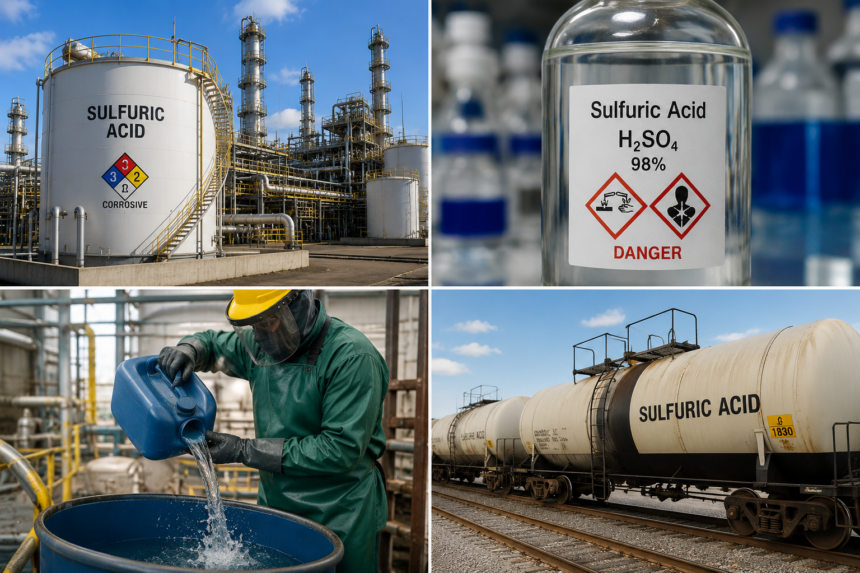
Sulfuric acid rarely makes headlines. It is colorless, corrosive, dangerous to handle, and mostly invisible to everyday consumers. Yet this industrial chemical quietly underpins some of the most essential systems of modern civilization — from food production and clean water to batteries, textiles, computer chips, petroleum refining, and metal processing.
Now, a combination of geopolitical conflict and tightening export controls is turning sulfuric acid into one of the most strategically important industrial commodities in the global economy.
The ongoing war involving Iran, disruptions around the Strait of Hormuz, and China’s move to restrict sulfuric acid exports have triggered a supply squeeze that is reverberating through agriculture, manufacturing, mining, and technology industries worldwide. Prices for both sulfur and sulfuric acid have surged, raising concerns that shortages could persist for years.
Why Sulfuric Acid Matters More Than Most People Realize
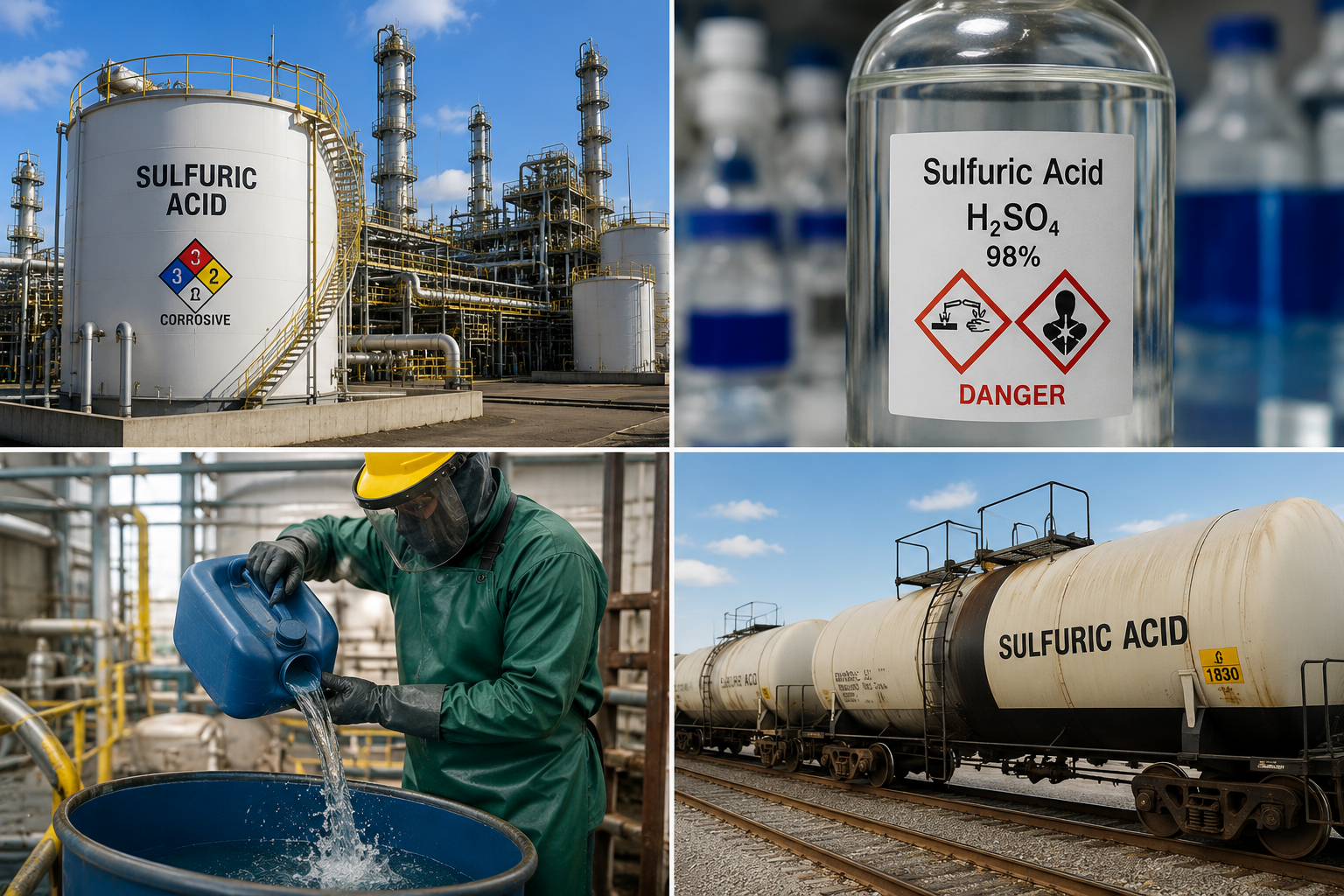
Sulfuric acid is often described as the world’s most widely used industrial chemical. Its importance stems from extraordinary versatility across global manufacturing systems.
The chemical is essential for:
- phosphate fertilizer production
- copper leaching and metal refining
- nickel processing through the HPAL method
- battery manufacturing
- petroleum purification
- textile processing
- semiconductor production
- industrial water treatment
- chemical manufacturing
Without sulfuric acid, many industries would slow dramatically or stop altogether.
The fertilizer industry alone demonstrates its importance. Sulfuric acid is used to process phosphate rock into fertilizer blends that support food production around the world. As supply tightens, concerns are growing that disruptions could eventually affect agricultural output and food prices.
According to reporting from Australia’s ABC Rural, fertilizer producers across several regions are already monitoring the market closely as supply risks intensify.
A Chemical Born From Industrial By-Products
One reason sulfuric acid historically remained inexpensive is that it is often produced indirectly as a by-product of other industrial processes.
There are two primary methods of production:
1. Sulfur Burner Process
This process uses elemental sulfur as feedstock. Sulfur is burned to produce sulfur dioxide, which is then converted into sulfuric acid.
2. Sulfur Smelter Process
In metal smelting operations, sulfur dioxide emerges as a by-product when ores containing sulfur are processed. Rather than waste the gas, facilities convert it into sulfuric acid.
This production structure means sulfuric acid pricing is heavily linked to sulfur itself — particularly when demand exceeds what smelting by-products alone can supply.
A crucial industrial coefficient helps explain the relationship:
1 ton of H2SO4→0.33 tons of sulphur1\ \text{ton of}\ H_2SO_4 \rightarrow 0.33\ \text{tons of sulphur}1 ton of H2SO4→0.33 tons of sulphur
In practical terms, approximately 330 kilograms of sulfur are required to produce one ton of sulfuric acid.
That ratio has become critically important as sulfur prices skyrocket.
The Iran Conflict and the Strait of Hormuz Crisis
The recent surge in prices has roots in geopolitical instability centered around the Persian Gulf.
Roughly half of global sulfur trade flows passed through the Middle East in 2025, according to market estimates cited by Argus Consulting Services.
The Strait of Hormuz — one of the world’s most strategically vital shipping lanes — became a focal point after conflict disrupted maritime transport and damaged refining infrastructure.
The impact has been severe for sulfur supply chains because sulfur itself is largely a by-product of oil refining and gas processing.
“When oil and gas processing is disrupted, sulfur availability is disrupted too,” analysts warn.
Meena Chauhan, head of sulfur and sulfuric acid research at Argus Consulting Services, explained that the war affected supply in two ways:
- vessels carrying sulfur were unable to move through the Strait of Hormuz
- refineries and processors in the region suffered damage or precautionary shutdowns
“Some sites are being taken offline because of damage; in other cases because of precautionary measures,” she said.
China’s Export Restrictions Deepen the Crisis
At the same time, China — the world’s largest sulfuric acid exporter — introduced export restrictions to protect domestic supply.
The restrictions took effect on May 1 and immediately tightened global availability.
China exported nearly 5 million tonnes of sulfuric acid last year, making it a dominant force in international trade flows. Yet China itself relies heavily on imported sulfur from the Middle East to maintain production.
Faced with supply uncertainty, Beijing moved to prioritize its downstream industries, including manufacturing, batteries, and chemical processing.
The consequences are being felt globally.
Australian Manufacturers Face Difficult Choices
One of the clearest examples of the crisis comes from Australia’s textile sector.
LoomTex, a textile manufacturer in Geelong, Victoria, uses sulfuric acid in research, dyeing, and fiber innovation.
Chief executive Samantha Van Zyl described the chemical as “critical as an auxiliary step in the lab … for fibre innovation.”
But shrinking availability has placed the company in a difficult position.
To secure enough supply, LoomTex may need to store larger quantities of dangerous chemicals onsite — triggering major regulatory and safety requirements.
“Increasing to the dangerous goods limit actually means that we’re changing the shape of our business,” Ms Van Zyl said.
“We’d have to bring in WorkSafe Victoria; the fire hazards and safety risks on site as a chemical risk profile completely change.
“It’s not something that can be done overnight.”
Without stable access to sulfuric acid, the company fears losing customers to overseas competitors.
Fertilizer Production Under Pressure
The fertilizer sector may face even greater long-term risks.
North West Phosphate chairman John Cotter explained that sulfuric acid is indispensable for phosphate fertilizer production.
“Most of those producers use sulphur mixed with water to create sulphuric acid mixed in with phosphate rock,” he said.
“That gives you the basic ingredients for all of the fertiliser blends that you find in the shops.”
Analysts say fertilizer producers are particularly vulnerable because they typically cannot absorb extreme price increases as easily as mining or battery industries can.
In some regions, fertilizer output reductions have already begun.
“We’ve seen in North Africa as well, a key fertiliser producer announcing that they’re going to have a reduction in their output of fertilisers,” Meena Chauhan said.
Why Sulfur Prices Have Reached Alarming Levels
The sulfur market has undergone a dramatic transformation in recent years.
For decades, sulfur was viewed as:
- a refining by-product
- a secondary commodity
- a relatively low-risk industrial material
That perception is changing rapidly.
According to PricePedia analysis, sulfur is increasingly becoming a strategic chemical resource within the global industrial supply chain.
Prices have surged accordingly.
Some specialized sulfur markets in China recently exceeded €800 per ton after conversion into euros — an extraordinary level historically considered unsustainable.
At those prices, sulfur alone would contribute enormous cost pressure to sulfuric acid production:
800×0.33=264 \euro/t800 \times 0.33 = 264\ \euro/t800×0.33=264 \euro/t
Once energy, maintenance, logistics, and industrial margins are added, sulfuric acid prices could exceed €300 per ton.
Analysts believe that level becomes economically damaging for many industrial users.
The Rise of Chemical Substitution
One of the most important developments in the market is the increasing possibility of substitution.
In several industrial applications, hydrochloric acid can partially replace sulfuric acid, especially in:
- water treatment
- pH regulation
- pickling operations
- general chemical processing
Because hydrochloric acid is currently much cheaper in some regions, industrial users may switch when sulfuric acid prices become too high.
PricePedia estimates that sulfuric acid begins facing significant competitive resistance once prices exceed roughly €180–200 per ton.
That creates a kind of economic ceiling for sulfur prices as well.
If sulfur becomes too expensive, demand for sulfuric acid weakens, eventually reducing sulfur demand itself.
A Structural Shift in Global Industry
What makes this situation especially significant is that many analysts no longer view the current disruption as temporary.
Several deeper structural trends are reshaping the sulfuric acid market:
- growing battery production
- rising demand for nickel and copper
- increasing global fertilizer needs
- supply chain regionalization
- geopolitical fragmentation
- vulnerability of energy-linked by-products
The clean-energy transition may intensify these pressures further. Electric vehicles, battery manufacturing, and critical mineral processing all depend heavily on sulfuric acid.
At the same time, refining disruptions or slower fossil fuel production growth could constrain sulfur availability.
This creates an unusual paradox:
the world’s push toward cleaner energy may indirectly increase dependence on one of industrial chemistry’s oldest and harshest substances.
Could the Crisis Last for Years?
Industry analysts warn that even if tensions ease in the Persian Gulf, recovery may be slow.
Shipping priorities may favor oil and gas over sulfur cargoes once trade routes reopen. Damaged facilities could also require years to return to full production.
“The war is impacting revenues, impacting the timelines for these projects that will now likely end up with delays through until next year, potentially even beyond next year,” Meena Chauhan said.
That means sulfuric acid markets could remain volatile well beyond the immediate geopolitical crisis.
The Chemical That Quietly Holds the World Together
Sulfuric acid rarely attracts public attention because it sits deep within industrial supply chains rather than on store shelves.
Yet the current crisis reveals how dependent modern civilization is on this single chemical.
Food production, textiles, mining, electronics, batteries, water treatment, and heavy manufacturing all rely on stable sulfuric acid supply.
As geopolitical tensions disrupt trade and governments protect domestic industries, sulfuric acid has evolved from an overlooked industrial by-product into a strategic global resource.
The world is now discovering that even the most ordinary industrial materials can become critical pressure points in an interconnected economy.