Charles Leclerc: The Ferrari Star Driving Formula 1 Into Pop Culture’s Spotlight
Charles Leclerc has long been one of Formula 1’s brightest stars, but 2026 is proving to be a defining year for the Monegasque driver both on and off the track. From contract speculation and championship pressure at Ferrari to unexpected viral moments at the Cannes Film Festival, Leclerc’s presence now stretches far beyond motorsport.
The 28-year-old Ferrari driver has become central to conversations about Formula 1’s future, celebrity culture, and the growing crossover between racing and mainstream entertainment. Recent weeks have highlighted just how influential Leclerc has become in shaping Formula 1’s global image.
From Ferrari’s Golden Hope to a Driver Under Pressure
Charles Leclerc entered Formula 1 carrying enormous expectations. After joining Ferrari in 2019 following his rise through the Scuderia’s junior academy, he was quickly positioned as the team’s future world champion.

Seven years later, the statistics tell a story of brilliance mixed with frustration. Leclerc has secured eight Grand Prix victories and 52 podium finishes, but a Formula 1 Drivers’ Championship still remains elusive.
His closest title challenge came in 2022 when he finished second behind Max Verstappen, though the gap between the two drivers was a substantial 146 points.


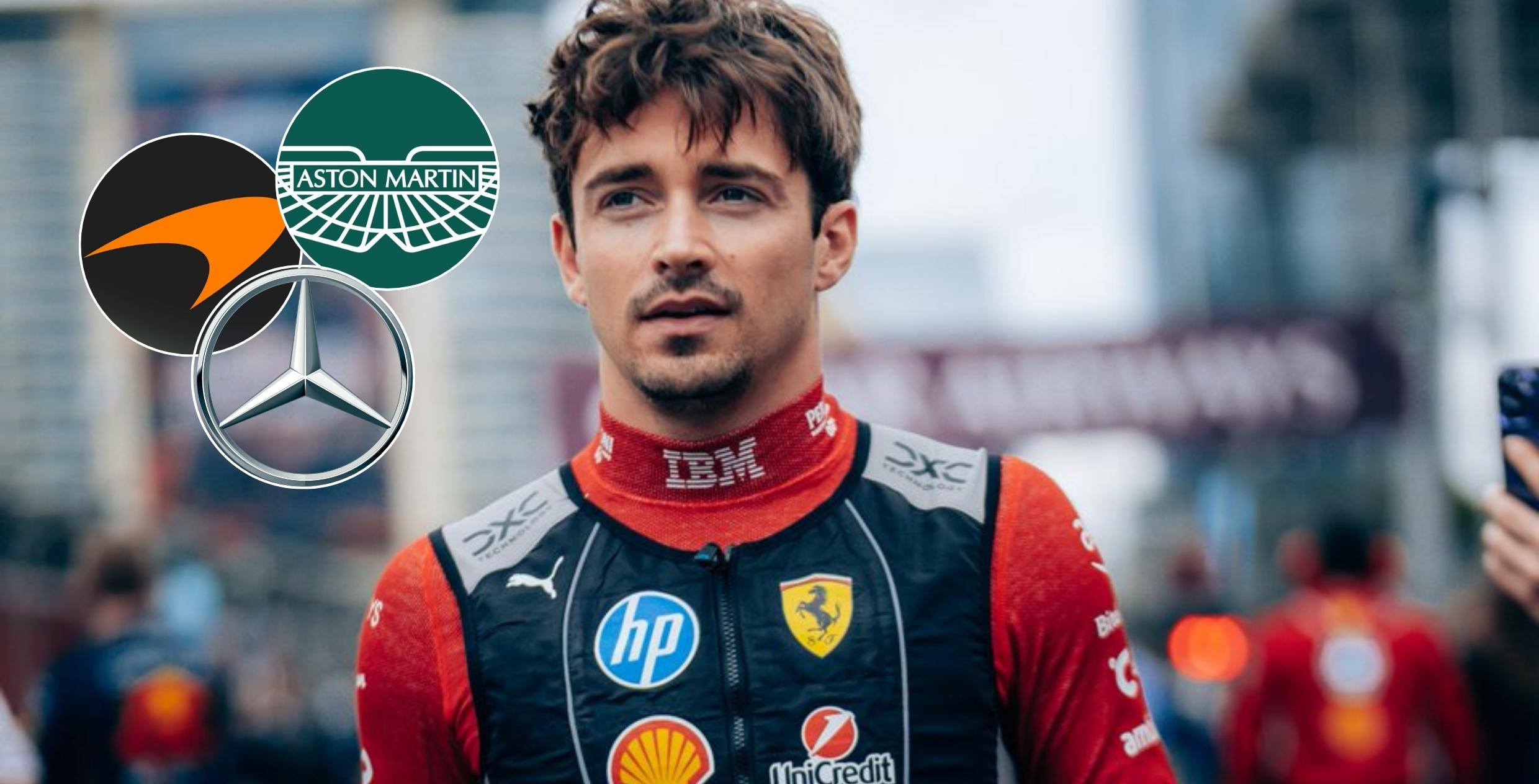
Now in his eighth season with Ferrari, Leclerc’s future is once again dominating headlines. Reports emerging in May 2026 claimed Aston Martin made what was described as a “serious offer” to tempt the Ferrari star away from Maranello. According to multiple reports, Leclerc personally rejected the approach despite growing uncertainty around Ferrari’s competitiveness.
The speculation reflects broader instability across the Formula 1 grid. With new regulations reshaping team performance and driver markets becoming increasingly volatile, elite drivers are reassessing long-term futures more aggressively than ever before.
Why Ferrari Cannot Afford to Lose Leclerc
Ferrari’s relationship with Charles Leclerc is about more than race results. For the Italian team, he represents continuity, identity, and the possibility of restoring championship glory.
Leclerc signed a multi-year contract extension in 2024 reportedly keeping him tied to Ferrari until 2029. Yet Formula 1 contracts are rarely immune to pressure when performance expectations are not met.


The situation has become even more sensitive because Ferrari’s current driver lineup includes seven-time world champion Lewis Hamilton, whose future beyond the current season remains uncertain.
If Ferrari were ever to lose Leclerc, it would trigger one of the biggest driver market shocks in recent Formula 1 history.
Motorsport analysts increasingly view Leclerc as one of the few drivers capable of leading a team through the next generation of Formula 1 regulations. His raw pace, qualifying ability, and deep connection with Ferrari’s fanbase make him strategically invaluable.
Despite trailing in the 2026 Drivers’ Championship standings, Leclerc remains a consistent podium contender. Reports indicate he currently sits third in the championship, though already significantly behind Mercedes rival Kimi Antonelli.
The Cannes Film Festival Moment That Went Viral
While Leclerc’s future in Formula 1 remains under scrutiny, a completely different side of his celebrity status emerged during the 2026 Cannes Film Festival.
A short interaction between Leclerc and Bollywood superstar Alia Bhatt unexpectedly exploded across social media, creating one of Cannes’ most-discussed crossover moments.
The pair were attending a L’Oréal Paris event when cameras captured Leclerc turning back to help Bhatt as she navigated the stairs in a flowing gown. The seemingly simple gesture instantly became viral content.
One widely shared social media post described it as “gentlemen behaviour,” while another joked that fans never expected to see “Charles x Alia” together at Cannes.
The viral reaction highlighted Formula 1’s evolving cultural relevance. Drivers are no longer viewed solely as athletes competing within a niche motorsport ecosystem. Instead, figures like Leclerc now operate in the same celebrity landscape occupied by film stars, musicians, luxury fashion brands, and digital influencers.
Formula 1’s Celebrity Era Is Accelerating
Leclerc’s Cannes appearance perfectly illustrates Formula 1’s dramatic transformation over the past decade.
The sport’s expansion into entertainment culture has accelerated through streaming documentaries, social media visibility, luxury branding partnerships, and global celebrity engagement. Drivers increasingly attend fashion events, film festivals, and major commercial launches alongside Hollywood actors and international artists.
Leclerc’s appearance with his wife, Alexandra Saint Mleux, at Cannes further reinforced his growing lifestyle and fashion profile. Reports described the couple making their first public appearance as newlyweds during the premiere of La Vie D’Une Femme.
Saint Mleux herself already commands a major online following as an art history student and influencer, further positioning the couple within modern celebrity culture.
Meanwhile, Alia Bhatt’s interactions with not just Leclerc but also Williams driver Carlos Sainz Jr. fueled a broader internet fascination with Formula 1’s increasing overlap with mainstream entertainment.
Social media users humorously claimed Bhatt was “collecting drivers like Pokémon,” reflecting how naturally Formula 1 personalities are now entering viral pop culture conversations.
A Driver Who Represents Formula 1’s Modern Identity
Leclerc’s appeal extends beyond pure racing talent.
He embodies many of the qualities Formula 1 now markets globally:
- youth and sophistication
- luxury lifestyle aesthetics
- social media accessibility
- emotional vulnerability
- elite athletic performance
- crossover celebrity appeal
This combination makes him uniquely valuable not only to Ferrari but also to Formula 1’s broader commercial ambitions.
Unlike previous generations of drivers who often remained distant from entertainment culture, Leclerc operates comfortably within both worlds. He can compete for podiums on Sunday and dominate fashion headlines by Monday.
That dual identity is becoming increasingly important as Formula 1 targets younger and more diverse global audiences.
The Road Ahead for Charles Leclerc
The next phase of Leclerc’s career may ultimately define his legacy.
Questions surrounding Ferrari’s competitiveness continue to intensify. If the team cannot consistently challenge for championships under Formula 1’s evolving regulations, pressure on Leclerc to explore alternatives will only grow stronger.
Aston Martin’s reported approach demonstrates how aggressively rival teams view him as a potential franchise driver.
At the same time, Leclerc’s off-track visibility continues to expand rapidly. Brand partnerships, celebrity appearances, and global media exposure are transforming him into one of Formula 1’s most marketable personalities.
His home Monaco Grand Prix remains one of the emotional centerpieces of the season, particularly after his memorable victory there in 2024. The race has become symbolic of both his personal journey and Formula 1’s glamorous global identity.
Whether Leclerc eventually becomes a world champion or not, his influence on modern Formula 1 is already undeniable.
Conclusion
Charles Leclerc’s 2026 season reflects the changing nature of Formula 1 itself. He remains Ferrari’s central hope for championship success while simultaneously becoming one of the sport’s most recognizable global celebrities.
From high-stakes contract rumors and championship battles to viral Cannes moments with Alia Bhatt, Leclerc now exists at the intersection of elite sport and international pop culture.
That evolution says as much about Formula 1’s future as it does about Leclerc himself.
The Monegasque driver is no longer simply racing for Ferrari. He is helping redefine what a modern Formula 1 superstar looks like.