Chelsea Handler and Shane Gillis Turn Netflix Roast Into Comedy’s Most Explosive Viral Moment
Netflix’s The Roast of Kevin Hart was supposed to celebrate one of comedy’s biggest stars. Instead, much of the internet woke up talking about Chelsea Handler and Shane Gillis.
- The Roast That Changed the Conversation
- Chelsea Handler’s Counterattack
- Why Jeffrey Epstein’s Name Returned to the Headlines
- Shane Gillis and the Evolution of “Edgy” Comedy
- Chelsea Handler’s Long History With Unfiltered Comedy
- The Internet’s Obsession With Chelsea Handler’s Personal Life
- Roast Comedy in the Streaming Era
- Why the Chelsea Handler-Shane Gillis Clash Resonated So Strongly
- What Happens Next?
What began as a standard roast segment during the finale of the 2026 Netflix Is a Joke festival quickly escalated into one of the most talked-about celebrity exchanges of the year. Gillis’ remarks about Handler’s political views and past connection to Jeffrey Epstein sparked immediate backlash, while Handler’s counterattack revived controversy surrounding the comedian’s own history with racist jokes and his firing from Saturday Night Live.
The confrontation ignited days of social media debate, revived years-old controversies, and highlighted how modern roast comedy now exists in a hyper-online culture where every punchline instantly becomes political, personal, and permanent.
The viral exchange has since dominated entertainment headlines and reignited broader conversations about comedy boundaries, celebrity accountability, and the increasingly blurred line between roasting and real conflict.



The Roast That Changed the Conversation
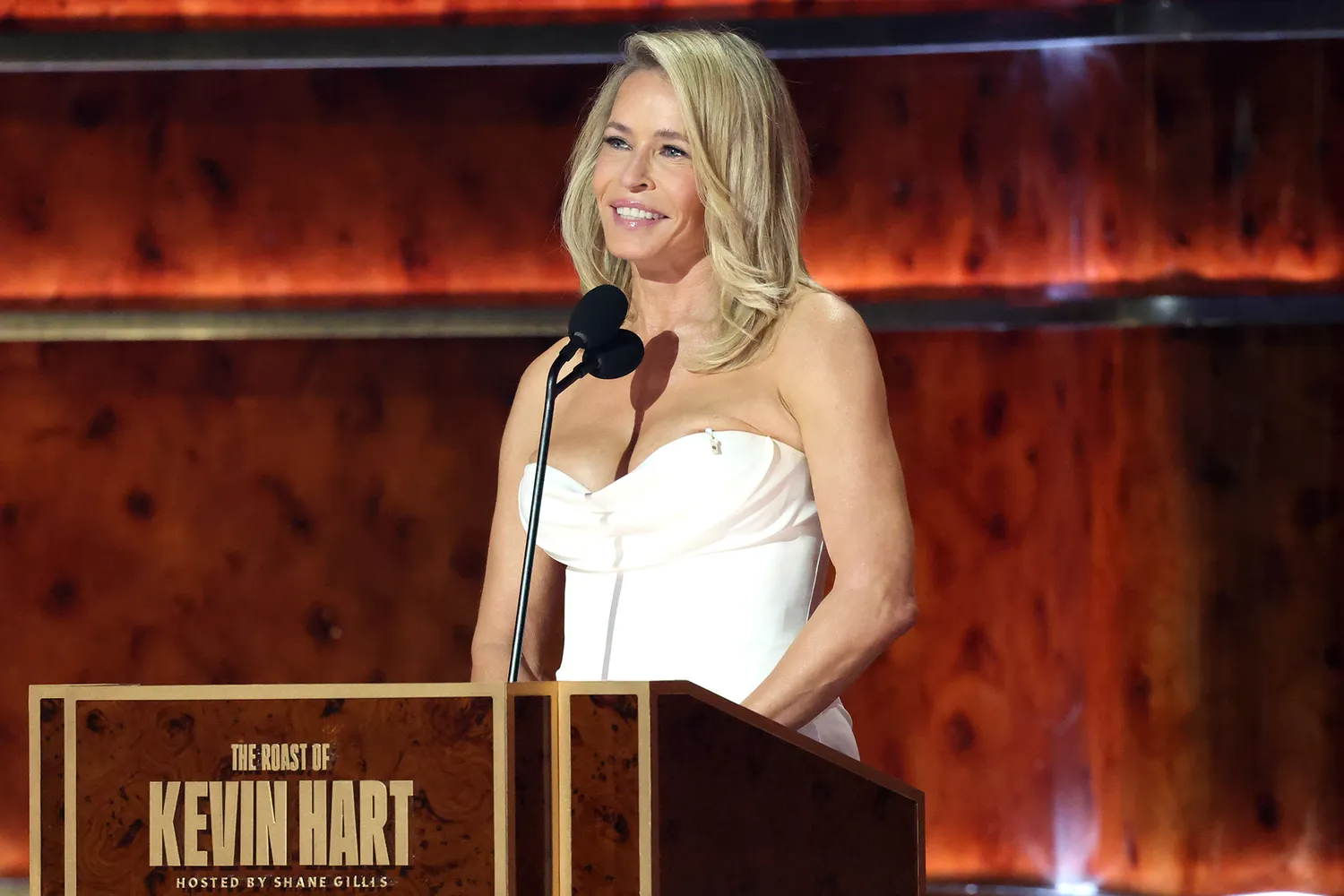
The incident unfolded during Netflix’s live Roast of Kevin Hart event at the Kia Forum in Inglewood, California on May 10, 2026. Hosted by Shane Gillis, the special featured an all-star lineup of comedians and celebrities including Tom Brady, Tony Hinchcliffe, Katt Williams, and Chelsea Handler.
Before Handler took the stage, Gillis introduced her with a barrage of controversial jokes.
According to reports from the event, Gillis called Handler a “Zionist,” before continuing with politically charged and provocative remarks. He also referenced Handler’s attendance at a dinner hosted by Jeffrey Epstein in 2010.
Entertainment Weekly documented part of Gillis’ set, including his comments about Handler attending “dinner at Jeffrey Epstein’s house in 2010,” alongside references to Prince Andrew and Woody Allen being present.


The room reacted immediately, but the moment truly exploded once Handler stepped up to respond.
Chelsea Handler’s Counterattack
Handler did not attempt to soften the exchange.
Instead, she directly targeted Gillis’ history of racist and homophobic remarks that led to his removal from Saturday Night Live shortly after he was hired in 2019.
“Shane, just so you know, Judaism and Zionism are two different things,” Handler said during her rebuttal.
She then delivered the line that rapidly circulated across social media:
“Kind of like how Chinatown and Koreatown are two different things, but your favorite slur works in both places.”
The comeback instantly became one of the defining moments of the roast.
Viewers online split into opposing camps almost immediately. Some praised Handler for directly confronting Gillis’ controversial past, while others argued Gillis had “won” the exchange by bringing up Handler’s Epstein association.
The internet reaction intensified the moment beyond ordinary roast comedy and transformed it into a cultural flashpoint.
Why Jeffrey Epstein’s Name Returned to the Headlines
Much of the online backlash against Handler centered on her previously acknowledged attendance at one of Epstein’s dinner parties.
Handler has publicly addressed the incident before. During an earlier interview with Rob Lowe, she admitted attending a dinner at Epstein’s New York home years before Epstein’s 2019 arrest and conviction-related scandal became globally known.
Handler said she attended alongside Katie Couric and recalled that the guest list included Woody Allen, Soon-Yi Previn, Charlie Rose, and Prince Andrew. She described the evening as “awkward and weird.”
She has consistently denied ever visiting Epstein’s private island.
Still, social media users revived the controversy after the roast aired, with many accusing Handler of failing to adequately respond to Gillis’ Epstein joke.
The backlash demonstrated how quickly historic celebrity controversies can resurface in the digital era, especially during highly visible live events.
Shane Gillis and the Evolution of “Edgy” Comedy
The roast also renewed debate about Shane Gillis himself.
Gillis has become one of the most commercially successful stand-up comedians in America despite — or arguably because of — the controversy surrounding his career. His 2019 dismissal from Saturday Night Live followed resurfaced podcast clips in which he used racist language while discussing Chinese people and culture.
At the time, Gillis defended parts of his comedic style as “risk-taking” humor, while critics argued the material crossed into outright racism.
His appearance as roastmaster for a major Netflix comedy event illustrated how dramatically public perception around controversial comedians has shifted in recent years.
Netflix itself has increasingly embraced comedians who provoke cultural debate, even when their material sparks backlash online. The success of roast specials, uncensored stand-up events, and confrontational comedy formats reflects a growing appetite for live unpredictability.
The Handler-Gillis exchange became the clearest example of that strategy in action.
Chelsea Handler’s Long History With Unfiltered Comedy
For Handler, the roast controversy fits neatly into a career built on confrontation.
The comedian rose to fame through Chelsea Lately, the late-night E! talk show that ran from 2007 to 2014 and became known for its aggressive celebrity humor and no-filter commentary.
Over the years, Handler has evolved beyond celebrity comedy into political commentary and activism, frequently using her platform to discuss social issues and American politics.
Her critics argue that her political rhetoric sometimes clashes with the irreverent style that originally made her famous. Supporters, meanwhile, view her willingness to confront controversial subjects as central to her identity as a comedian.
That divide was visible throughout the roast fallout.
The Internet’s Obsession With Chelsea Handler’s Personal Life
The roast controversy also reopened public fascination with Handler’s celebrity relationships and personal history.
Following the Netflix event, several entertainment outlets revisited her brief but memorable romance with rapper 50 Cent. The pair dated casually after meeting on Chelsea Lately in 2010, a relationship Handler later described as surprising and fun.
Handler has referred to 50 Cent as her “favorite ex-boyfriend” and previously joked about impulsively buying a Bentley during their relationship after being impressed by his luxury cars.
Media coverage following the roast also resurfaced Handler’s broader dating history, including relationships with Ted Harbert, Andre Balazs, and comedian Jo Koy.
This secondary wave of coverage reflected how celebrity controversies today rarely stay confined to a single incident. Instead, entire public personas get reexamined in real time.
Roast Comedy in the Streaming Era
The Handler-Gillis feud highlighted how dramatically roast comedy has changed since the days of traditional Comedy Central roasts.
Streaming platforms now amplify every joke instantly across TikTok, X, Reddit, Instagram, and YouTube. Instead of disappearing after broadcast, controversial moments are clipped, dissected, and reframed by millions of viewers within minutes.
That environment fundamentally changes the nature of comedy.
A roast line that once existed only for a live audience now becomes searchable internet history forever. Context disappears quickly, and audiences often encounter isolated clips detached from the larger event.
Several outlets covering the Kevin Hart roast noted that some jokes were reportedly removed or edited after the live broadcast.
The fact that audiences now analyze not only what aired — but also what got cut — demonstrates how deeply entertainment culture has merged with online discourse.
Why the Chelsea Handler-Shane Gillis Clash Resonated So Strongly
Part of the reason the moment exploded online is because it touched multiple cultural fault lines simultaneously:
- political identity
- celebrity accountability
- cancel culture
- antisemitism debates
- race and offensive humor
- Jeffrey Epstein associations
- the role of edgy comedy in mainstream entertainment
Both Handler and Gillis represent very different comedic eras and audiences.
Handler emerged from the late-2000s celebrity roast culture dominated by cable television and tabloid humor. Gillis represents the newer internet-era comedian whose fanbase often embraces anti-establishment and anti-censorship messaging.
Their clash felt symbolic to many viewers because it reflected a larger generational conflict happening across entertainment and media.
What Happens Next?
Neither Netflix nor the comedians involved appeared interested in softening the controversy after the roast aired.
In fact, the viral attention may ultimately benefit everyone involved commercially. Comedy roasts thrive on controversy, and streaming platforms increasingly rely on viral moments to dominate cultural conversation.
For Gillis, the event reinforced his image as an unapologetically provocative comic.
For Handler, it reestablished her reputation as a fearless performer willing to confront criticism head-on.
And for Netflix, the roast succeeded in becoming exactly what modern live entertainment aims to be: impossible to ignore.
Whether audiences viewed the exchange as brilliant comedy, uncomfortable hostility, or something in between, the Handler-Gillis showdown proved one thing clearly — in the streaming age, the biggest entertainment moments are no longer scripted dramas or blockbuster films.
Sometimes they are simply two comedians refusing to back down on stage.