Kodak Black Arrested: Inside the Florida MDMA Trafficking Case and What Comes Next
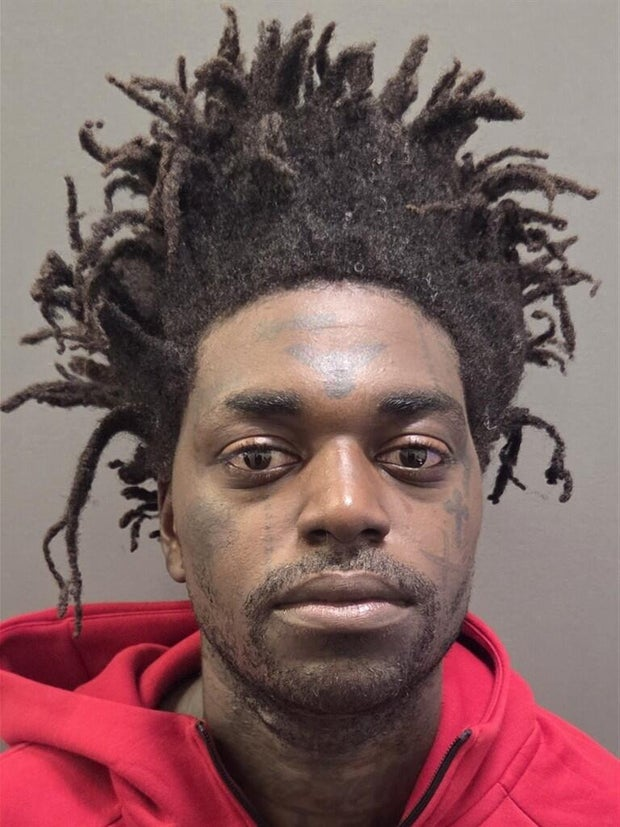
Kodak Black is once again facing serious legal scrutiny after being arrested in Florida on a felony drug trafficking charge tied to an incident that authorities say began months earlier in Orlando. The rapper, whose legal name is Bill Kapri, was booked into the Orange County Jail on Wednesday, May 6, 2026, on a charge of trafficking MDMA, the synthetic drug commonly known as ecstasy or molly. He later entered a written plea of not guilty and requested a jury trial.
- The Arrest That Followed a November Police Encounter
- What Kodak Black Is Accused Of
- A Courtroom Fight Over Bond
- Kodak Black Pleads Not Guilty
- Why the Instagram Allegations Matter
- A Celebrity Case With Broader Questions
- Kodak Black’s Previous Legal Troubles
- The Music Career Behind the Headlines
- What Happens Next?
- Conclusion: A High-Stakes Case for Kodak Black
The case has drawn attention not only because of Kodak Black’s celebrity status, but also because of the details laid out by investigators: luxury SUVs, a reported response to gunshots, a pink bag allegedly linked to social media photos, $37,000 in cash, and arguments in court over whether his career as a rapper should affect his bond.
The Arrest That Followed a November Police Encounter
The charge stems from a November 2025 incident at the Children’s Safety Village on Fairvilla Road in Orlando. According to the information provided, police were called to the area after multiple people reported hearing gunshots nearby. When officers arrived, they found a BMW SUV and a Lamborghini SUV parked outside, with several people gathered around them.


Investigators said officers smelled marijuana coming from the vehicles and began searching them. During the search of the Lamborghini SUV, an officer reported seeing a $100 bill with a “white powdery substance” on it. Authorities also said they found a pink pair of scissors that appeared to match an item seen in a Kodak Black Instagram photo posted the week before.
Inside the vehicle, officers said they found rings on the floorboard that appeared to match rings worn by the rapper. They also reported finding a pink bag in the passenger seat containing a substance later identified as MDMA, $37,000, and multiple documents bearing the name Bill Kapri. Investigators said the bag also appeared in a photo on Kodak Black’s Instagram account.


Police later said testing by the Florida Department of Law Enforcement confirmed the substance in the pink bag was MDMA and was considered a trafficking amount. The report came back on April 17, 2026.
What Kodak Black Is Accused Of
Orange County Jail records listed the original charge as trafficking more than 10 grams and less than 200 grams of MDMA. The Associated Press reported that Kapri was booked on a felony charge of trafficking MDMA and that the case dates back to the November police encounter in Orlando.
The key allegation is not simply that MDMA was found near the rapper, but that investigators believe the items recovered from the Lamborghini SUV created a connection to him. That alleged connection includes documents with his legal name, items said to match his social media posts, and his reported request that the money inside the bag be returned to him.
According to the police report, everyone at the scene denied owning the bag, including Kapri. However, investigators said he told officers the money “belonged to his business” and asked for it back.


A Courtroom Fight Over Bond
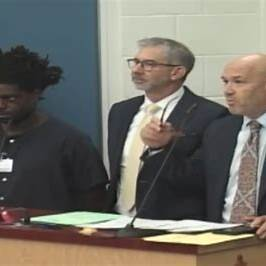
Kodak Black made his first appearance before a judge on Thursday. His legal team argued that he had flown in from California to turn himself in and that the evidence did not justify a high bond. His attorney asked for bond to be set at $10,000.
The prosecution pushed for a higher amount, arguing that the standard bond should be increased. In court, an assistant state attorney said, “The state would actually ask that you increase the bond because the defendant is a professional rapper.”
The defense responded sharply: “The fact that he’s a rapper doesn’t give you a legal purpose to raise the bond.”
The judge ultimately set bond at $75,000. While acknowledging the state’s argument, the judge said the decision was not based on Kapri’s career. “I am going to increase the bond, not for the fact that you’re a rapper. I think that has no binding. But the other factors that the court considered is your prior criminal history, including 12 prior felony convictions.”
The judge also noted that although Kapri did not claim ownership of the bag, his request for the money inside it appeared to create some connection to the bag. He was ordered not to have contact with co-defendants and witnesses, though the court allowed contact with certain witnesses identified by the defense as family members or members of his security team.
Kapri later bonded out.
Kodak Black Pleads Not Guilty
Kapri entered a written plea of not guilty and asked for a jury trial. He also waived appearing in person at a future arraignment hearing in state court.
That plea means the case now moves into the next phase of the criminal process, where prosecutors will have to prove the charge and the defense will likely challenge the strength of the evidence tying Kapri to the drugs.
His defense attorney suggested in court that the case was weak, saying, “On my way here, on the train, I was typing up a motion to dismiss. The is not enough here.”
Why the Instagram Allegations Matter
One of the most striking details in the case is the role investigators say social media played in linking items to Kodak Black. Authorities alleged that the pink bag found in the Lamborghini matched one seen in a photo posted on the rapper’s Instagram account. They also said a lighter and other items appeared to match objects seen in the same or related photos.
In criminal investigations, social media posts can become relevant when authorities argue that they help identify ownership, possession, proximity, or familiarity with items found during a search. In this case, investigators appear to be using the alleged photo matches as part of a broader argument that the bag and its contents were connected to Kapri.
However, the defense has pushed back on that connection. According to the information provided, his attorney argued that Kapri was not in either vehicle, that the vehicles were not registered to him, and that analysis did not return fingerprints tying him to the items found.
A Celebrity Case With Broader Questions
The courtroom exchange over whether Kodak Black’s status as a rapper should affect bond raises a larger question about celebrity defendants and equal treatment in court. Prosecutors argued that his occupation and lack of ties to Orlando justified a higher bond and a passport surrender condition. His legal team countered that being a rapper was not a valid legal basis for raising bond.
The judge’s ruling tried to separate fame from legal risk, saying the bond increase was based on prior criminal history rather than occupation. Still, the moment became one of the most discussed parts of the hearing because it touched on a recurring issue in high-profile criminal cases: whether fame is viewed as a flight risk, a public pressure point, or an irrelevant detail.
Kodak Black’s Previous Legal Troubles
This is not Kodak Black’s first encounter with law enforcement. The rapper has faced multiple legal issues over the years, including drug-related allegations and a federal weapons case.
In 2023, police in Plantation, Florida arrested Kapri after finding him asleep at the wheel with white powder around his mouth. Authorities initially said the powder tested positive for cocaine, but a lab test later revealed it was oxycodone, for which Kapri had obtained a prescription. That arrest violated probation in an unrelated case and led to him being held in Miami for two months.
He was also arrested in 2022 on charges of trafficking in oxycodone and possession of a controlled substance without a prescription. He was released on bond with regular drug testing as a condition. In 2023, he was ordered into drug rehab for 30 days after missing a drug test and later testing positive for fentanyl, according to court records cited in the provided material.
In January 2021, then-President Donald Trump commuted a three-year federal prison sentence Kapri was serving for falsifying documents used to buy weapons. Kapri had served about half of that sentence.
The Music Career Behind the Headlines
Despite his repeated legal troubles, Kodak Black remains a major figure in hip-hop. As Kodak Black, Bill Kapri has sold more than 30 million singles and released major hits including “Super Gremlin,” which reached No. 3 on the Billboard Hot 100 in 2022.
His debut album, Painting Pictures, also became a major commercial moment in his career, peaking at No. 3 on Billboard. The contrast between his commercial success and recurring legal problems has long shaped public discussion around him: fans see a talented artist with a distinctive voice and major cultural influence, while critics point to a pattern of arrests and court cases that continue to interrupt his career.
What Happens Next?
The next major question is how prosecutors will attempt to prove possession or control of the MDMA allegedly found in the pink bag. The defense is likely to focus on whether Kapri owned the bag, whether he had direct access to the vehicle, whether the vehicle was registered to him, and whether the physical evidence truly ties him to the drugs.
The case may also turn on how much weight the court gives to circumstantial details: the documents with his name, the money he allegedly claimed belonged to his business, and the alleged Instagram connections.
For now, Kodak Black is out on bond, has pleaded not guilty, and has requested a jury trial. The charge remains serious, and the outcome could carry major legal and career consequences.
Conclusion: A High-Stakes Case for Kodak Black
Kodak Black’s latest arrest adds another chapter to a legal history that has often run parallel to his music career. The Florida MDMA trafficking case is still in its early stages, and the rapper is presumed not guilty unless proven otherwise in court.
What makes this case especially notable is the mixture of legal, cultural, and celebrity factors surrounding it: a felony drug charge, a contested bond hearing, disputed evidence, and a defendant whose fame became part of the courtroom discussion. As the case moves forward, the central question will be whether prosecutors can establish a clear legal connection between Bill Kapri and the MDMA allegedly found in the vehicle — or whether the defense can convince the court that the evidence falls short.