




7.4 Earthquake in Indonesia: A Sudden Jolt, a Swift Warning, and a Region on Edge
A Morning Shock Beneath the Molucca Sea
In the early hours of Thursday, April 2, 2026, a powerful 7.4-magnitude earthquake struck beneath the waters of the Molucca Sea in Indonesia, triggering widespread alarm across coastal communities and prompting tsunami warnings that briefly extended across parts of Southeast Asia.
- A Morning Shock Beneath the Molucca Sea
- Tsunami Alerts and Coastal Anxiety
- Lives Disrupted: Casualties and Damage
- “The Strongest in Years”: Eyewitness Accounts
- Aftershocks and Ongoing Risk Assessment
- Why Indonesia Is So Vulnerable
- Regional and Global Implications
- A Region Recovering—and Watching Closely
- Conclusion: A Powerful Reminder of Nature’s Force
The quake, recorded at a depth of approximately 35 kilometers (22 miles), sent strong tremors through several regions, including North Sulawesi and North Maluku. Within minutes, residents in cities such as Bitung and Ternate reported intense shaking lasting between 10 and 20 seconds—enough to send people running from homes, markets, and hospitals in search of safety.
Despite the relatively short duration, the impact was immediate and disruptive. Buildings were damaged, panic spread quickly, and emergency systems were activated across multiple provinces.

Tsunami Alerts and Coastal Anxiety
The earthquake triggered a small but measurable tsunami, heightening fears across coastal zones. Monitoring stations recorded waves of up to 30 centimeters (about one foot) in parts of Indonesia, while smaller waves were detected as far as the southern Philippines.
Initial warnings from regional monitoring agencies suggested that waves under 0.3 meters could reach several countries, including Japan, Malaysia, Papua New Guinea, and Taiwan. However, after further assessment, authorities downgraded the threat and lifted the tsunami alert within a few hours.

Even so, officials urged caution. Indonesia’s disaster management authorities warned residents to stay away from beaches and coastal areas until a formal all-clear was issued, emphasizing that aftershocks and secondary risks could still pose danger.
Lives Disrupted: Casualties and Damage
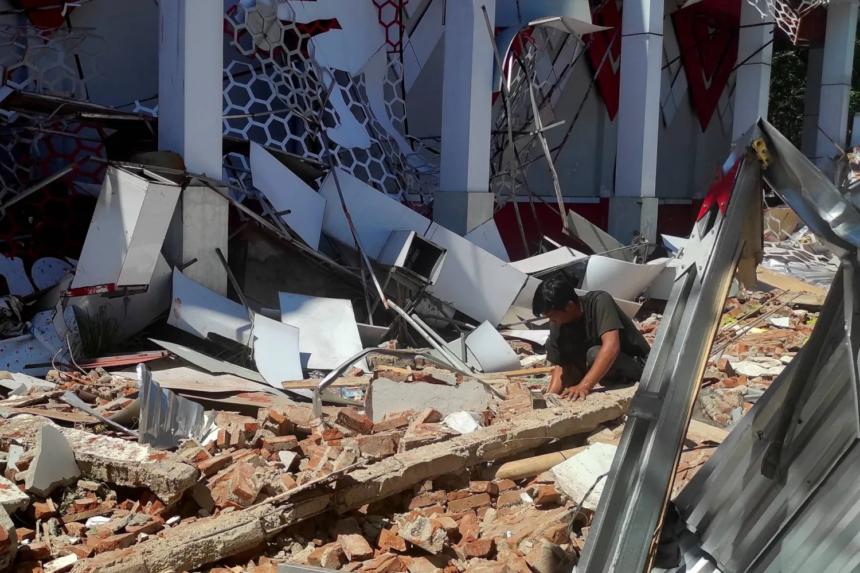
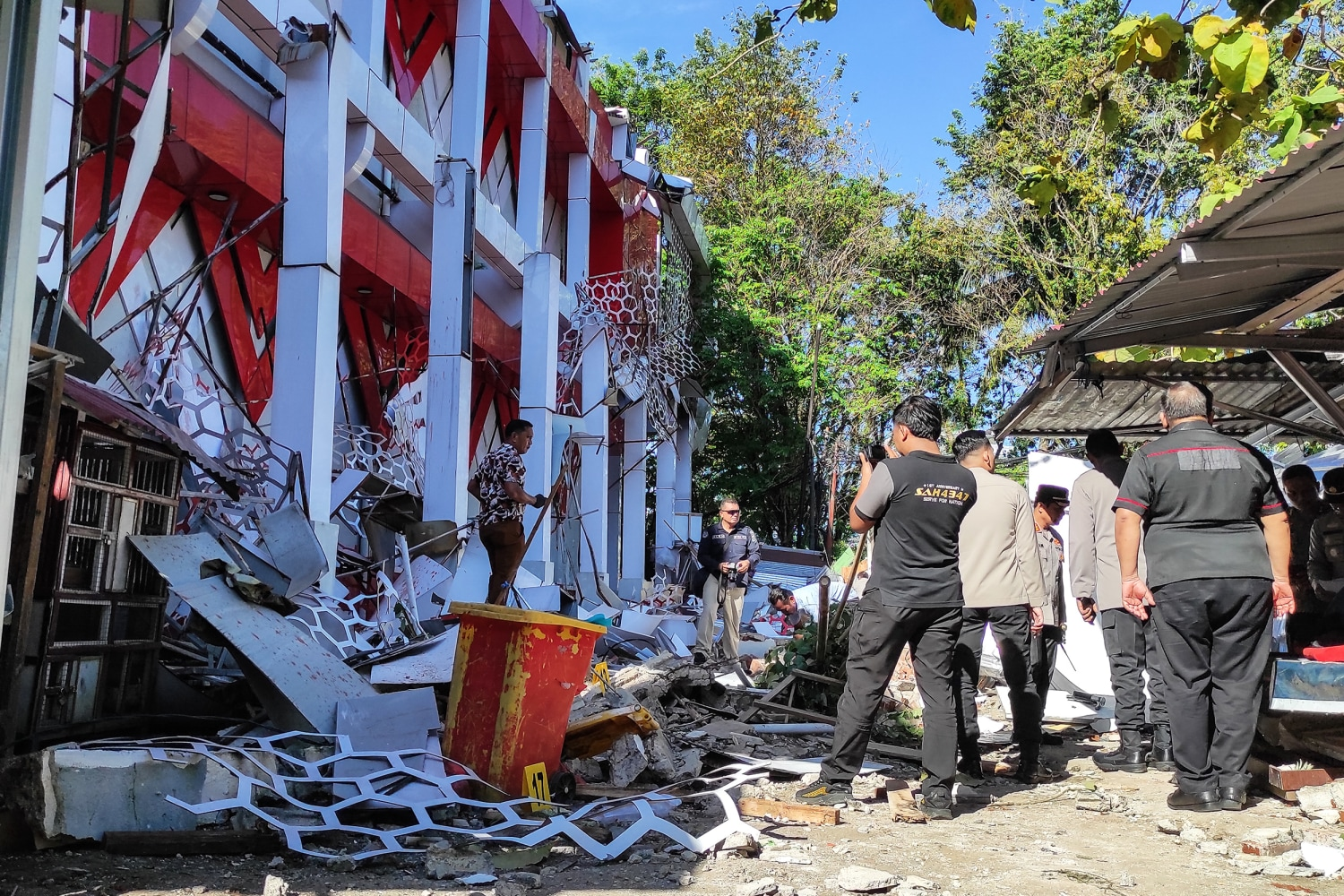
The earthquake claimed at least one life—a 70-year-old woman in North Sulawesi who was killed when a building collapsed. Several others were injured, including individuals who were hurt while attempting to escape buildings during the tremor.
Initial damage assessments revealed a mix of light to moderate destruction:
- A church in the Batang Dua Island district suffered structural damage
- Houses in South Ternate were partially destroyed
- Public infrastructure, including a sports complex in Manado, showed visible damage
- Power outages and structural cracks were reported in multiple areas
In some regions, particularly remote villages, authorities continued to gather information, suggesting that the full extent of the damage may take time to emerge.
“The Strongest in Years”: Eyewitness Accounts
For many residents, the quake stood out not just for its strength, but for its intensity compared to recent years.
In Bitung, one resident described the moment the tremor hit:
“We had just woken up and suddenly the earthquake hit… we all ran out of the house. The shaking was very strong.”
Others echoed similar sentiments. A journalist in Manado reported that furniture shook violently and that the sensation was among the strongest she had experienced in at least six years.
Scenes of confusion and urgency unfolded across affected areas:
- Marketplaces emptied as people fled
- Schools dismissed children almost immediately after arrival
- Hospitals evacuated patients into open spaces and vehicles
These accounts highlight not only the physical force of the quake but also the psychological impact on communities accustomed to seismic activity—yet still vulnerable to its unpredictability.
Aftershocks and Ongoing Risk Assessment
Following the main earthquake, multiple aftershocks were recorded, including tremors with magnitudes exceeding 5.0. At least one aftershock reached 6.2 magnitude, reinforcing concerns about continued seismic instability in the region.
Authorities confirmed that these aftershocks did not carry tsunami potential, but they were still felt in several affected areas, prolonging anxiety among residents.
Emergency teams, including Indonesia’s Search and Rescue Agency, deployed personnel to assess structural damage, assist injured residents, and ensure that evacuation protocols were followed where necessary.
Why Indonesia Is So Vulnerable
Indonesia’s geography plays a central role in its exposure to earthquakes. The country sits along the Pacific “Ring of Fire,” a zone of intense tectonic activity where multiple plates converge.
With a population exceeding 280 million people spread across thousands of islands, Indonesia regularly experiences earthquakes and volcanic eruptions. This makes disaster preparedness a constant priority—but also a persistent challenge.
The 7.4 earthquake serves as another reminder of this underlying geological reality:
- Frequent seismic events are part of daily life
- Infrastructure resilience varies across regions
- Early warning systems remain critical for minimizing casualties
Regional and Global Implications
Although the tsunami generated by this earthquake was relatively small, the event underscores the importance of coordinated regional monitoring systems.
The rapid dissemination of alerts by agencies such as the Pacific Tsunami Warning Center helped prevent unnecessary panic while ensuring that coastal communities remained vigilant.
From a broader perspective, the incident reinforces several key considerations:
- The need for continued investment in early warning systems
- Improved building standards in earthquake-prone regions
- Public education on emergency response and evacuation procedures
For neighboring countries, the event also highlights how seismic activity in one part of Southeast Asia can have ripple effects across a wide geographic area.
A Region Recovering—and Watching Closely
As authorities continue to assess damage and monitor aftershocks, life in affected areas is gradually stabilizing. However, caution remains the dominant theme.
Residents are returning to their homes, but with heightened awareness. Emergency teams are still active, and officials are maintaining close surveillance of seismic activity in the Molucca Sea.
While the immediate crisis may be easing, the underlying risk remains unchanged.
Conclusion: A Powerful Reminder of Nature’s Force
The 7.4 earthquake in Indonesia was not the most destructive in the country’s history, but it was a stark reminder of how quickly conditions can change in a seismically active region.
In a matter of seconds, routine morning activities were replaced by evacuation, uncertainty, and emergency response. The relatively low casualty count reflects both preparedness and a degree of luck—but also underscores the importance of vigilance.
As Indonesia continues to live with the realities of its geological position, events like this reinforce a critical truth: preparedness, awareness, and rapid response remain the most effective defenses against nature’s unpredictability.