


Princess Catherine’s Easter 2026: A Royal Return Amid Challenge and Renewal
A Symbolic Return to Tradition
The 2026 Easter celebrations at Windsor carried unusual weight for the British royal family. What is typically a polished display of continuity and tradition became, this year, a moment of quiet resilience—anchored by the return of Catherine, Princess of Wales after a prolonged absence.
- A Symbolic Return to Tradition
- The Setting: Windsor’s Enduring Easter Tradition
- A Royal Family Under Scrutiny
- Catherine’s Return: Personal Resilience Meets Public Expectation
- The Wales Family: Continuity Through Generations
- Fashion as Messaging: Subtle Signals of Stability
- A Monarchy Balancing Tradition and Modern Pressure
- Cultural and Public Implications
- Looking Ahead: A Measured Future
- Conclusion: Renewal in a Time of Transition
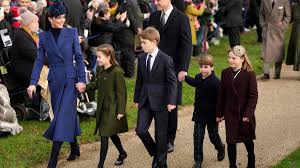
For the first time since 2023, Catherine appeared alongside Prince William and their children at the annual Easter Matins Service at St George’s Chapel, Windsor Castle. The appearance followed a deeply personal period marked by her cancer diagnosis in early 2024 and subsequent treatment, which led the family to spend Easter privately for two consecutive years.
Her return in 2026 was therefore not merely ceremonial—it was symbolic. It signaled recovery, continuity, and a cautious re-emergence into public royal life.


The Setting: Windsor’s Enduring Easter Tradition
The Easter service at St George’s Chapel has long been a fixture of the royal calendar. Generations of the monarchy, from Queen Elizabeth II to contemporary senior royals, have used the occasion to reinforce a sense of stability and public connection.
This year’s gathering included King Charles III and Queen Camilla, joined by senior family members such as Princess Anne and Prince Edward. The Dean of Windsor, Christopher Cocksworth, welcomed attendees as crowds gathered to witness the traditional procession.



Yet, the 2026 service unfolded under the shadow of recent controversy within the monarchy—most notably the absence of Prince Andrew and his immediate family.
A Royal Family Under Scrutiny
The absence of Prince Andrew, alongside Sarah Ferguson and their daughters Princess Beatrice and Princess Eugenie, reflected the ongoing fallout from his arrest in February 2026 on suspicion of misconduct in public office.
The situation has marked a rare and serious moment in modern royal history. King Charles addressed the issue directly, emphasizing the importance of due process:
“What now follows is the full, fair and proper process by which this issue is investigated in the appropriate manner and by the appropriate authorities.”
He continued:



“Let me state clearly: the law must take its course.”
This statement, supported by both Prince William and Princess Catherine, underscores a shift in royal messaging—toward transparency and institutional accountability, even when it involves senior family members.
Catherine’s Return: Personal Resilience Meets Public Expectation
Catherine’s reappearance was one of the most closely watched aspects of the Easter service. Her absence in 2024 and 2025 had been a deliberate decision, prioritizing recovery and family privacy.
By early 2025, her cancer was reported to be in remission, allowing for a gradual return to public engagements.
Easter 2026 therefore marked a turning point—not just medically, but symbolically. It represented a return to duty while maintaining a carefully managed public profile.
Observers noted the composed and measured nature of her appearance. Rather than a dramatic comeback, it was a controlled re-entry aligned with the monarchy’s broader strategy of stability.
The Wales Family: Continuity Through Generations
The presence of the Wales children—Prince George, Princess Charlotte, and Prince Louis—reinforced the generational continuity of the monarchy.
Their participation also reflected the normalization of royal traditions within a modern family context. The children, now regular attendees since 2022 and 2023, walked alongside their parents in coordinated attire, projecting cohesion and unity.
Beyond the public setting, glimpses into their private Easter traditions—such as egg hunts and family gatherings—offer a more relatable dimension to royal life. As Prince William once remarked humorously, “There will be a lot of chocolate being eaten here.”
Fashion as Messaging: Subtle Signals of Stability
Catherine’s wardrobe choices at Easter 2026 were not incidental. Royal fashion often operates as a form of communication, and this appearance was no exception.
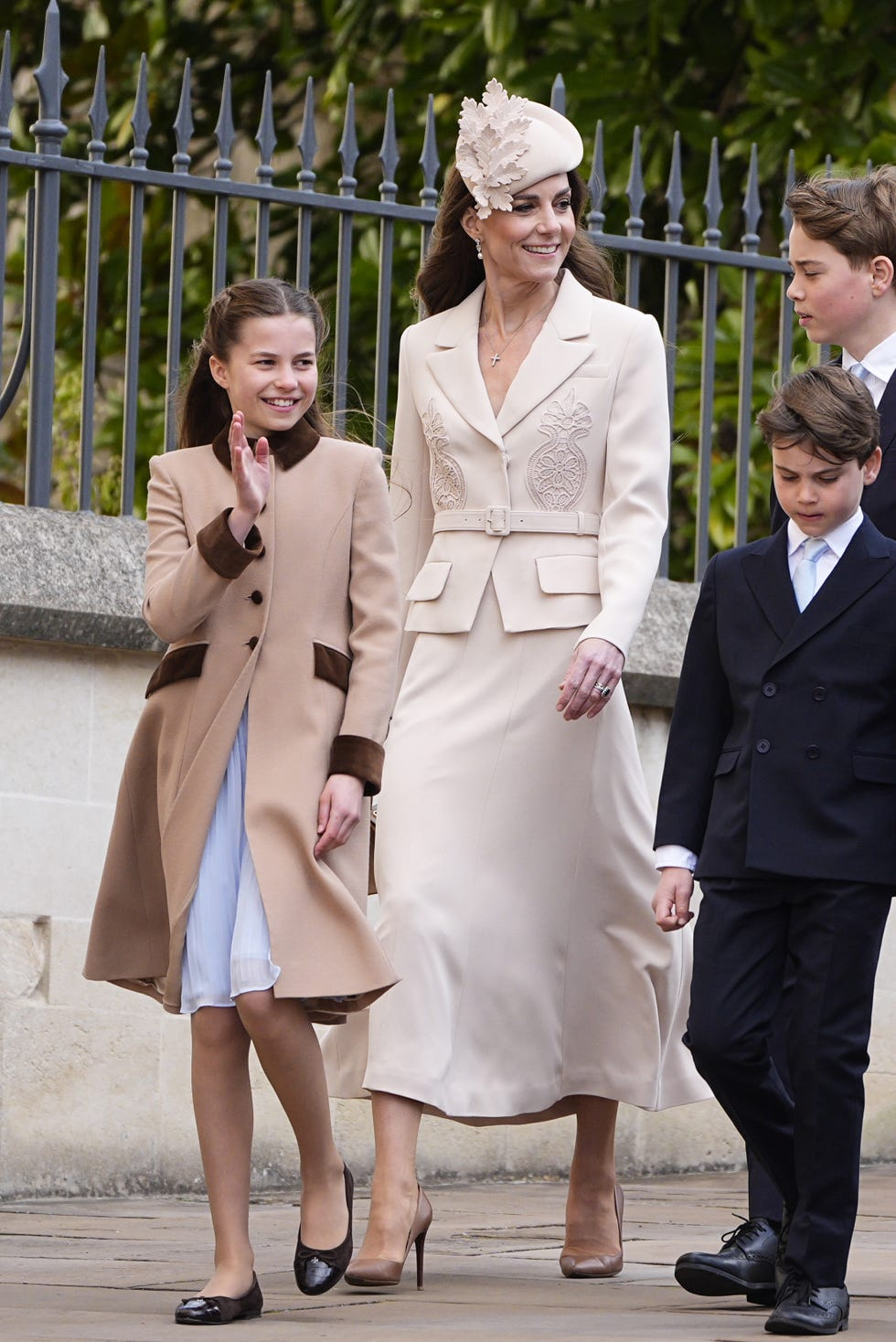
She wore a cream-toned ensemble, including a re-worn Self-Portrait dress paired with a new hat featuring leaf appliqués—an understated blend of continuity and renewal.
Accessories carried symbolic weight as well:
- A DeMellier handbag, long part of her wardrobe rotation, reinforced familiarity and consistency
- Pearl drop earrings from Queen Elizabeth’s collection served as a subtle tribute to royal heritage
Meanwhile, Princess Charlotte mirrored her mother’s aesthetic, wearing a tailored coat and dress combination that echoed Catherine’s style—an intentional visual alignment that reflects both influence and continuity.
A Monarchy Balancing Tradition and Modern Pressure
Easter 2026 revealed a monarchy navigating two parallel realities:
- Preserving tradition — through ceremonial events, public appearances, and generational continuity
- Responding to modern scrutiny — through transparency, accountability, and controlled messaging
The absence of Prince Andrew, contrasted with the visible unity of the rest of the royal family, highlighted this balancing act. The institution appears increasingly aware that public trust depends not only on tradition but also on perceived integrity.
Cultural and Public Implications
The broader cultural significance of this Easter lies in its layered narrative:
- Health and resilience: Catherine’s return resonates with audiences facing similar personal challenges
- Institutional reform: The monarchy’s handling of internal controversy signals evolving expectations
- Public relatability: Family-centered moments humanize an institution often viewed as distant
In effect, the 2026 Easter service functioned as both a ceremonial event and a subtle recalibration of royal identity in the modern era.
Looking Ahead: A Measured Future
The future trajectory for Princess Catherine and the royal family remains deliberately measured. Public appearances are likely to continue at a controlled pace, balancing duty with personal well-being.
At the same time, the monarchy’s response to internal controversies will remain under scrutiny. The emphasis on due process and institutional accountability suggests a strategic shift that may define its next phase.
For Catherine specifically, Easter 2026 may come to be seen as a transitional moment—marking the beginning of a new chapter characterized by resilience, restraint, and renewed public engagement.
Conclusion: Renewal in a Time of Transition
Easter has always been associated with themes of renewal and hope. In 2026, those themes were embodied not just in religious observance, but in the lived experiences of the royal family.
Princess Catherine’s return, set against a backdrop of institutional challenge, offered a quiet but powerful narrative: one of recovery, continuity, and adaptation.
For the monarchy, the message was clear—tradition endures, but it must evolve alongside the realities of the modern world.