





The New Reality of Flight: Rising Costs, Global Disruptions, and What It Means for Travelers
Air travel has long been a symbol of speed, connectivity, and global integration. Yet in 2026, the concept of “flight” is undergoing a significant shift. What was once predictable and increasingly affordable is now being reshaped by geopolitical tensions, rising fuel costs, and operational disruptions.
The ongoing conflict involving Iran has triggered a cascade of consequences across the aviation industry. Airlines are adjusting routes, canceling flights, and introducing new charges—developments that are already being felt by travelers worldwide. This article examines how these changes are unfolding, what they mean for passengers, and how the future of flight may evolve in response.
A System Under Pressure: How Conflict Disrupts Flight Networks
The aviation industry operates on tightly coordinated global systems. When a major geopolitical event disrupts key airspaces or fuel supplies, the ripple effects can be immediate and widespread.
The current conflict has forced the closure or restriction of critical Middle Eastern hubs such as Dubai, Doha, and Abu Dhabi—airports that serve as major transit points between continents. As a result, airlines have had to suspend or reroute flights across large portions of their networks.
According to industry reports, global air travel remains “severely disrupted,” with many passengers unable to reach their destinations as planned.
Major carriers—including Air France, Lufthansa, and Delta—have canceled or delayed flights to destinations across the Middle East. Others have extended suspensions for months, indicating that the disruption is not temporary but part of a broader operational recalibration.
Rising Costs: The Fuel Factor Behind Flight Prices
At the core of these disruptions lies a fundamental economic driver: jet fuel.
Jet fuel prices have surged as a direct consequence of the conflict, creating immediate cost pressures for airlines. Fuel is one of the largest expenses in aviation, often accounting for a significant portion of ticket pricing.
Industry expert McKenzie McMillan explains that fuel surcharges are already embedded in ticket prices, sometimes accounting for up to half the cost of a flight.
As prices rise further, airlines are responding in several ways:
- Introducing new fuel surcharges (e.g., $60 on certain bookings)
- Increasing base fares
- Reducing flight frequency to conserve fuel
These measures are not uniform across all ticket types. Travelers using reward points, companion fares, or discounted bookings are expected to feel the impact first and most directly.
“It’s going to mostly directly and immediately affect people who are booking companion fares, WestJet points, bookings with other airlines as well,” McMillan noted.
Flight Cancellations and Capacity Cuts: A Growing Trend
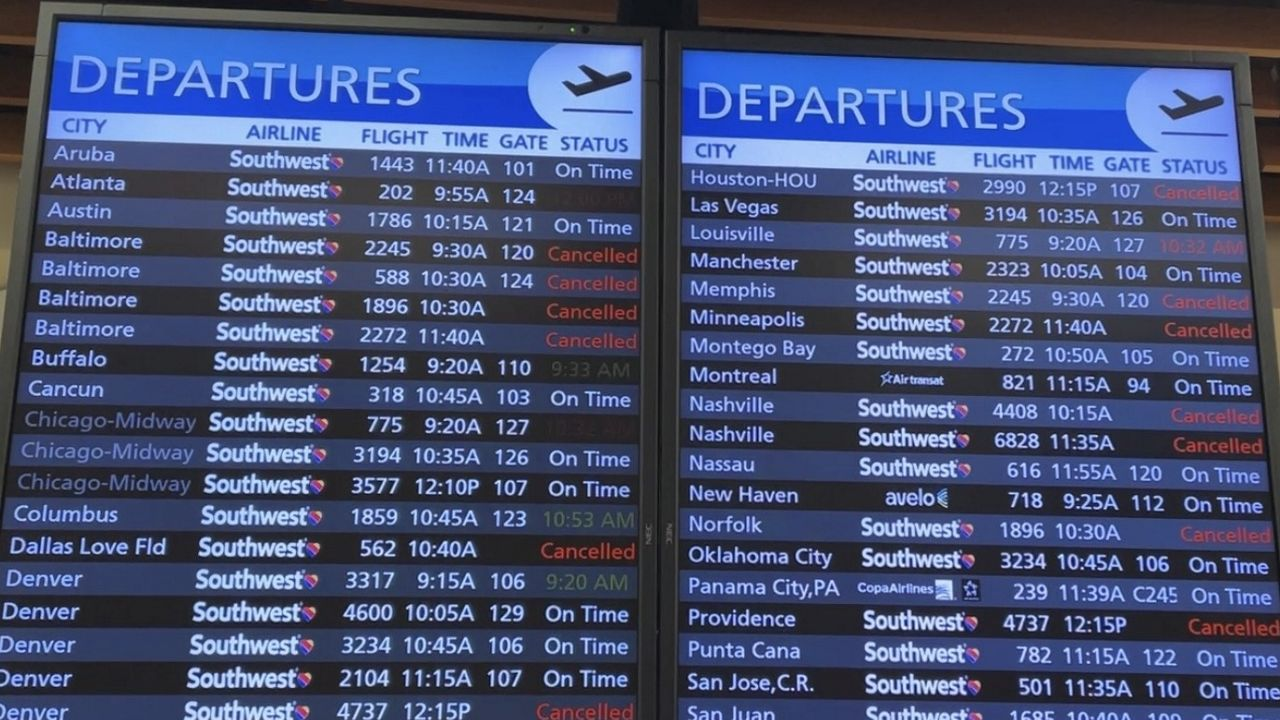
Beyond pricing, one of the most visible consequences of the current situation is the increase in flight cancellations.
Airlines are actively reducing capacity to manage both fuel costs and operational risk. This includes:
- Canceling routes to high-risk or restricted regions
- Scaling back schedules during off-peak periods
- Redirecting aircraft to more profitable or stable routes
For example:
- Multiple airlines have suspended flights to cities such as Tel Aviv, Dubai, and Riyadh for extended periods.
- Some carriers are postponing new route launches indefinitely.
- Others are shifting capacity toward Europe and other high-demand regions.
These decisions reflect a broader strategic shift: airlines are prioritizing efficiency and risk mitigation over expansion.
Passenger Experience: Delays, Stranding, and Limited Options
For travelers, the implications are immediate and often frustrating.
During peak travel periods, flights tend to operate at full capacity. When cancellations occur, finding alternative seats becomes significantly more difficult. In some recent cases, passengers have been stranded for several days due to a lack of available flights.
McMillan highlighted a recent example in Mexico, where cancellations left travelers without options for extended periods.
This highlights a key vulnerability in modern air travel: while global connectivity has increased, redundancy has not kept pace. When disruptions occur, the system has limited flexibility to absorb them.
The Role of Travel Insurance: From Optional to Essential
In this evolving landscape, travel insurance is no longer a secondary consideration—it is becoming a necessity.
Experts are urging travelers to insure their bookings, particularly in light of increasing uncertainty. Insurance can provide coverage for:
- Flight cancellations
- Delays and missed connections
- Unexpected accommodation costs
- Emergency rebooking expenses
“That’s just another reason why it’s very important to make sure that you are insuring your travel purchases,” McMillan emphasized.
As disruptions become more frequent, insurance is emerging as a critical safeguard against financial loss and logistical complications.
Airline Strategies: Adaptation in Real Time
Airlines are not passive in the face of these challenges. Instead, they are actively adapting their strategies to maintain operations and protect profitability.
Key responses include:
1. Dynamic Route Management
Airlines are continuously adjusting routes to avoid restricted airspaces while maintaining connectivity.
2. Flexible Scheduling
Reduced flight frequencies allow carriers to concentrate demand and minimize empty seats.
3. Revenue Optimization
Fuel surcharges and fare adjustments help offset rising operational costs.
4. Network Rebalancing
Some airlines are increasing flights to stable, high-demand regions such as Europe to compensate for losses elsewhere.
These strategies reflect a broader trend toward agility in aviation—a shift from fixed schedules to more responsive, data-driven operations.
Broader Implications: Flight as a Reflection of Global Stability
The current situation underscores a deeper reality: flight is not just a mode of transport—it is a reflection of global stability.
When geopolitical tensions rise, the effects are not confined to diplomacy or economics; they extend into everyday experiences such as travel. Flight routes, ticket prices, and airport operations all become indicators of broader global dynamics.
This interconnectedness means that:
- Regional conflicts can have global travel consequences
- Energy markets directly influence mobility
- Aviation serves as both a driver and a barometer of globalization
Future Outlook: What Lies Ahead for Flight?
Looking forward, several trends are likely to shape the future of air travel:
Increased Volatility
Flight schedules and pricing may remain unpredictable as long as geopolitical tensions persist.
Higher Baseline Costs
Fuel surcharges and elevated ticket prices could become the new norm rather than temporary measures.
Greater Emphasis on Flexibility
Airlines and passengers alike will prioritize flexibility in bookings and operations.
Technological Innovation
The industry may accelerate investment in fuel-efficient aircraft and alternative energy sources to reduce dependency on volatile fuel markets.
Risk-Aware Travel Behavior
Travelers are likely to become more cautious, factoring in geopolitical risks and insurance coverage when planning trips.
Conclusion: Flight in Transition
Flight in 2026 is defined by adaptation. The industry is navigating a complex landscape shaped by conflict, cost pressures, and operational constraints. For travelers, this means higher prices, potential disruptions, and the need for greater preparation.
Yet despite these challenges, the fundamental importance of flight remains unchanged. It continues to connect economies, cultures, and people across vast distances.
What is changing is how that connection is managed—more cautiously, more strategically, and with a heightened awareness of the global forces that shape every journey.